Food, Wines, and a Few Thoughts in Between
By Carl Franco
Time to escape! Let’s leave the leaf blowers, parking meters, and affordable housing debates behind us, for a little while, at least. It’s vacation season and time to slow down, reenergize and enjoy life for a bit. Whether you’re packing up the car for the shore, heading to the mountains, or simply relaxing in your own backyard, you’ll need three essentials: good food, good wine, and a good book. This is the season to shift into low gear and enjoy life’s simple pleasures.
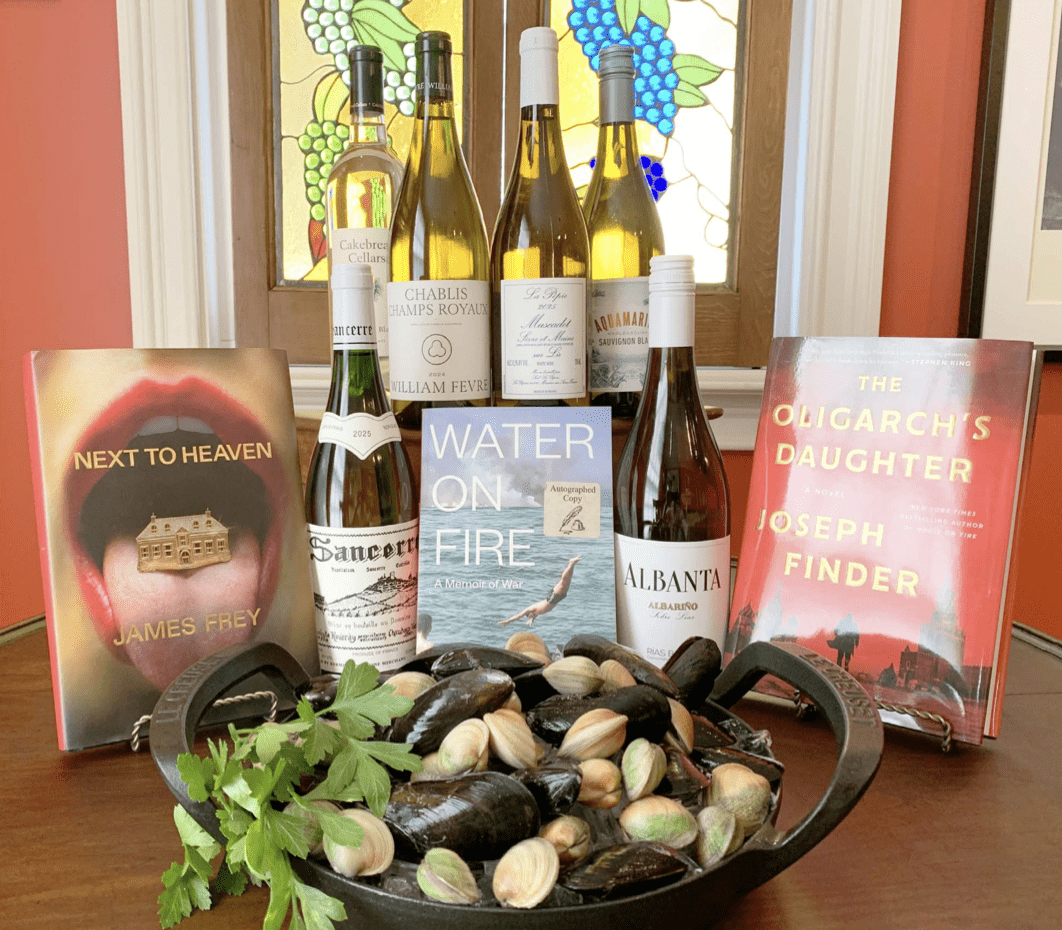
Whether your vacation read is an absorbing autobiography, a suspense-filled espionage thriller, or a sultry, salacious saga, you’ll find the perfect escape in the capable hands of the experts at Elm Street Books. For the food, inspiration is everywhere, from TikTok videos to food bloggers to recipe creators, all ready to help you plan some delicious vacation meals. And for the wine? That’s where I can help, and in this week’s column, we will be looking at some summer whites.
Sip to Shore Call
When you’re vacationing at the shore, seafood is practically de rigueur at dinnertime. Maybe you were up early fishing, crabbing or clamming, or maybe you simply went to the local fishmonger where the catch of the day caught your eye. However the fish or platter of oysters arrived at your table, it deserves a wine that’s just as memorable. Let’s take a look at some classic pairings that bring out the best in your favorite seaside fare.
If you were to choose a Spanish wine that seems to have a natural affinity for a seafood dinner, Albariño would lead the pack. Native to the lush, Atlantic-influenced region of Galicia in northwestern Spain, the grape reaches its finest expression in the Rías Baixas where cool ocean breezes and mineral-rich soils produce wines that are crisp, vibrant, and remarkably food-friendly. Prized for its vibrant acidity, fresh aromatics, and flavors of peach, tangerine, citrus, mineral, and subtle hints saline, this wine is welcome sight on any summer table. Most examples are fermented in stainless steel rather than oak, preserving the grape’s bright fruit character and refreshing finish. As a final note, if you happen to find yourself in nearby Portugal, this grape goes by the name Alvarinho.
Calling all Clams
For generations, Muscadet has been the quintessential seafood wine of France’s Loire Valley. Made from the Melon de Bourgogne grape, Muscadet is produced near the Atlantic coast where its brisk acidity, light body, and crisp citrus flavors have made it a natural partner for oysters and other shellfish. The best examples of this wine are lean, refreshing, and marked by flavors of lemon, green apple, white flowers, and a distinctive mineral character that mirrors the coastal environment in which they are grown. When shopping for Muscadet, look for bottles labeled Muscadet Sèvre et Maine Sur Lie. “Sèvre et Maine” refers to the premier growing area, named for the two rivers that flow through the region, while “sur lie” means the wine has been aged on its fine lees, which are the spent yeast cells left behind after fermentation. This traditional technique adds texture, complexity, and subtle notes of fresh bread and brioche while preserving the wine’s vibrant acidity. Its bright acidity, mineral backbone, and delicate saline finish make Muscadet Sèvre et Maine Sur Lie one of the world’s finest partners for oysters, clams, mussels, shrimp, scallops, and simply prepared fish. It’s no surprise that locals along France’s Atlantic coast have considered it the benchmark seafood wine for centuries.
Living under a Rock
Limestone, that’s all you need to know about Chablis. Although all Chablis is made from Chardonnay, don’t expect the rich style often associated with this grape. Produced in the northernmost reaches of Burgundy, Chablis is celebrated for its purity, vibrant acidity, and unmistakable minerality. This is all due to the region’s cool climate and distinctive Kimmeridgian limestone soils, formed millions of years ago from ancient marine fossils which give Chablis its hallmark flavors of green apple, lemon, white flowers, and, most notably, flinty mineral notes. While many Chablis wines are fermented and aged in stainless steel to preserve their freshness, some top producers use older, neutral oak barrels that add texture without imparting obvious oak flavors.
Chablis has long been considered one of the world’s finest wines for seafood. Its bright acidity and crisp mineral character complement rather than overwhelm delicate flavors, making it an exceptional match for oysters, clams, lobster, crab, scallops, shrimp, and simply prepared white fish. The wine’s flinty, saline edge seems to echo the taste of the sea, creating a pairing that is both elegant and effortlessly refreshing. For seafood lovers, few combinations are as timeless as fresh shellfish and a perfectly chilled glass of Chablis.
There are other Sauvignon Blancs in the Sea
Although Sancerre, American Sauvignon Blanc, and New Zealand Sauvignon Blanc are all made from the same grape, they couldn’t be more different in the glass. There is no doubt that Sancerre, from France’s Loire Valley, is currently the golden child and the most popular pour on the market. Sancerre is restrained and elegant, offering crisp citrus, green apple, quiet herbal notes, and a signature flinty minerality that reflects the region’s limestone-rich soils. American Sauvignon Blanc, particularly from California, tends to have a nice weight to them with subtle flavors of peach and melon often with a cleaner finish. Some producers ferment or age the wine in oak, creating a richer, creamier style that may be labeled Fumé Blanc. New Zealand Sauvignon Blanc, especially from Marlborough, is the most exuberant of the three. It bursts with vibrant aromas of grapefruit, passion fruit, lime, and freshly cut grass, supported by mouthwatering acidity that makes it instantly recognizable. In broad strokes, Sancerre is refined and sophisticated, American Sauvignon Blanc is generous, fruit-forward, and clean, while New Zealand Sauvignon Blanc is bold and aromatic, with a citrus and grapefruit-driven bouquet that’s impossible to ignore. Each style has its place at the table, but all three shine alongside fresh seafood in their own unique way.
Summer doesn’t last forever. Soon enough, backpacks will replace beach bags, early sunrise alarm clocks will replace lazy, late mornings, tuition bills will arrive, and committees will start forming. So while August is still here, plan your escape. The staff here at The Sentinel is doing the same, and we’ll be on hiatus for a couple of weeks. My suggestion? Grab the sunscreen, a good book, and your favorite wines. As a child, I was taught that if you hold a seashell up to your ear, you’ll hear the ocean calling. I would say to answer it while you can, because that snow shovel buried in the garage has a habit of appearing just when you thought you had a little more time.
Carl Franco is the proprietor of Francos Wine Merchants in New Canaan.