By Staff Reporters
For years, Andrew Hyde worked to make sure no one could see how much he was struggling. An accomplished student-athlete with friends and a loving family, he said he concealed his anxiety and addiction behind the appearance of success.
After an overdose at age 20, he began letting people see what was really happening.
“All this time, I had expected people to respond with judgment, maybe even disdain,” Hyde said. “What I got instead was curiosity, interest, empathy.”
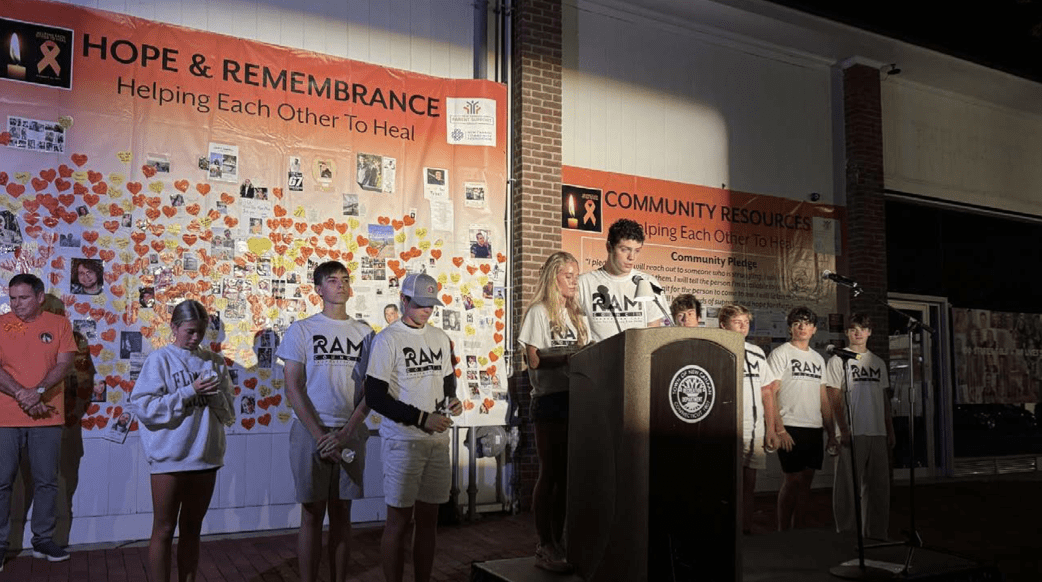
His story was among those shared Sept. 2 at the New Canaan Parent Support Group’s 10th annual Community Addiction Awareness Vigil, an evening of remembrance, music and personal testimony that urged people facing addiction to seek help and neighbors to offer it.
About 500 people attended, according to founder Paul Reinhardt. The gathering brought together people in recovery, families, treatment providers, clergy and young volunteers. Speakers remembered lives lost while describing the relationships, opportunities and ordinary accomplishments that recovery had made possible.
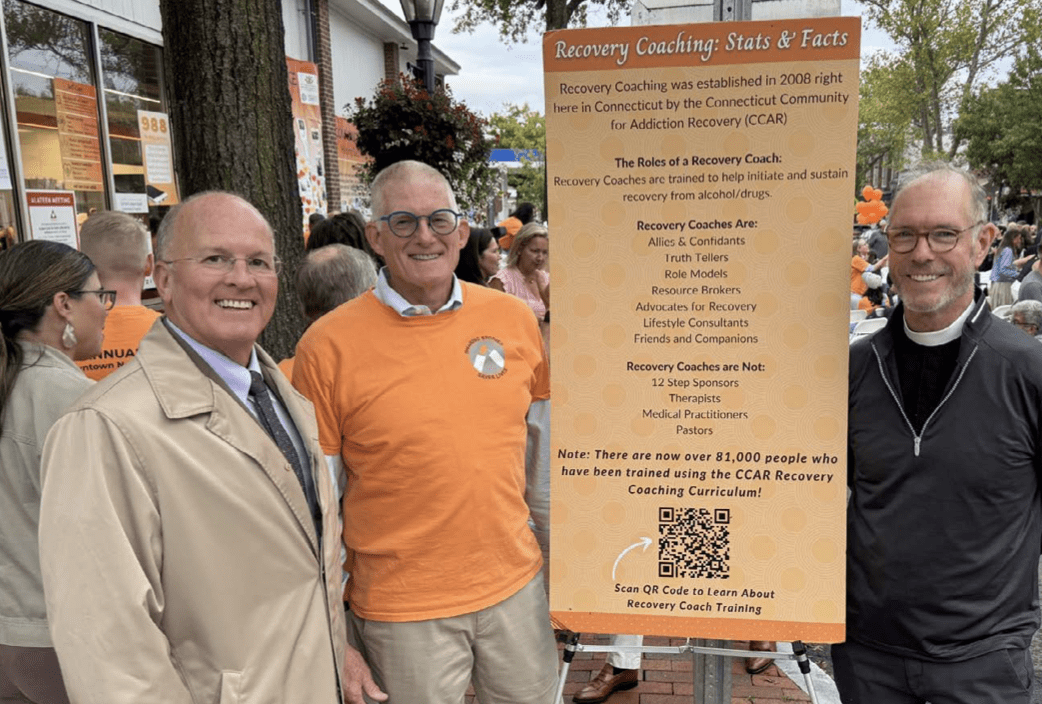
In an interview after the vigil, Reinhardt said the event reflected a mission that began with his own family’s loss. He started the support group in September 2016 in tribute to his son, Evan, who died of an overdose in 2015.
The organization began with a weekly meeting for parents whose loved ones were struggling with addiction or were in early recovery. A year later, Reinhardt and a group of community members organized their first awareness vigil, making personal stories of recovery a central feature.
“The very first one we had 400 people there and we knew that maybe this was something that we should make annual,” Reinhardt said.
The group expanded its work in 2018 with monthly educational programs called Pathway Sessions, bringing addiction and recovery specialists together with the public. A website, monthly newsletter and resources for families followed. This September also marks the support group’s 10th anniversary.
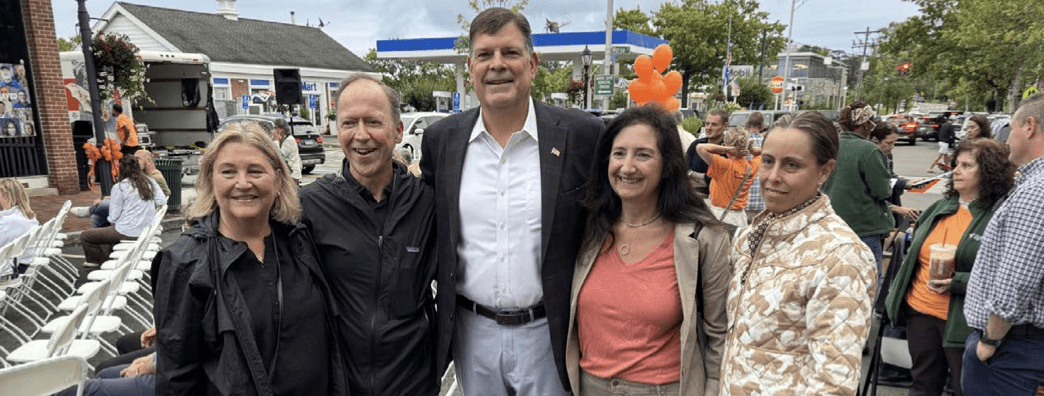
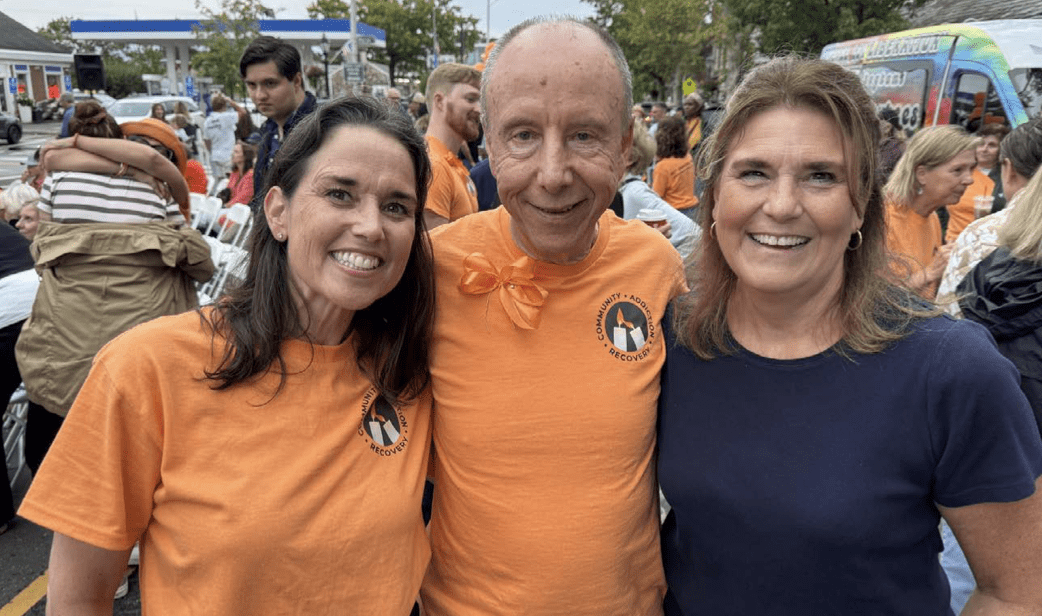
For the vigil, planning begins in March with volunteers Reinhardt calls “Team Orange.” This year, organizers added vigil ambassadors, supporters who encouraged others to attend and received orange T-shirts recognizing their efforts.
Reinhardt said moving the event from Tuesday to its Wednesday rain date likely prevented attendance from reaching the organizers’ goal of 750. Still, he was pleased with the turnout and particularly encouraged by the speakers, whose stories offered examples of finding and sustaining recovery.
“They were relatively young speakers in their 20s and 30s,” he said. “So I think that’s important too, because you never know who’s there listening and might be inspired.”
The call to reach out was also reflected in the work of providers attending the vigil.
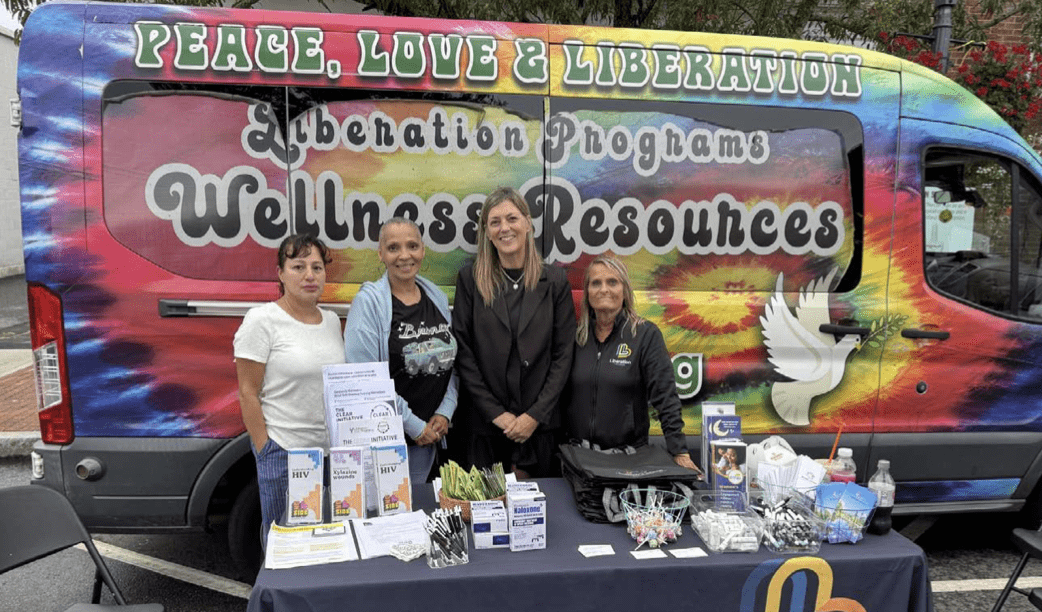
Liz Evans of Liberation Programs described the organization’s mobile outreach van as a way to reach people at risk of overdose, provide prevention education and connect them with treatment and other services.
“We connect with folks, link them to programs and services,” Evans said.
She also described the organization’s CLEAR Initiative, which stands for Community and Law Enforcement for Addiction Recovery. Through the initiative, police can contact an outreach team after responding to an overdose. An overdose outreach specialist may then follow up with police to offer the person resources and services, she said.
Among the other community supporters attending were Liz Moore, Silver Hill Hospital’s director of community relations, and Lisa Ferraro, its chief development officer.
Moore said the hospital’s presence was primarily about supporting Reinhardt, the parents and the broader community, while also helping people recognize that assistance is available.
“I think we also show people that there’s a place to go,” Moore said.
She said hospital representatives discussed Silver Hill’s assessment program in conversations with attendees. Reinhardt, she added, has been a strong advocate for the program.
Reinhardt opened the evening by recognizing the orange worn throughout the audience — Evan’s favorite color. To him, it also represented optimism, empathy, connection and generosity.
“All of us belong because orange is about connection,” he said.
The evening connected the vigil’s beginnings with the lives that have changed since. Kera Townshend McRedmond, a friend of Evan’s who spoke at the first vigil in 2017, returned with more than 12 years in recovery.
She expressed gratitude for her husband, family, friends and recovery community, and especially that her two young sons “get to have a sober mom today.”
Master of ceremonies John Hamilton asked people in recovery to raise their hands, then invited anyone who knew someone in recovery to join them. Nearly everyone had a hand raised, he observed.
“The community is the healer and the community’s here tonight, the community of recovery,” Hamilton said.
For speaker Mike Keller, recovery began with a connection made at a meeting after repeated attempts to stop drinking. A man he approached for advice urged him to call every day and helped connect him with a sponsor.
Keller described learning discipline, patience and responsibility through recovery. Buying a used Honda CR-V, he said, represented more than acquiring a car: It required showing up for work, saving money and making a considered decision.
But his most meaningful measure of progress was the ability to build and maintain relationships with family, friends and colleagues.
“Find the people, the places and the things that make you truly happy and stick by them,” Keller said.
Maggie Buchanan recalled being a college student unable to get through a single day without drinking. Frightened, she called her parents and asked for help.
They sought professional guidance and insisted she enter treatment. Although she initially intended to remain sober only long enough to satisfy them, participating in a recovery community changed her plans.
Fifteen years later, she described returning to school, earning two master’s degrees, traveling abroad and getting married. She also spoke about serious health problems and losses, emphasizing that sobriety had not made life free of hardship.
“The miracle of recovery isn’t that life becomes perfect,” Buchanan said. “The miracle of recovery is that even when things are really, truly hard, we don’t have to drink over it anymore.”
Hyde was introduced by his mother, Kim, a charter member of the support group who had shared her own experience at the second annual vigil.
“Watching his transformation has been one of the greatest privileges of my life,” she said.
Hyde, who said he became sober in 2015, described honesty as a daily practice. He urged anyone still wondering whether it was safe to acknowledge their struggles to begin with one relationship.
“If that’s you, find one person and let them in,” he said.
Music reinforced the evening’s themes. Ned Thunem performed “One Step,” a song he said he wrote in a halfway house in Florida. Support group member Dave Hart performed “Our Best Days,” speaking about his daughter’s recovery and his hope that they would perform together again.
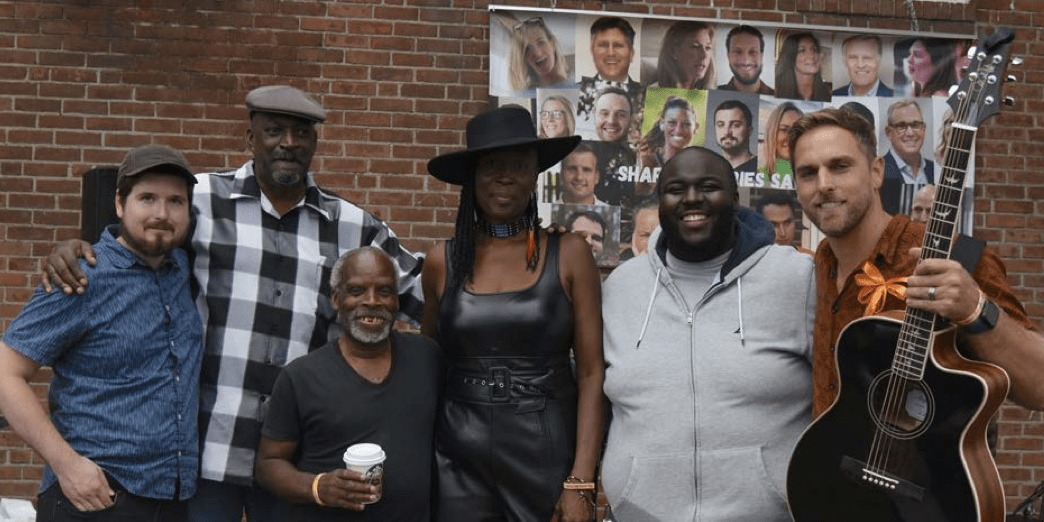
Musical Intervention, the New Haven organization whose recovery band performed at the vigil, offered another example of how people can find connection through creative work.
Founder and director Adam Christoferson said the organization has operated for 10 years in downtown New Haven, providing free admission for people to write, record and perform original music. It also offers free food and beverages to help remove barriers to participation.
Its 2,300-square-foot space includes a performance stage, coffee shop, recording studio and an area where people can gather and share stories. Songwriting workshops, open jams and a Thursday night open mic bring together people with different backgrounds and musical interests, he said.
Many participants are in recovery. Others have experienced homelessness, domestic abuse or hospitalizations. Christoferson said the focus is on the abilities people bring through the door.
“But when you come to Musical Intervention, you’re not known through your diagnosis or your situation,” he said. “We’re just interested in working with your artistic side.”
Established musicians help participants develop their talents, creating opportunities to collaborate and take part in music.
“And we identify people as musicians, guitarists, artists, and that’s the lens in which we treat people,” Christoferson said.
For Reinhardt, the band’s participation underscored the vigil’s recognition that there are multiple pathways to recovery.
“Addiction happens anywhere to anyone, but music can be a pathway to recovery,” he said.
During the candlelighting ceremony, local clergy offered prayers for healing and remembrance. Members of the RAM Council and National Charity League distributed candles and helped spread the light through the gathering.
The Rev. Martha Epstein, pastor of the United Methodist Church, compared healing to kintsugi, the Japanese practice of repairing broken pottery with gold.
“Tonight we are the gold, remembering, loving, supporting, and refusing to give up on one another,” Epstein said.
The evening’s community pledge turned those sentiments into specific commitments: Reach out to someone who is struggling. Offer to talk. Listen. Give encouragement.
“I will take the initiative and not wait for the person to come to me,” participants pledged.
Reinhardt said that commitment captures the support group’s broader vision.
“The vision is to imagine a community of people with understanding about addiction and recovery who proactively reach out with empathy and kindness to those who are struggling,” he said.
Whether those struggles affect one’s own family or someone else’s, he added, “we all can do something to help just by having that empathy and willingness to talk to someone who’s struggling.”