By Frank Gallo
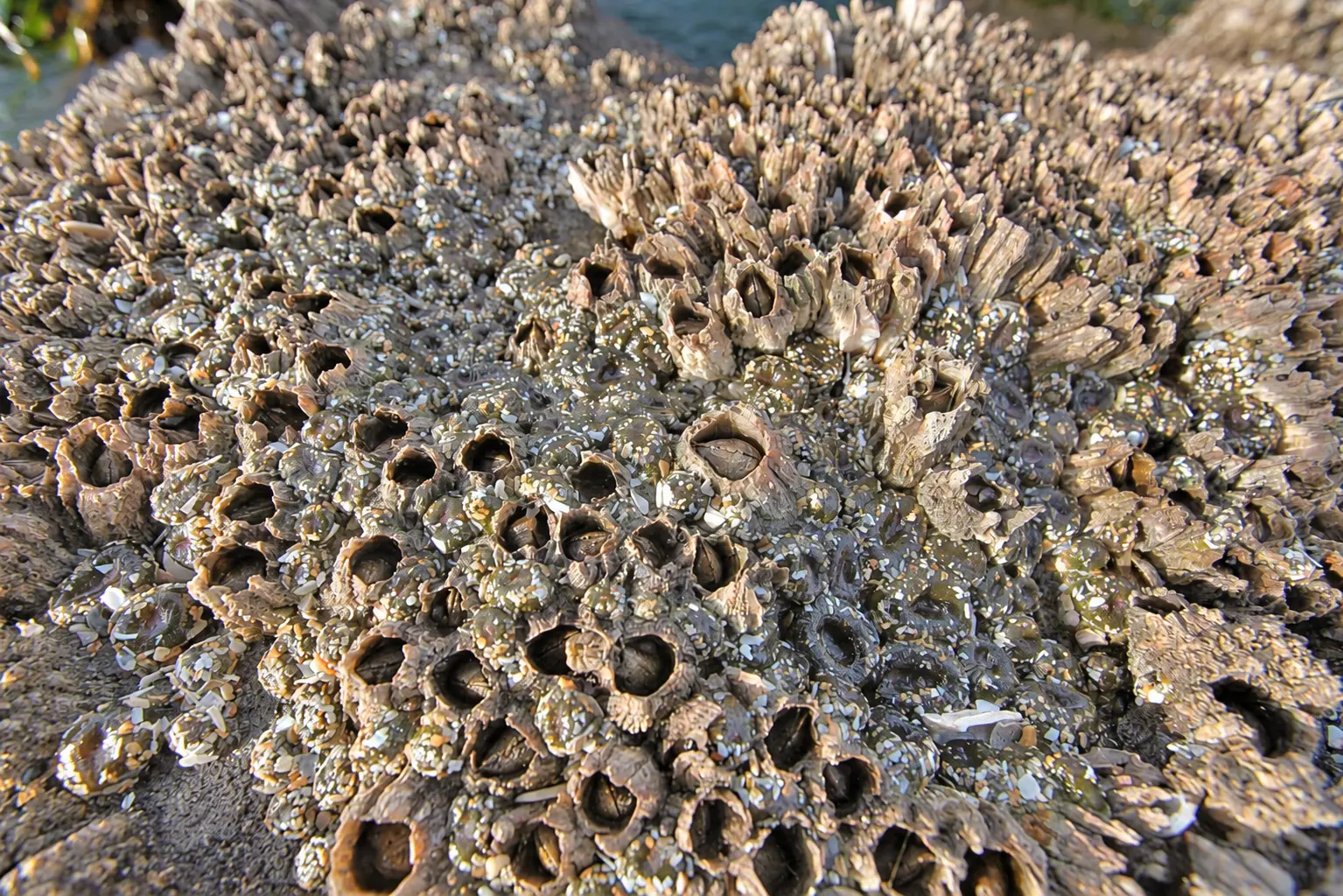
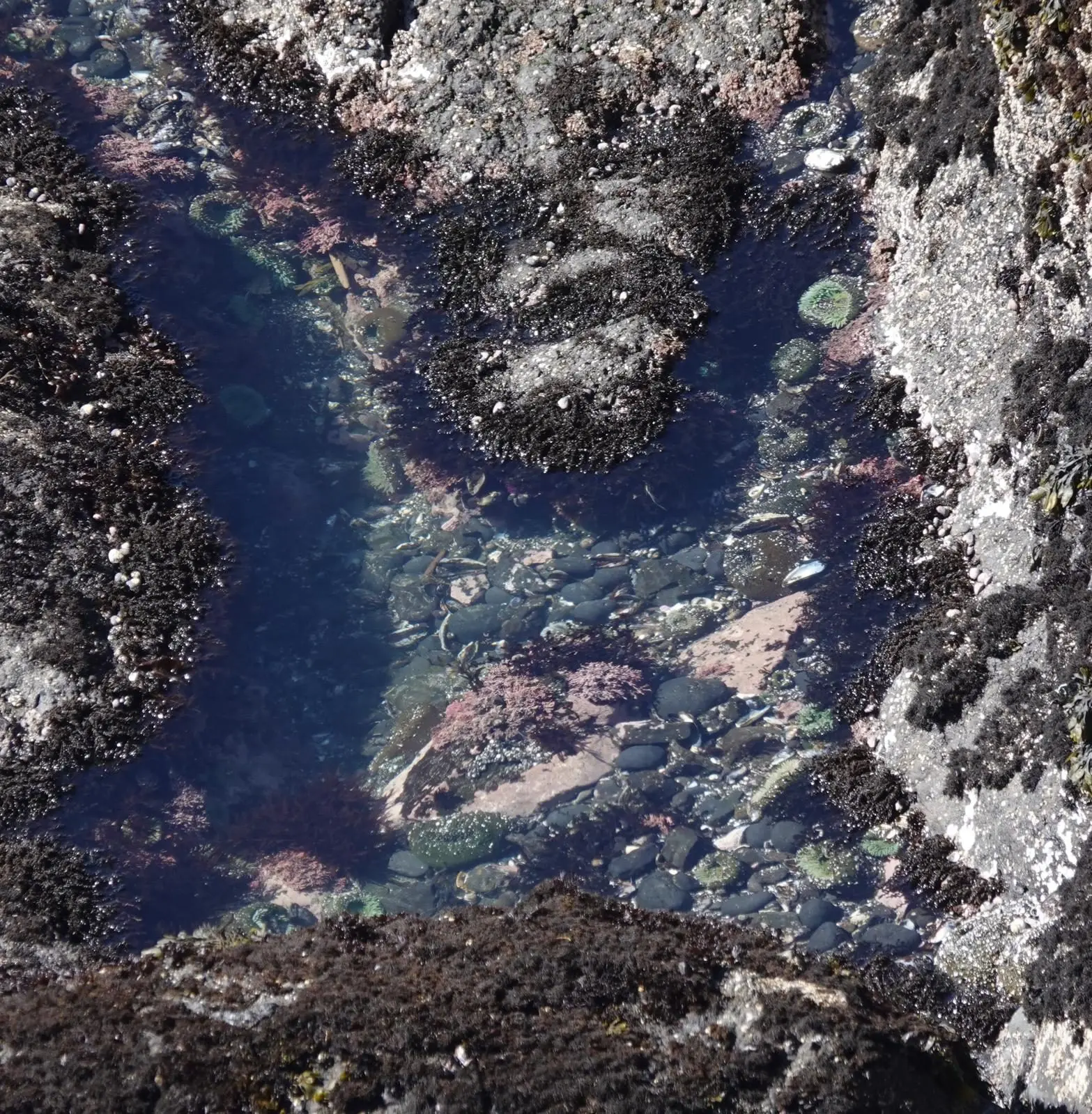
The air was a humid 97 degrees. I dove into the water and came up gasping for air, my limbs quickly turning crimson from the icy depths. The water was no more than 65 degrees, much colder than expected for early July. Vigorously, I swam to some nearby rocks and climbed out to thaw. The tide was receding, and below me a small tide pool was forming in the rocks. I watched as the barnacles made final attempts at procuring meals before being abandoned by the tide.
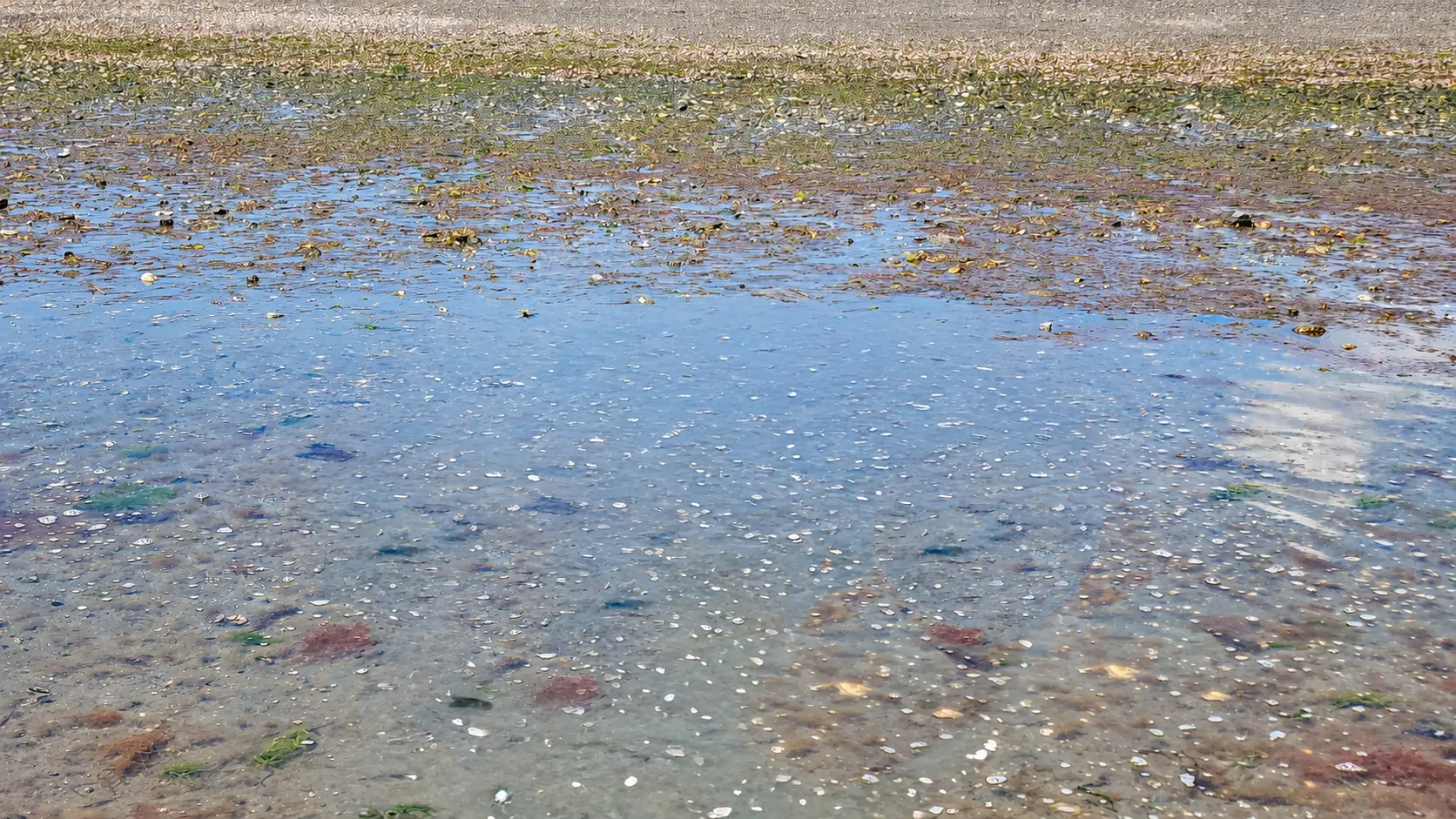
What a harsh reality barnacles, Balanus sp., and other tidepool creatures endure! They are stranded without water for six hours twice daily – left to bake in the summer sun or freeze in winter’s harsh winds, battered by waves and gales, scoured by sand and attacked by predators and pollutants. Yet, they flourish. These barnacles encrusted on the rocks start their lives as free-swimming organisms, adrift with other members of the plankton community on the ocean currents – avoiding predators, finding food, and remaining afloat until they settle to the bottom and become “pillars” of the barnacle community.
Finding suitable habitat, like rocks or other solid objects on which to attach, the young barnacles glue themselves down headfirst and secrete protective calcium carbonate shells. Here they remain throughout their lives, sweeping food into their mouths with their feet. (Scientists once looked at barnacle glue as a potential “super glue” of dentistry, but synthetic glues were more successful.)
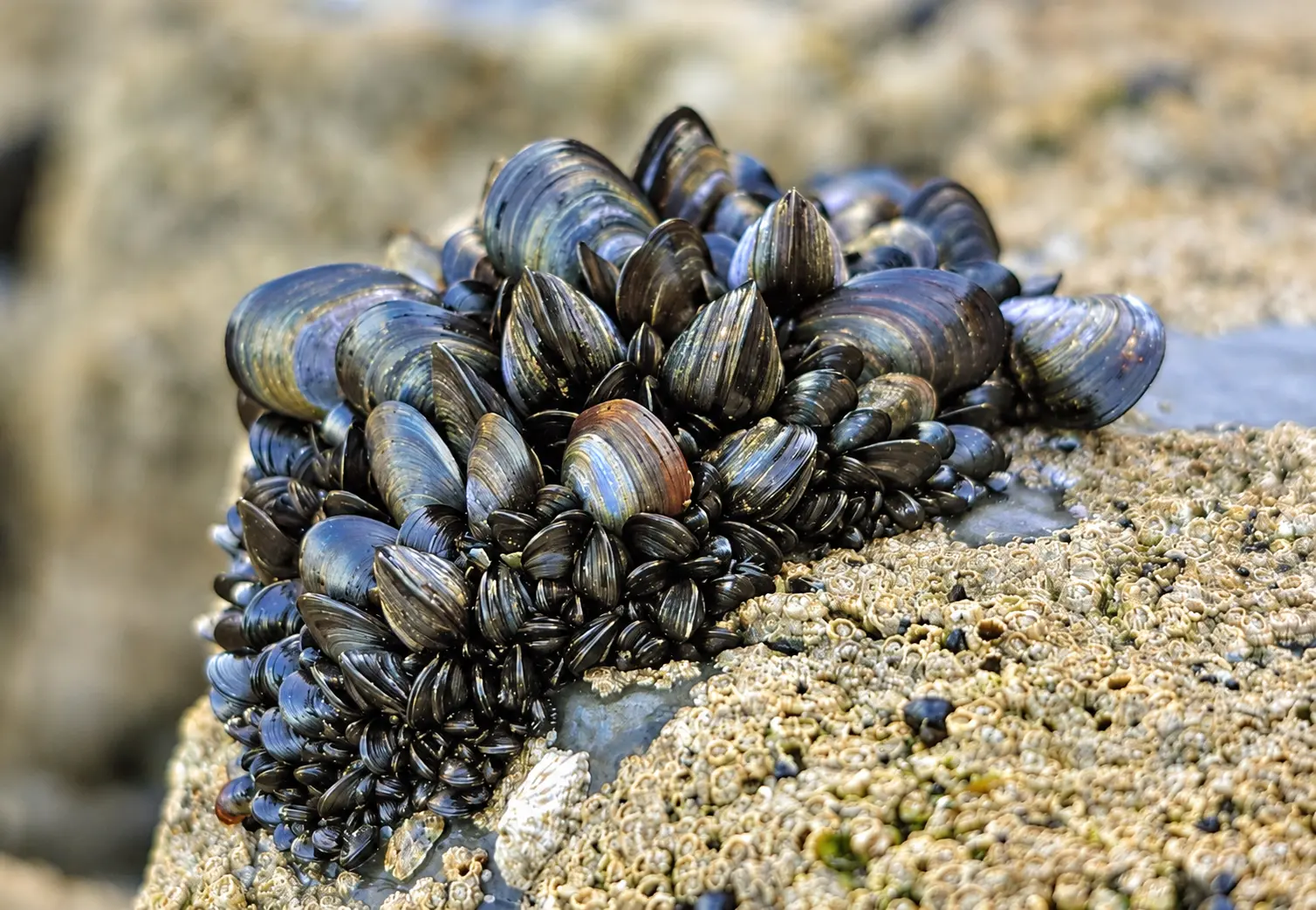
Blue mussels, Mytilus edulis, attach to one another and to rocks and other hard surfaces by secreting 20-60 special filaments called byssal threads that anchor them securely to a solid substrate. These threads help them to withstand the extreme conditions within a tidepool and can be stretched considerably before snapping. When the tidepool is full, the mussels open their shells and siphon seawater into their stomachs, sifting out plankton and other organic matter before expelling the filtered water. When the tide recedes, they close their shells and hold their breath, essentially, for 6 hours until the tide rises and seawater returns.
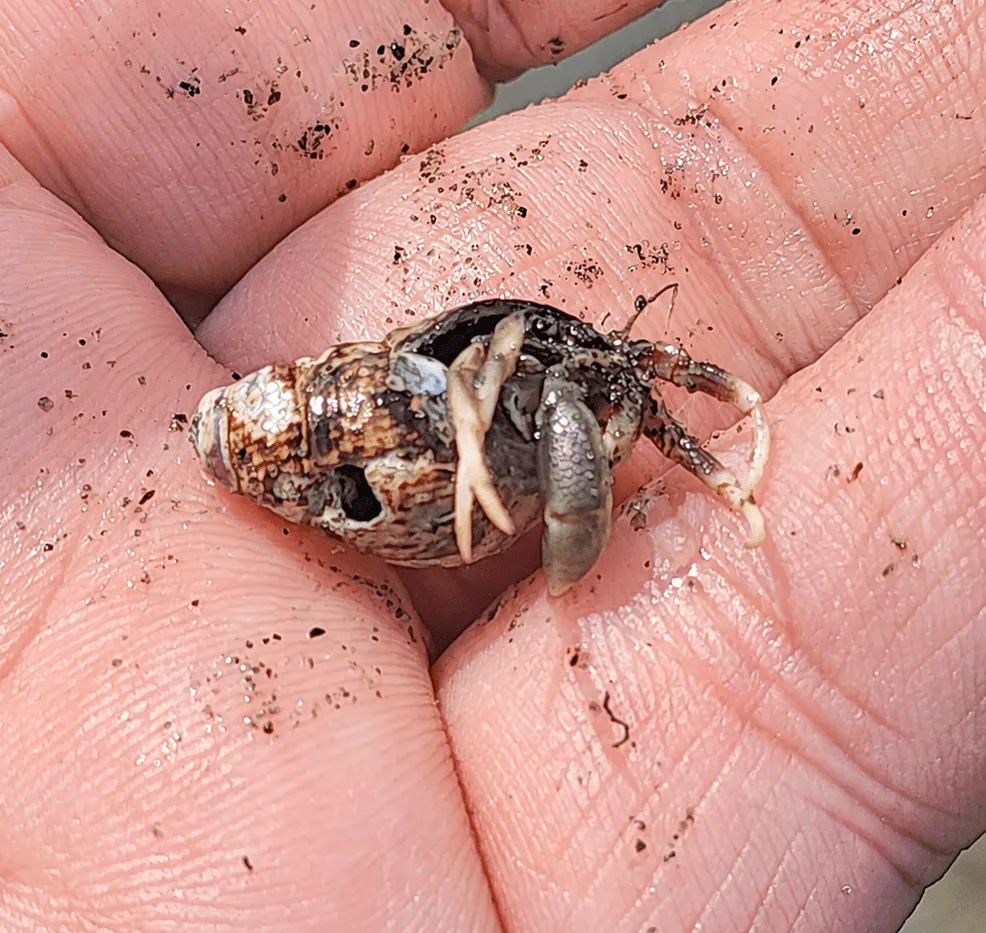
Blue mussels, shrimp, hermit crabs, and other species are also left in the waters of the tide pools. A common periwinkle snail, Littorina littorea, slowly grazes algae from the stones with its rasp-like tongue, called a radula. When the water is gone, it seals itself to the rock with mucus, withdraws its fleshy foot, and closes its attached, door-like, horny plate (operculum) to retain water and deter predators. Extra blood vessels in its mantle cavity also allow it to breathe air for short periods of time. The limpet, Acmaea sp., a conically shaped relative of the snail, excavates a cavity perfectly matching its shell shape. An algae grazer as well, it returns from feeding to its cavity before the tide recedes completely. How the cavity is relocated is still a mystery.
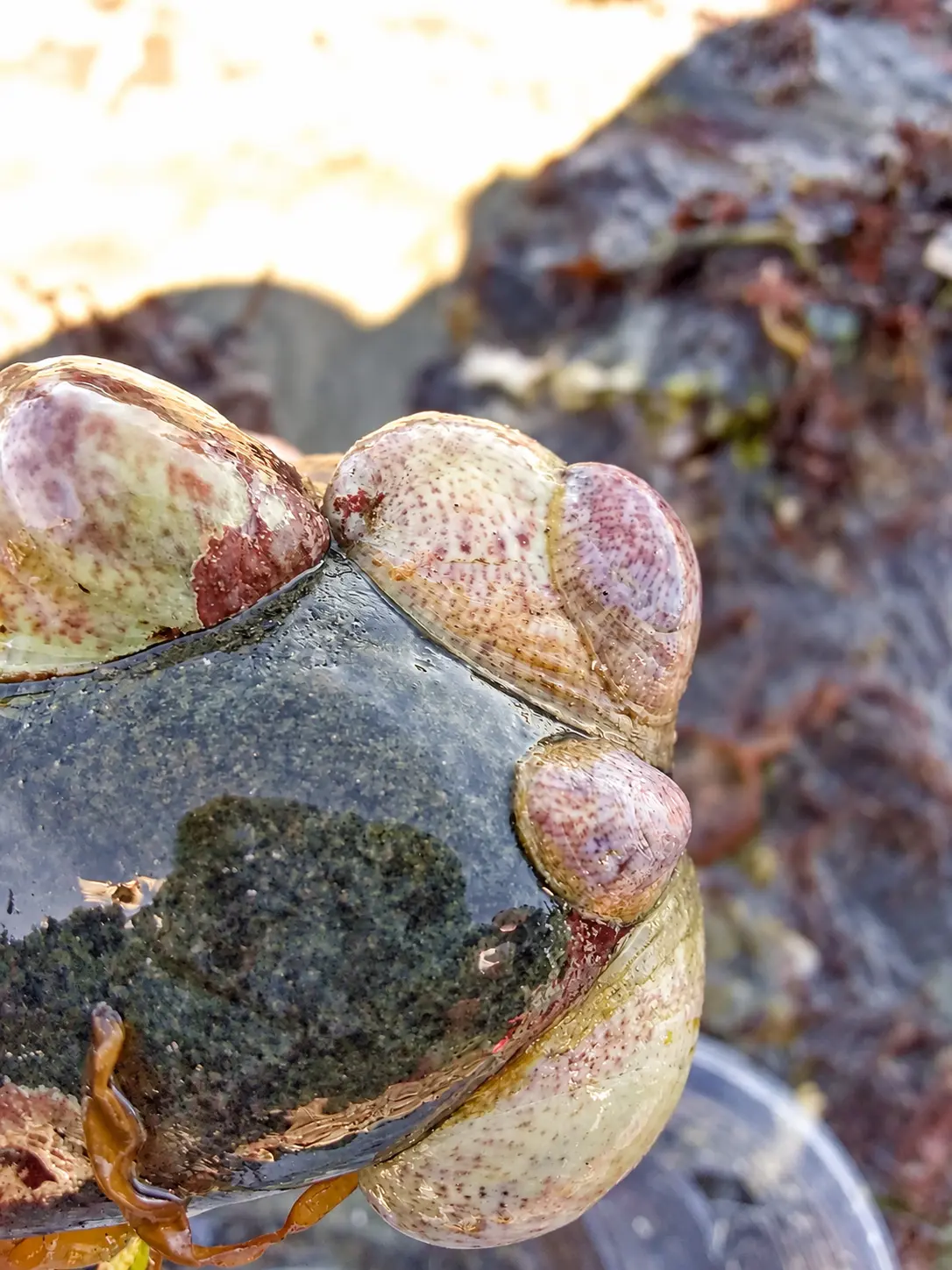
Slipper snails, Crepidula fornicata, are a type of plankton-eating snail also adapted to live in tidepools. They also start life as planktonic organisms before permanently attaching to rocks and other hard surfaces. Once secure, they use hairlike cilia on their gills to circulate plankton-rich seawater into their mouths. For ease of fertilization, other slipper snails will stack atop one another. Like many gastropods, slipper snails are hermaphrodites, they can be either male or female or both at the same time. Slipper snails exhibit sequential hermaphroditism; they all start out life as males, then change to females. Once a female, they don’t change back. Stacks of 5 or more are not uncommon. Those on the bottom are females; those on top, males, and those in the middle may be both or either.
Large waves can dislodge slipper snails from the safety of their shelter. Once they are separated from their base, the bottom snail is usually eaten leaving the others to the mercy of the waves. They are destined to end up on the beach. Some beaches in our area are carpeted with slipper snail shells brought in by storms.
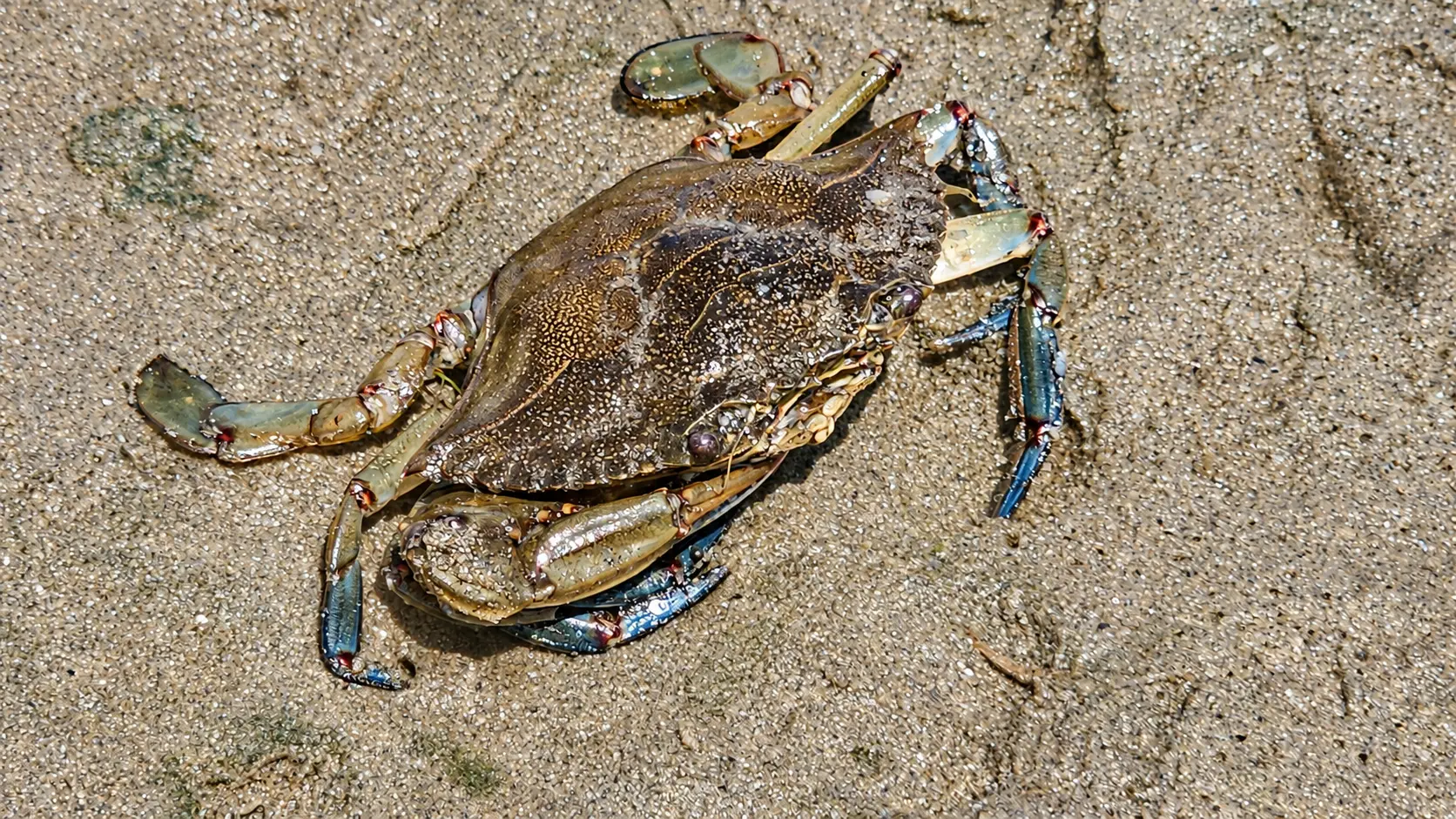
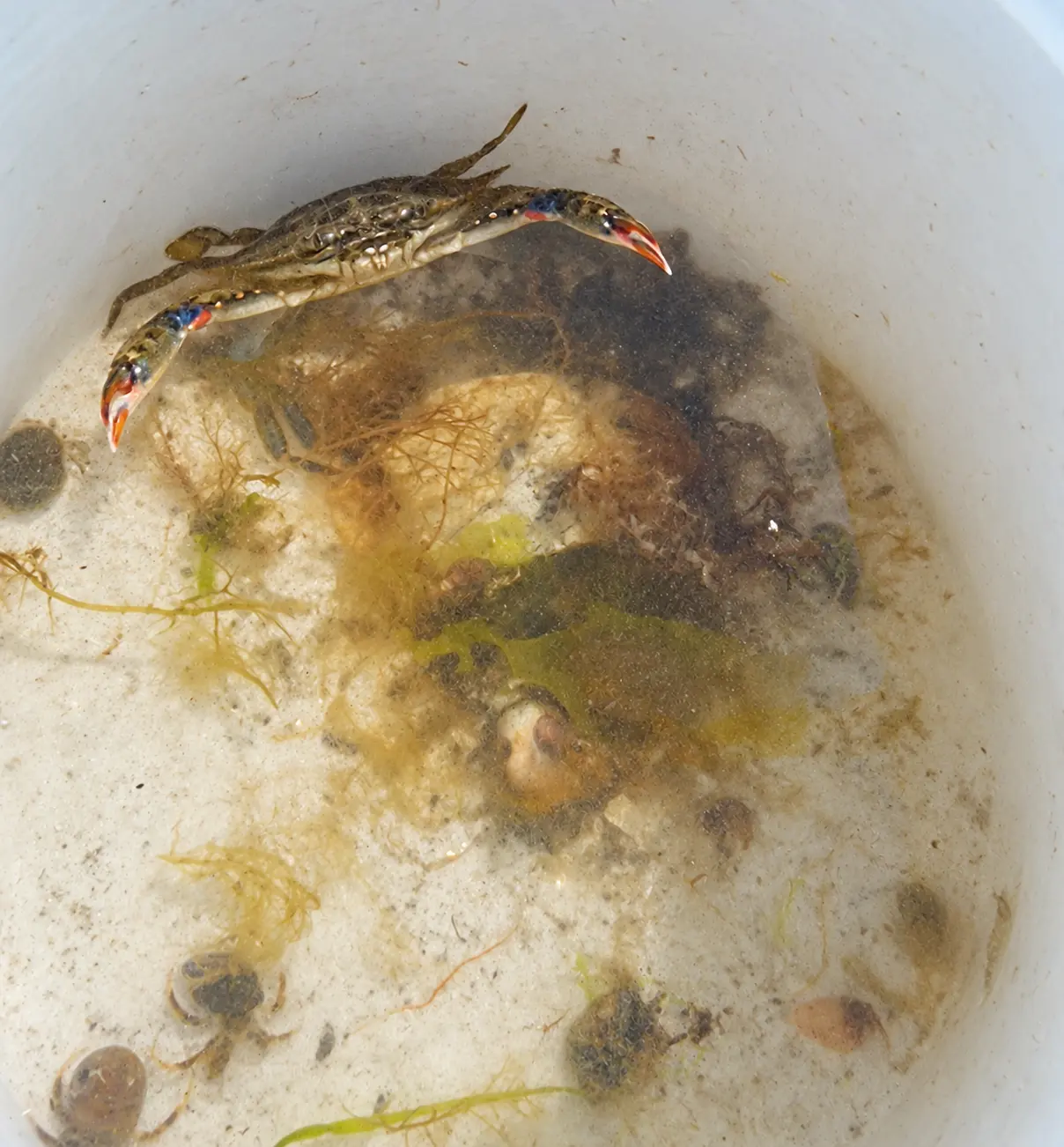
Young lobsters, blue, green, lady (calico), and other crabs come to the tidepools to molt. They shed their shells (exoskeletons), by popping them open and crawling out from within. They absorb water to increase in size before setting a new shell. While they’re soft, they’re vulnerable to being attacked by other predators, and must take care to conceal themselves within rock crevices, beneath the sand, or under seaweed, all while enduring the constant changes within their tidepool.
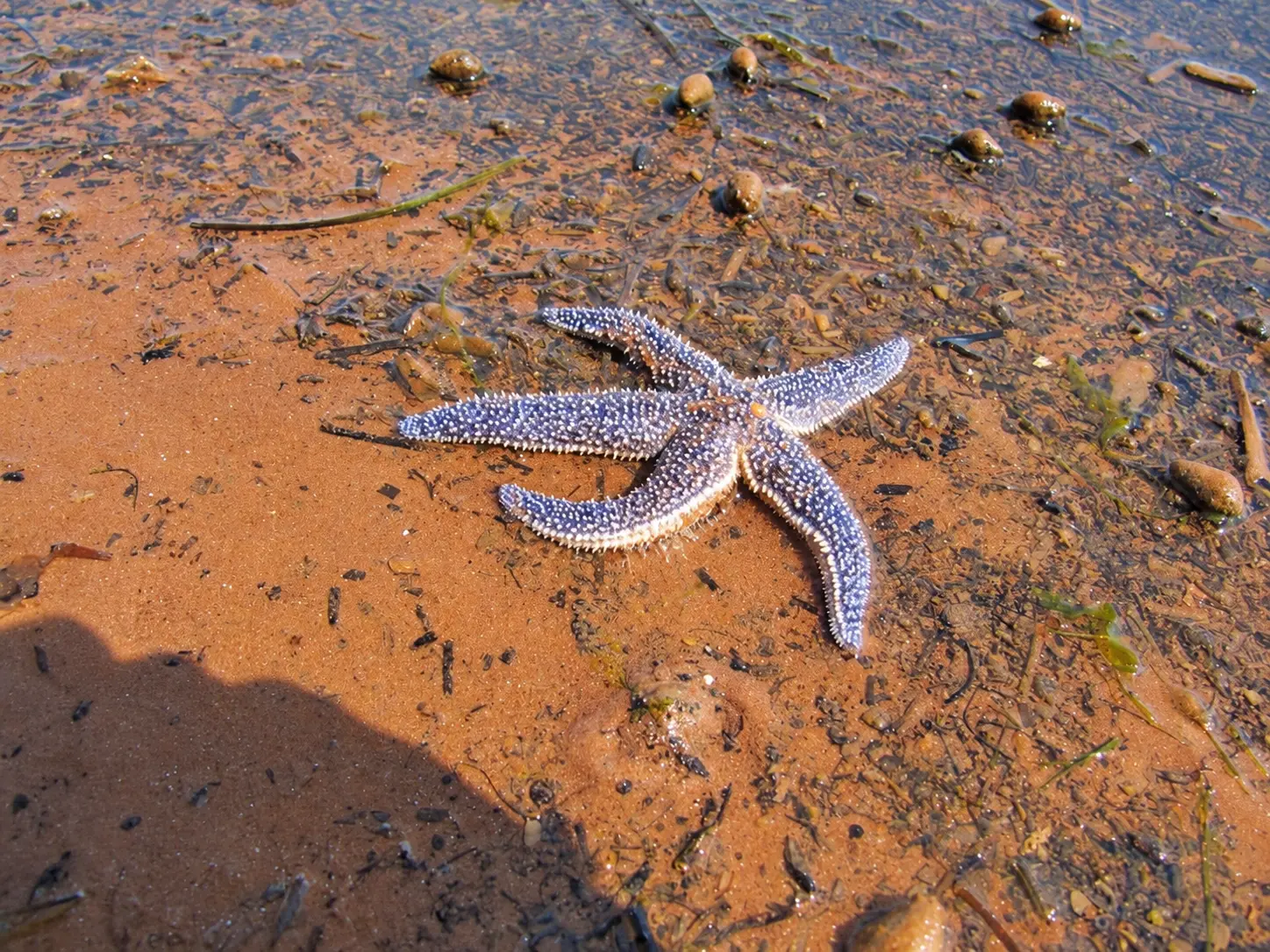
Within the tidepool, a common sea-star, Asterias forbesi, moves with rhythmic fluidity, gliding on myriads of tiny, hydraulically operated tube feet over the rocky bottom. Another does battle with a blue mussel, slowly prying the mussel’s shells apart with suction from its tube feet. If it secures an opening, it will evert its own stomach, secrete gastric juices and digest its prey. Shelter is sought beneath the moist seaweed when the sea-star is forsaken by the tide.
As the waves depart, the tide pool becomes an “island.” Its temperature, at first matching the ocean’s, begins to approach that of the air temperature. The change is often dramatic — the sweltering, 97-degree air will increase the tide pool’s temperature by tens of degrees, but in six hours the pool will again be submerged in 65-degree water. As water evaporates, the pool also becomes more saline, extremely so on hot days. If it rains, the salinity decreases. Waves and sand also have an effect, regularly battering and scouring the pools and their inhabitants. These are the conditions tolerated by the creatures living between the tides.
Each intertidal species has developed mechanisms to survive in a harsh, drastically fluctuating environment, whether by means of securing hold, preventing desiccation, avoiding predation, or obtaining oxygen. The variety of adaptive mechanisms is truly amazing. I still look at barnacles and marvel at their ability to survive.
Frank Gallo is the Senior Naturalist at the New Canaan Nature Center located at 144 Oenoke Ridge, and the author of Birding in Connecticut – a comprehensive bird-finding site guide. He can be reached at Fgallo@newcanaannature.org. For more on the New Canaan Nature Center, visit www.NewCanaanNature.org.