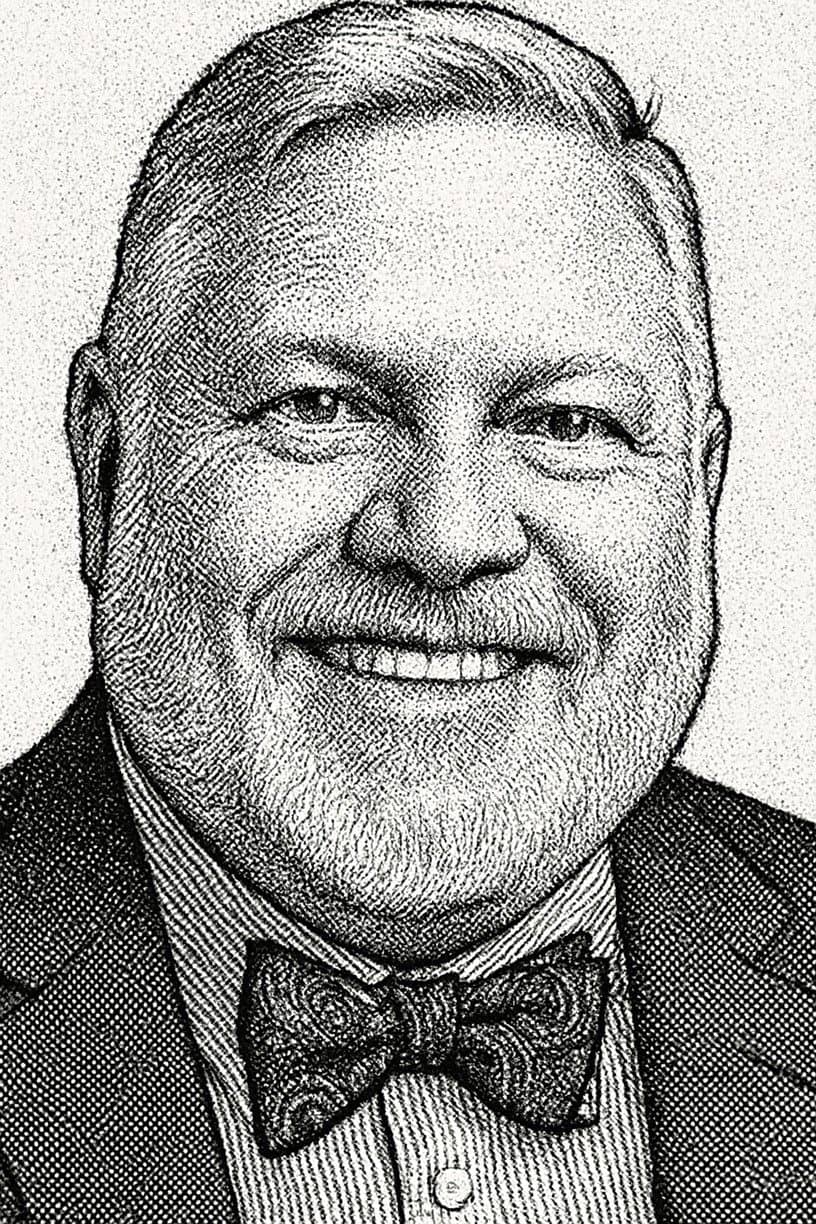
By Russell R. Barksdale, Jr.
By the time this column goes to print, one hopes the federal government is open again—and that at least two responsible adults in Washington have managed to sit across the table and simply do their jobs.
For those of us in healthcare, shutdowns are political fodder—but for patients, they’re anything but abstract. We don’t get continuing resolutions. Healthcare providers are open 24 hours a day, seven days a week, 365 days a year, because illness doesn’t wait for Congress to balance a ledger. Through pandemics, hurricanes and political stalemates, nonprofit providers like ours keep doing what we’ve always done: taking care of people.
But lately, healthcare feels less like an enterprise and more like a stage play — one where the script is written by people who don’t understand the economics of performance. Let’s call it Political Theatre: The ACA and the Art of Paying for It.
The Affordable Care Act (ACA) helped. It expanded coverage to millions, ended exclusions for pre-existing conditions, and extended preventive care to people who hadn’t seen a doctor in decades. As of 2025, more than 24 million Americans are enrolled through ACA marketplaces—up 113% since 2020. Roughly 93% receive federal subsidies, and about 60% pay little or nothing in premiums, thanks to expanded tax credits.
That’s a public-policy success story on one level: fewer uninsured, more preventive care, better outcomes. But it also created an economic pressure cooker for the system that delivers that care and those that pay for it. Regrettably, it has fallen on the back of those healthcare providers who operate under regulated reimbursement rates that never keep up with inflation.
Healthcare providers are now operating in a world where the vast majority of patients—whether covered by the ACA, Medicare Advantage, or Medicaid—don’t pay the full cost of care, and where government-set reimbursement rates frequently fall short of the actual expense of providing it.
Medicaid reimburses providers, on average, about 73 cents for every dollar of care delivered. Medicare rates hover just above cost. Commercial insurers are asked to make up the gap—where they can. It therefore becomes an added tax on employers who offer their employees competitive healthcare coverage. The math, unsurprisingly, isn’t sustainable.
Conservatives are right to worry about the fiscal sustainability of subsidized coverage, and progressives are right to argue that access to healthcare shouldn’t depend on one’s tax bracket. But both sides have ignored a central truth: access without adequate funding isn’t equity—it’s illusion.
Meanwhile, Medicare Advantage—the “managed” portion of the senior market—now covers roughly 34 million Americans, more than half of all Medicare beneficiaries, but unlike traditional Medicare, Medicare Advantage must generate healthy profits to pay their investors and stockholders. In theory, MA was designed to improve care coordination and efficiency. In practice, many providers now describe it as a reimbursement labyrinth in which delayed authorizations and denials too often substitute for cost control.
The broader consequence is structural imbalance. Healthcare providers, especially nonprofits, are carrying a growing share of uncompensated or undercompensated care. Their margins are shrinking, not because of inefficiency, but because the system rewards coverage expansion while underpricing the services required to sustain it.
During the last government shutdown, funding for key safety-net programs froze overnight. Yet our healthcare providers remained open. Nurses didn’t stop showing up. Surgeons didn’t cancel procedures. Healthcare workers did their jobs while Washington debated whether to do theirs.
That’s the paradox of American healthcare: an industry that operates continuously on mission while policymakers operate episodically on politics.
The ACA proved that coverage expansion is achievable, but not fiscally sustainable. That requires confronting the uncomfortable arithmetic of healthcare finance — a shared recognition that the true cost of care must be paid by someone, and that providers cannot indefinitely subsidize a system that refuses to value its own labor.
Healthcare can’t remain a moral obligation funded like a temporary program. If access is a right, it must be funded responsibly. If it’s a market, it must be priced transparently. What it cannot be is both free and high-quality at the same time without fiscal discipline.
So while Washington’s actors rehearse their next act, healthcare providers will keep the lights on. Because in this business, the show doesn’t stop. But it would be nice if the policymakers remembered who’s really footing the bill when the curtain rises.
Russell R. Barksdale, Jr., PHD, MPA/MHA, FACHE President and CEO Waveny LifeCare Network