By Frank Gallo
I like coffee. I drink a lot of it, and luckily, my travels have taken me to many countries where coffee is grown from Jamaica’s Blue Mountains to the highlands of Columbia, Guatemala, and Costa Rica. I’ve seen coffee grown in rich mountain forests teaming with birds and other life, and in sun-soaked plantations devoid of nearly all but the coffee. The difference between the two coffee cultivation methods is striking in terms of biodiversity. Why such a difference? Grap a cup and let’s dive in.
What is coffee?
Coffee, specifically (Coffea arabica), is a small shrub thought to originate in Ethiopia. It grows predominantly in the shade of a forest tree canopy, typically between 2,600ft and 6,550ft above sea level. Coffee is grown in more than 50 countries within a latitudinal band between 25°N and 30°S of the Equator known as the “Bean Belt that has the ideal climate for growing coffee. Hawaii is the only state that produces coffee commercially.
Although there are more than 130 species and many varietals and cultivars, primarily two are grown commercially, Arabica, and Robusto (C. canephora), and account for roughly 70% and 30% of global coffee cultivation, respectively. More sun tolerant Robusta coffee is from the African Congo and generally considered lower quality coffee than Arabica.
What’s the difference between shade- and sun-grown coffee?
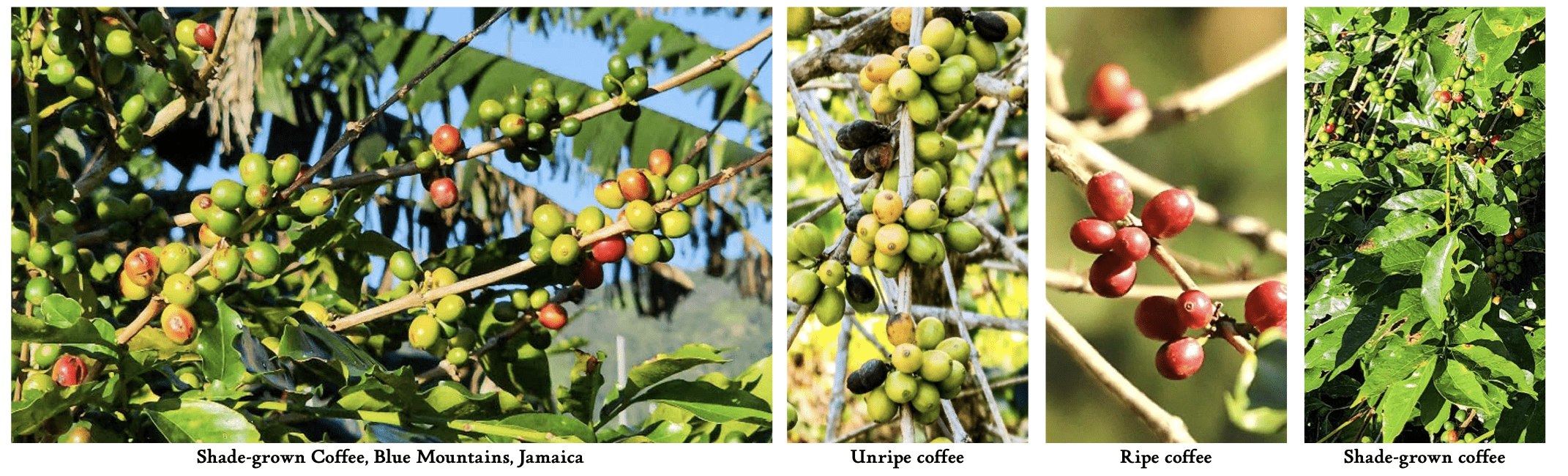
Conventionally, coffee is cultivated under a native tree canopy in full to moderate shade, with some forest understory cleared for farming, but still retains a diverse plant and animal community.
In the mid-1970s, the U.S. worked with Costa Rica to develop sun-tolerant Arabica coffee, partly in response to leaf rust that attacks coffee, and to increase production to meet growing demand; coffee grown in full sun ripens faster and has higher yields than coffee grown in shade. USAID and local governmental agencies convinced many farmers to adopt sun-tolerant coffee cultivation, leading to a shift in coffee production practices worldwide, and the loss of roughly 2.5 million acres of rainforest in Central America. Although sun-grown production yields increase, there is a downside. Sun-grown coffee cultivation is more susceptible to erosion and may be unsustainable. It requires the substantial use of pesticides, fertilizer, and other chemicals, which often negatively impact on the environment, and small farmers who cannot afford them nor protect themselves from their use. Coffee grown in sun is a monoculture; not much else lives in a sun-grown plantation.
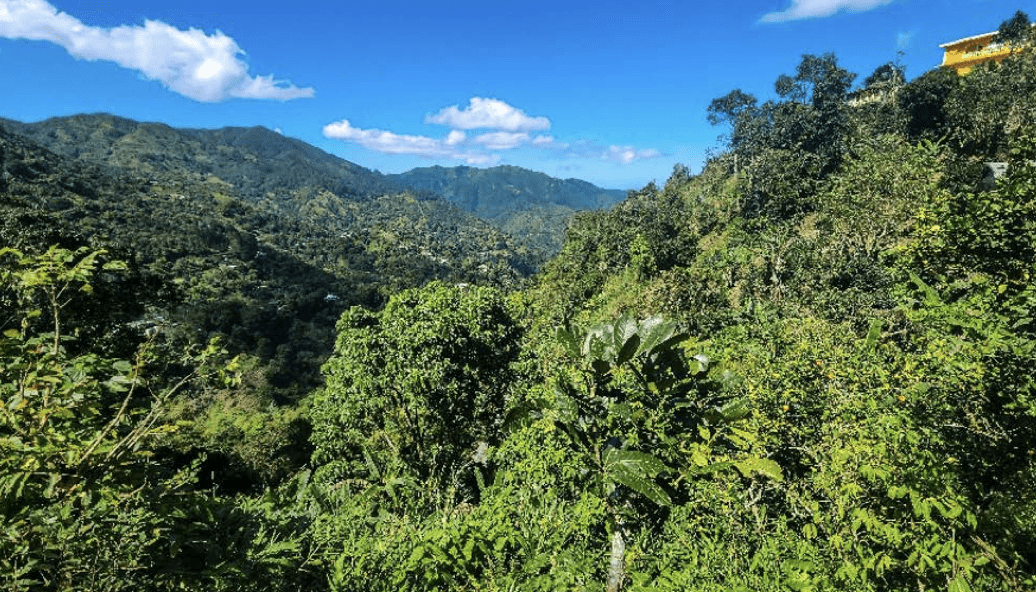
In Contrast, shade-grown coffee plantations provide important habitat for a wide range of mammals and native and migratory birds. As many as 184 bird and 28 mammal species are known to utilize them. Shade-grown farms also support pollinators, such as bees, butterf lies, moths, and bats, and maintain populations of reptiles, amphibians, and invertebrates that help control coffee crop pests, reducing the need for chemicals. The forest canopy helps to filter and retain water mitigating drought conditions, stores carbon, stabilizes and enriches the soil, providing soil nutrients from leaf decomposition, reducing or eliminating the need for fertilizers.
With increased public awareness, the demand for “specialty” shade-grown and organic coffees has continued to increase dramatically in the US over the past few decades. However, the area of land used for non-shade Arabica and Robusta coffee has grown at a much faster rate. Sun-grown Robusta cultivation has exploded in Asia to meet global demand. Robusta is often mixed with Arabica coffee to make instant and budget coffee blends to lower costs and provides a more balanced taste. It is used in espresso because of its stronger flavor, and in energy drinks due to its higher caffeine content. Vietnam, the world’s second largest coffee producer (17%), is the leading grower of Robusta.
Most (80%) of the worlds Arabica beans, and just over half the world’s coffee are grown in Latin America, with Brazil and Colombia, the planet’s first (40%) and third (8%) largest coffee producers, respectively, accounting for most of it.
Unfortunately, with the trend toward sun-grown coffee cultivation to meet increasing demand, coffee farming is driving deforestation, which research shows causes decreased rainfall that may lead to drought, negatively affecting coffee production, communities, and farmers.
According to the organization Coffee Watch, “more than 1,200 square miles of forest were cleared for coffee cultivation in Brazil’s coffee-growing regions between 2001 and 2023,” creating what their director, Etelle Higonnet, called “a Honduras-sized hole in Brazilian forests.” Adding, “overall, in areas with high concentrations of coffee cultivation, more than 42,000 square miles of forest has been felled either directly for coffee production or indirectly for infrastructure.”
Climate change is also affecting farmers worldwide due to rising temperatures, irregular rainfall, and periods of severe drought which negatively impact coffee yields, depressing the income of often impoverished farmers according to Fairtrade America. Recently, replanting shade trees in Kenya has helped to mitigate some of these negative effects.
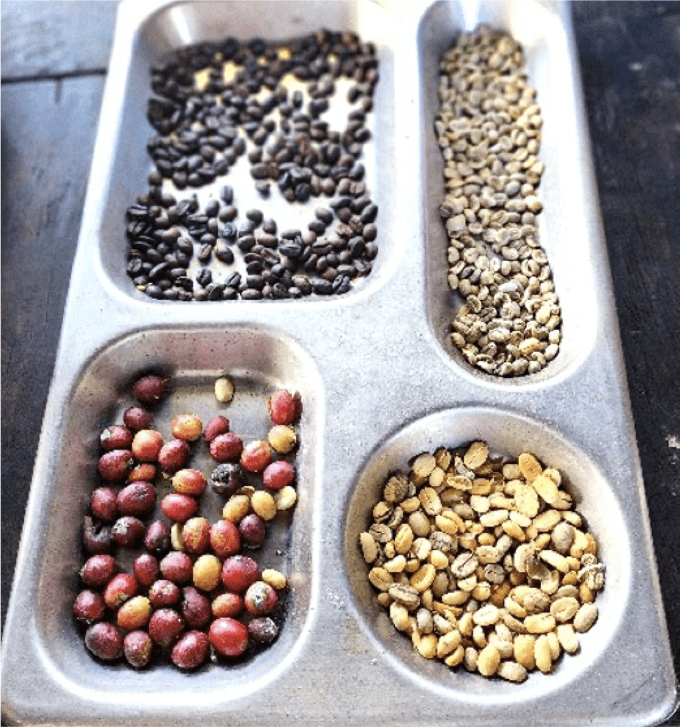
What does shade-grown really mean?
There are different levels of complexity to shade grown plantations:
Diverse Shade or “rustic” coffee is planted within native forest with at least 40% canopy cover. It produces lower coffee yields, but has the least negative environmental impact, with limited pesticide or other chemical use. Most coffee in India is grown this way.
Traditional polyculture, much like rustic planting, also utilizes original forest, leaving a varied native canopy intact. Other beneficial plants used for medicine, food (nut and fruit trees), fuel, or lumber, are planted alongside the coffee.
Commercial polyculture creates a two-level system, coffee and canopy, by removing more foliage, epiphytes, and trees to add more coffee and valuable tree varieties, thus lowering diversity to increase coffee yields. Fertilizers and pesticides may be necessary.
Scant shade, or shade monoculture uses 1-2 pruned commercially valuable shade trees, such as banana, cacao, or mahogany, above more densely planted coffee. Such farms focus on market-based products. Chemicals are often required.
Unshaded monoculture coffee is grown in full sun without a canopy to increase yields to meet growing demand but needs high inputs of chemicals at a greater ecological cost.
Certifications
The highest ecological coffee standard is the SMBC (Smithsonian Migratory Bird Center) Bird Friendly® Seal, which certifies that a coffee is shade-grown organic and bird friendly (Min 40% shade cover).
Another environmentally friendly certification is the Rainforest Alliance® seal which requires farmers to use sustainable farming practices to protect forests, wildlife, water, and soil (Min15% shade cover).
There are Organic certifications, such as USDA, which require farmers not to use pesticides and other toxic chemicals protecting groundwater and farmer’s health.
And there’s Fairtrade®, which trains and aids farmers in producing crops in a responsible and sustainable way. Many, but not all of which grow organic coffee in shade, but not always.
Where is shade-grown coffee grown and where can I buy it?
Although it’s difficultto find precise percentages for every country, there are several countries that produce predominantly traditional shade- grown and often organic coffees, including Ethiopia, Guatemala, Honduras, India, and Nicaragua. Hawaiian coffee is usually shade- grown. Other countries that produce large percentages of shade-grown or organic coffee include Peru, Honduras, Colombia, Kenya, and Mexico, especially in the southern states.
Five Bird Friendly® coffee brands certified by SMBC are Java Planet, Royale Coffee Company, Birds and Beans Coffee, ABA (American Birding Association) Songbird Coffee, and Dean’s Beans Bird-Friendly® Coffee. Other brands are also available. Bird Friendly® coffee generally commands a premium price but also helps protect wildlife and farmers.
Locally, Zumbach’s Gourmet Coffee in New Canaan has a variety of delicious organic coffees and is collaborating with New Canaan Nature Center to create a shade-grown organic Nature Center blend.
Many Wild Birds Unlimited and Whole Food stores sell Bird Friendly® coffee, and The Audubon Shop in Madison offers a specialty shade-grown organic Costa Rican coffee. Aldi’s sells two inexpensive whole-bean Honduran and Peruvian organic coffees.
If you prefer decaffeinated coffee, Costco sells premium whole-bean Swiss water- processed shade-grown organic coffees. They are sold in bulk online from Ruta Maya, and Mayorga, along with their Kirkland organic Columbian (also available in stores).
Aside from the fact that shade- grown organic coffee is more environmentally friendly and safer for farmers, it tastes better. Because it takes longer for the fruit to mature on the plant, the beans develop a higher oil and sugar content and thus make a more flavorful brew. Give it a try and see what you think. A little change in your morning routine can make a big difference.
Frank Gallo is the Senior Naturalist at the New Canaan Nature Center, where he leads environmental education programs, wildlife research, and citizen science initiatives that connect the community to the natural world. A seasoned birder, field biologist, and educator, Frank brings decades of experience in conservation and environmental outreach across Connecticut.