By Peter Barhydt
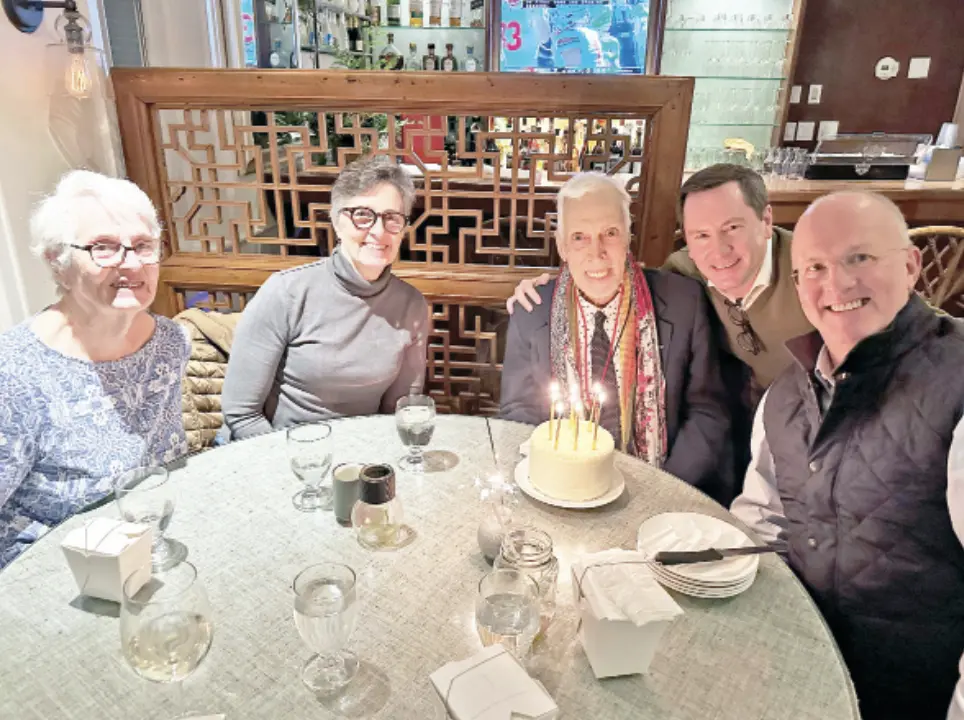
Tom Nissley, a man of quiet intellect, unshakable grace, and restless civic purpose, moved through the worlds of ministry, psychotherapy, preservation, and the arts with the same guiding instinct: to tend to what others might overlook and to leave each life, building, and conversation stronger than he found it—died on January 10 at his home in New Canaan, reportedly in his sleep. He was 92.
For more than sixty years, Mr. Nissley devoted himself to the patient, often quiet work of community life: preserving a saltbox, attending a dress rehearsal, offering council in a therapy room or over coffee. He was that rare figure in town affairs: omnipresent but never overbearing, learned but never self-important, generous but never performative.
“He wasn’t an activist so much as a supporter,” said Kevin Moynihan, New Canaan’s former first selectman. “He was deeply engaged, but never strident. He was always connecting ideas, people, and places. That’s how his mind worked.”
A Life Beyond the Pulpit
Thomas William Nissley was born on Jan. 1, 1934, in Lancaster, Pennsylvania. He graduated from Franklin & Marshall College in 1955 with a degree in English and business and went on to earn a Master of Divinity from Princeton Theological Seminary in 1958. He was ordained that year into the Presbyterian ministry.
His early career brought him to churches in Virginia and Pennsylvania before he joined the staff of the First Presbyterian Church of Stamford—known locally as the “Fish Church”—in 1964. There, he served for more than a decade as associate pastor and director of all programs, overseeing educational initiatives and civic outreach as well as Sunday worship.
“He had a way of making institutions feel human,” Mr. Moynihan recalled. “He wasn’t loud, he wasn’t ideological. He just showed up prepared and thoughtful.”
Even as he worked within the Church, Mr. Nissley was drawn to a broader canvas. He helped develop a landmark database analyzing pastoral effectiveness, later studied Christian worship at the University of Neuchâtel in Switzerland, and participated in a 1970 Geneva symposium on the dating of Easter, co-sponsored by the World Council of Churches and the Vatican.
From Theology to Therapy
In the mid-1970s, Mr. Nissley transitioned into psychotherapy, founding the Ridgelea Institute in 1975. Over nearly five decades, he trained and mentored therapists in Transactional Analysis and Gestalt theory, hosting colleagues from across the U.S. and as far as Germany and South Africa. He believed deeply in the power of family systems therapy and frequently lectured on the hidden dynamics within households.
“Tom was almost like a psychiatrist to me,” Mr. Moynihan said. “We’d meet for lunch once a month when I was in office—and he would listen carefully, ask good questions, and offer insight. He had that pastoral gift, even in everyday conversation.”
Preservation as Civic Practice
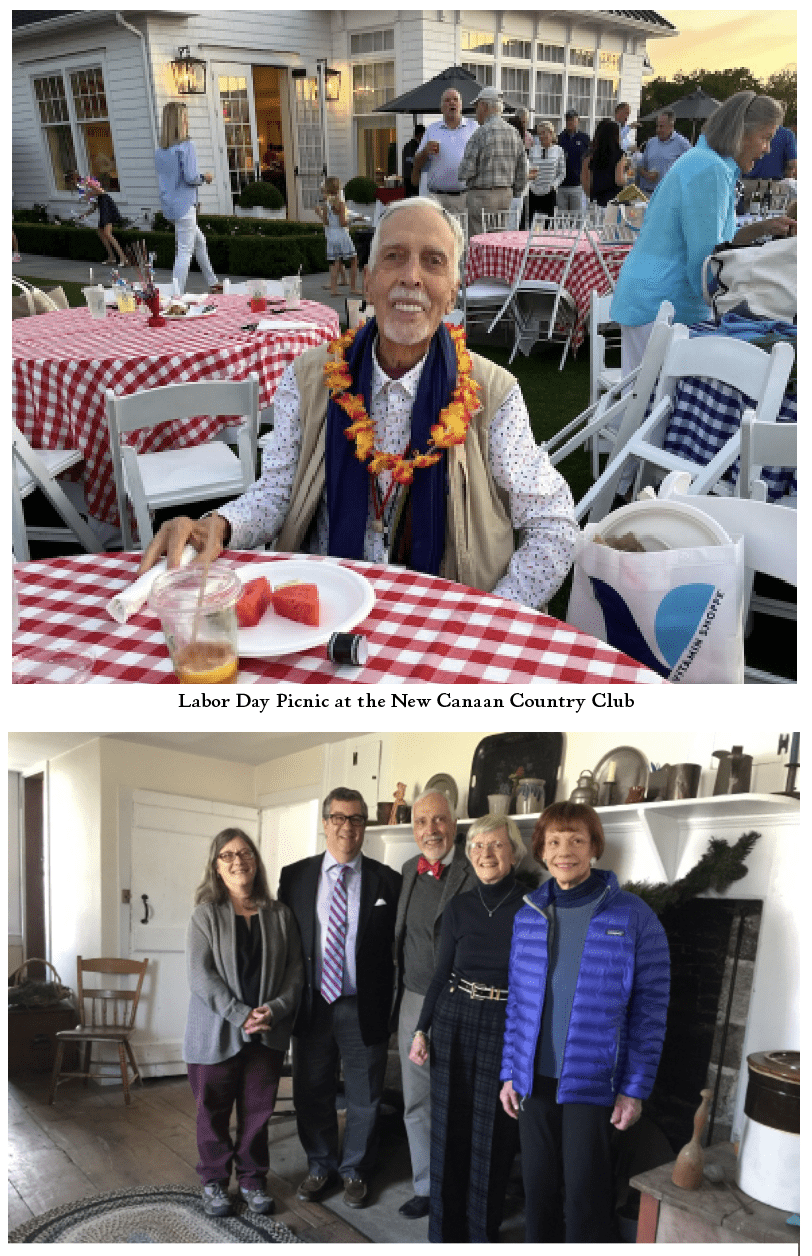
Though he never carried the title of architect, Tom Nissley helped shape the physical landscape of New Canaan and beyond. He served for more than a decade on the board of Preservation Connecticut, was a trustee of the New Canaan Museum and Historical Society, and chaired the Historic District Commission.
His preservation work was not arm’s length. When the 1735 Ferris Hill House was bought by a developer, Nissley and his then-wife Sandy purchased it themselves, placed a permanent conservation easement on the property, and sold it only to someone who would honor its legacy.
“He put a preservation easement on it so it could never be torn down or significantly altered,” said Chris Schipper, chair of the New Canaan Community Foundation. “It cost him dearly. But that’s who Tom was. Preserving the house mattered more.”
Another example: The Grupes Brown house on Valley Road in New Canaan, slated for demolition by the First Taxing District. Mr. Nissley attended meetings, lobbied officials, and—together with his then-wife Sandy—provided critical financial support that made the eventual acquisition possible.
“You don’t try to save a property unless you have backing,” Mr. Schipper said. “Tom and Sandy were the backing.”
He also supported the acquisition of the Fowler property, which now connects Silvermine to Audubon land. He helped launch the master plan for restoring Bristow Park, the nation’s third oldest bird sanctuary. “He’d send you a picture of a flower or a bird and say, ‘What a great world we live in,’” Mr. Schipper recalled.
Mr. Moynihan agreed. “Over the last 15 years, no major land trust or preservation project really moved far without Tom’s support. In many cases, he was the driving factor.”
A Theater Seat, Occupied
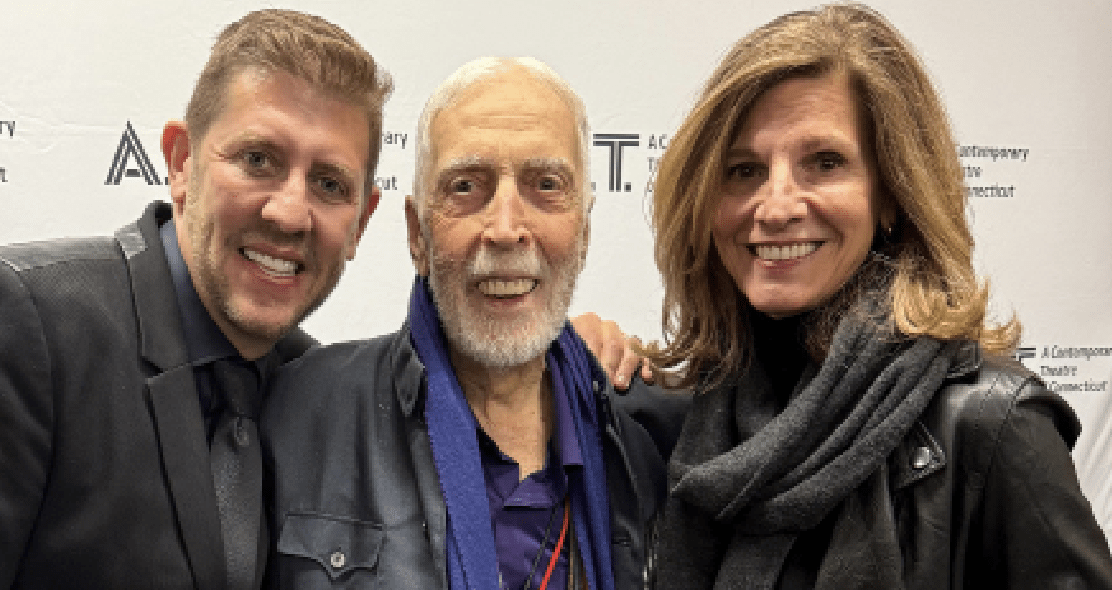
Parallel to his preservation work ran a lifelong devotion to the arts—particularly theater. For more than 35 years, Mr. Nissley reviewed plays, musicals, and opera across the region. He published What to Do, and later Ridgelea Reports on Theatre, and was a longtime member of the Connecticut Critics Circle. In recent years, he served as a regular contributor to the New Canaan Sentinel.
Mr. Nissley was a regular attendee of the Sentinel weekly community coffees at the Lapham Community Center, where he gave theatrical dispatches with a critic’s insight and a supporter’s heart. “He brought the magic of the stage to life with wit, insight, and a true passion for the arts,” read the Sentinel’s “NICE List” tribute in 2025. “He proved that storytelling, history, and community go hand in hand, keeping New Canaan as wonderful as ever.”
Fellow theatergoers noted his tact. “He was always encouraging,” said Chris Cluett, a friend who often accompanied him to shows. “Even if he thought a performance didn’t quite land, he’d focus on what worked. I don’t think I ever heard him speak poorly of a show.”
He was a fixture at the Powerhouse Theatre, usually in the third row, and was often introduced to cast and crew as the house’s most devoted audience member. “He stayed after every performance,” said Patricia Spugani of Town Players of New Canaan. “He talked to the actors; he made people feel seen and appreciated. We all loved Tom’s sincere enthusiasm for live performances.”
Tom Butterworth recalled Mr. Nissley’s energy and distinctive flair. “He had more energy than I did. And he dressed with such individualized panache—if there was a cause, he was wearing the ribbon for it. He was a role model for aging with curiosity and joy.”
A Mind at Home
Mr. Nissley brought the same intentionality to his homes that he brought to his professional life. He once lived in a landmark yellow house on Buttery Road and later in a modernist home near the center of town, designed by architect Jim Evans, its glass walls opening onto a wild meadow garden. “Tom lived preservation,” said John Engel. “It wasn’t theoretical. It was how he chose to live.”
He continued working as a real estate agent well into his 80s, specializing in historic and architecturally significant properties. He was named Realtor of the Year by the New Canaan Board of Realtors in 2008.
“Selling a house wasn’t a transaction to him,” said Mr. Engel. “It was stewardship.”
A Civic Companion
Though he held no elected office, Mr. Nissley shaped New Canaan civic life with quiet force. He attended meetings, hosted conversations, built coalitions, and introduced neighbors who would otherwise never have met. He mentored. He advised. He encouraged.
“I regarded my relationship with Tom as one of friendship,” said Mr. Moynihan. “When I ran for office, he was one of my first dozen supporters. He believed in showing up—and in staying. He was a presence. A listener. A friend.”
A Celebration of Life will be held Saturday, January 17, at 1 p.m. at the First Presbyterian Church of New Canaan, with a reception to follow in the Common Room.
In a town shaped as much by what it has saved as by what it has built, Tom Nissley’s legacy endures—in preserved homes, protected lands, reviewed performances, mentored leaders, and well-timed words offered across a table, after a show, or in the fourth row as the lights went down.