By Kate Dzikiewicz
Over the past century, Connecticut’s forests have endured repeated waves of invasive pests and diseases. Dutch elm disease, chestnut blight, and other destructive pathogens have wiped out once-dominant tree species, permanently reshaping the composition and character of our woodlands. Today, our forests face another serious threat: Beech leaf disease.
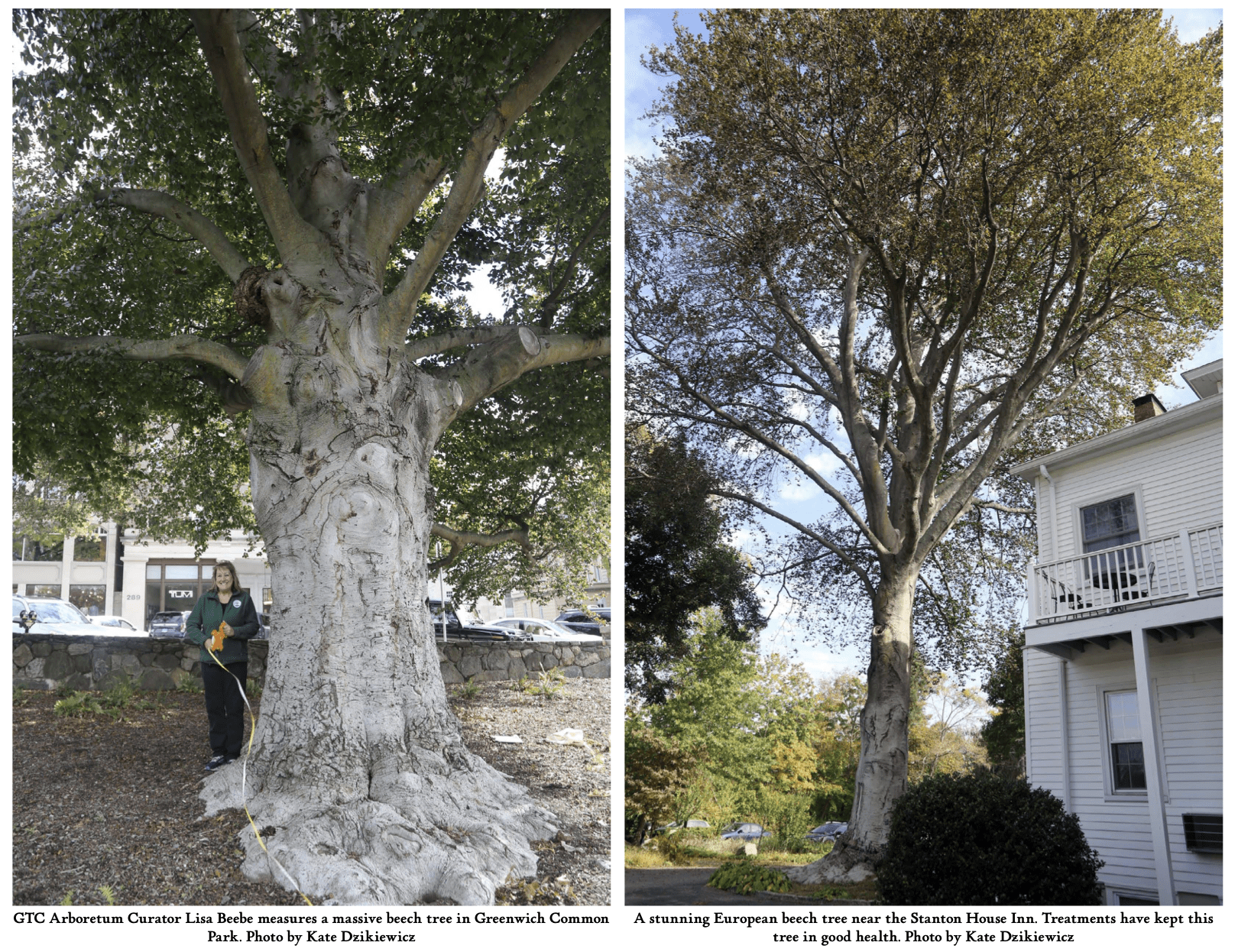
American beech trees are a foundational species in many Connecticut forest ecosystems and among the most common native trees in our region. Their nuts provide a rich source of protein and fat for wildlife, including squirrels, wild turkey, black bears, and numerous bird and small mammal species. In good health, beech trees can live an extraordinary 300-400 years and when grown in open areas such as parks and yards, their trunks may reach two to three feet in diameter. Connecticut is home to several remarkable specimens, including a magnificent beech in Greenwich Common Park off Greenwich Avenue. This tree is part of the Greenwich Tree Conservancy’s town-wide Arboretum. Arboretum Curator Lisa Beebe found that the trunk measures 14.5 feet in circumference, or over four feet in width!
Unfortunately, beeches in our forests, parks, and backyards are now under grave threat. Since its arrival in Connecticut, beech leaf disease has spread rapidly. Without intervention many of the state’s beech trees could be lost in the coming years, but emerging treatments are offering new hope.
Beech leaf disease was first identified in the United States in Ohio in 2012 and was confirmed in Connecticut in 2019. It is caused by the microscopic nematode Litylenchus crenatae, originally from Asia. Research suggests the nematode may spread through wind-driven rain, water droplets, and possibly through animal droppings after wildlife consume infected beech nuts. Both native and ornamental beech varieties are susceptible, placing trees in natural forests and landscaped settings alike at risk.
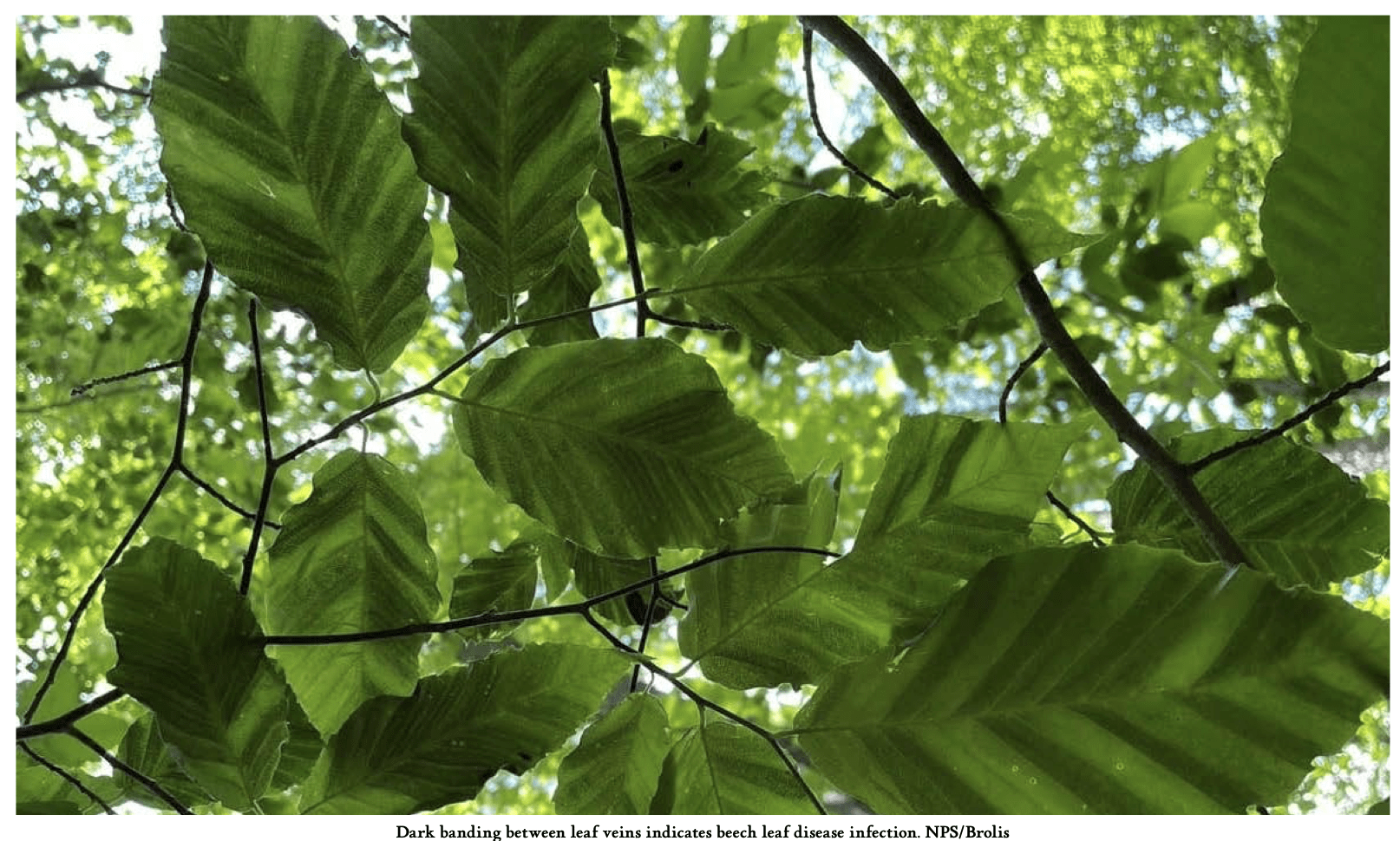
The nematodes overwinter in the leaf buds of infected trees, damaging leaves as they develop in spring. Infection is easy to recognize. Affected leaves display dark banding between veins and may appear thickened, leathery, crinkled, or curled. Because leaves are essential for photosynthesis, the process by which trees convert sunlight into energy, extensive leaf damage can effectively starve a tree over time.
In many cases, infected trees decline and die within two to three years. However, recent research has identified treatments that can improve survival rates, particularly for high-value landscape trees. Carefully applied fertilizers may strengthen trees and improve their resilience. In addition, antiparasitic nematicides can be injected into roots, sprayed on leaves, or used in combination treatments. Homeowners concerned about beech trees on their property should consult a certified arborist to assess tree health and determine the most appropriate course of action. Treatment typically requires multiple years of follow-up to be effective.
Across New Canaan, Greenwich and surrounding communities, many individual beech trees near homes, parks, and public spaces are already receiving treatment, helping to preserve some of these majestic giants. Unfortunately, no method currently exists to treat entire forest ecosystems at scale, leaving millions of beech trees in Connecticut’s woodlands critically vulnerable.
Still, there is reason for cautious optimism. Ongoing research is exploring more efficient treatments and investigating whether certain beech trees may possess natural resistance to the disease. With continued scientific effort and community awareness, there remains hope that our iconic beech forests will endure for generations to come.
Kate Dzikiewicz is the Executive Director, Tree Conservancy. To find out more about the Tree Conservancy, visit us at: www.greenwichtreeconservancy.org