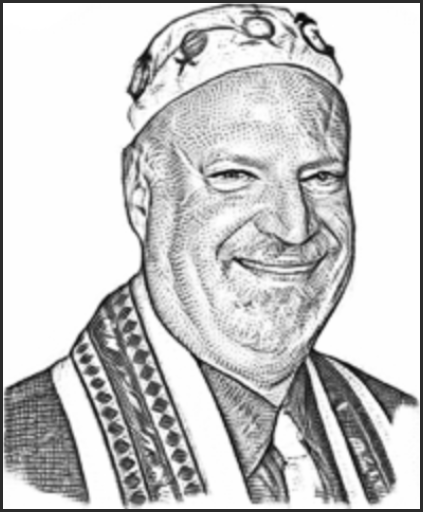
By Kate Noonan
“So therefore, any one of you who does not renounce all that he has cannot be my disciple.” Luke 14:33
There is a moment many of us recognize, not always in prayer, not always in church, but sometimes in the quiet middle of an ordinary afternoon, when we feel the weight of ourselves. The noise. The habits. The familiar loops of thinking and reacting that have played out so many times often feel less like choices and more like fate. It is in that moment that God whispers something both surprising and freeing: It is time to let go.
Over the course of a lifetime, it seems that many operating systems have been installed in our personal hardware. Some were loaded in childhood; messages about worthiness, fear, control, the need to perform. Others were added through heartbreak, failure, or the slow erosion of disappointment. They run quietly in the background, consuming energy, shaping responses and often distorting perception. The troubling truth is this: these programs, once installed, do not simply vanish because we ignore them. They keep running while shaping outcomes. And they do not always lead us to our best selves, or more importantly, to our truest selves – our selves as God sees us.
This is precisely why Lent is not merely a season of religious obligation. It is a divinely designed opportunity for reprogramming.
Jesus understood this need intimately. Even He, in the fullness of His divine mission, recognized that busyness can become a barrier. In the wilderness, before His public ministry began in earnest, He withdrew. He fasted. He sat in silence and withstood the voice of every temptation. Later, throughout His ministry, He would repeatedly leave the crowds, leave the urgent requests, and go alone to pray. He needed, as fully human and fully divine, to extract himself from a very busy ministry and be with God. If the Son of God required that emptying and time in prayer then we too must require the same.
Luke 14:33 is one of the most demanding verses in all of Scripture. Jesus does not dress it up. He does not soften it with qualifications. The equation is straightforward: disciples renounce. The call to follow Christ is, at its core, a call to uninstall. To surrender the programs that protect us from vulnerability. To release the identities we have curated for safety. To lay down the things: material, emotional, psychological – that we have quietly promoted to the status of gods.
This is not self-destruction. It is self-discovery through surrender.
The philosopher Blaise Pascal observed that the human heart is restless until it rests in something ultimate. We fill ourselves endlessly — with achievement, with distraction, with the approval of others. But Christian spirituality insists on a counterintuitive truth: we must be emptied before we can be filled.
Lent is an entire season designed precisely for that process. The traditional practices of prayer, fasting, and almsgiving are not arbitrary religious exercises. They are tools specifically designed to interrupt the background programs. Fasting interrupts the program of comfort-seeking. Almsgiving interrupts the program of accumulation. Prayer interrupts perhaps the most stubborn program of all: the belief that we are the complete master of our own lives.
When we renounce, truly renounce, not just symbolically, we create space. Space for clarity. Space for honesty. Space for the Spirit of God to move in places too long filled with our own noise.
Holiness, then, is not about perfection. It is not about becoming someone else or erasing who you are. It is about becoming, at last, fully and freely yourself, as God originally designed. It is the freedom that comes when the old programs no longer run the show, and a truer, more whole operating system of love, grace, and divine purpose is allowed to function more freely.
So the question is not simply what will you give up this Lent. The question is: what is it time to uninstall? And, finally, are you willing to trust what God might install in its place?
Kate Noonan is a Pastoral Associate and Retreat Master. She graduated from Yale Divinity School in 2018.