By Russell R. Barksdale, Jr.
When New York Governor Kathy Hochul recently suggested that supporters travel to Florida to persuade former New Yorkers to return, it landed somewhere between candor and inadvertent comedy.
After all, the sequence is difficult to ignore: First, create an environment in which high-income retirees conclude, rationally, that they are quietly being pushed out. Then, once they do, organize a state-wide retrieval effort.
It is not a strategy one typically sees in business, but increasingly common place in politics.
Still, the governor deserves some credit. She said the quiet part out loud: the tax base has been “eroded.” What she did not need to say, but clearly understands, is how important the senior tax base is and the value of our senior community’s contribution to the fabric of their community.
Connecticut would be wise to listen carefully. So far, it has not.
Something far more consequential than demographic drift is underway. Wealthy seniors are relocating, not out of necessity, but out of calculation. We can say they are not being forced out, but they are. They are also opting out.
This distinction matters. A retiree living on Social Security alone has limited flexibility. A retiree with a pension, investment income, and federally sourced benefits has options; and, more importantly, the ability to act on them. That income arrives regardless of geography. The only variable is where it is taxed, and where it is spent.
In public finance terms, this is close to ideal: inbound federal dollars, locally circulated, with relatively low service demand attached. It is, quite literally, revenue without recruitment. And yet, states treat it with a certain casual indifference, as though it were ambient, rather than contested. It is not ambient. It is highly mobile.
Affluent retirees do not wake up one morning and impulsively relocate. They run scenarios. They compare marginal tax rates. They evaluate property tax exposure against expected longevity. They consult advisors who are paid, quite handsomely, to remove inefficiencies. Then they leave. Quietly, deliberately, and usually permanently.
The policy failure is not that this is happening. The policy failure is pretending it is surprising. Because once you accept the premise that fixed-income wealth is mobile the rest follows with uncomfortable clarity.
If one state taxes retirement income more aggressively than another, capital will migrate.
If one state imposes persistently high property taxes into non-earning years, homeowners will reconsider. If cost structures are volatile and upward-trending, predictability will be purchased elsewhere.
This is not ideology. It is optimization. What makes this particularly costly is who is leaving.
These are not marginal contributors to a local economy. They are among its most stable and efficient participants. They often pay substantial property taxes, without placing pressure on school systems. They spend consistently across local businesses, smoothing economic cycles rather than amplifying them. They fund nonprofits, cultural institutions, and community programs, not periodically, but structurally.
And they give something else, which does not appear in budget documents but is immediately felt in its absence.
They built the very communities whose policies now do not value their worth. They financed school systems that defined property values for decades. They supported hospitals, libraries, and civic organizations long before we depended on them. They volunteered, governed, fundraised, and, in many cases, quietly solved problems before they became agenda items.
When they leave, what follows is not just a fiscal adjustment. It is a civic one.
The Little League loses a sponsor. The nonprofit loses a board member. The town loses the person who knows why the last three “obvious solutions” failed. Character, it turns out, is not infinitely renewable.
And yet, policy discussions rarely reflect this level of consequence. Instead, they operate on a comforting assumption: that these residents will remain anchored by familiarity, community ties, or simple inertia.
They are not. They are anchored until our polices and math detaches them.
Connecticut, at present, appears to be relying on relativity as a governing principle. As long as New York’s policies are more visibly strained, Connecticut’s can be interpreted as… less so. It is such a reassuring comparison. It is also strategically irrelevant.
Because the competition is not New York. It is Florida, it is the Carolinas. It is every state that has decided, explicitly and unapologetically, that attracting affluent retirees is a core economic strategy. They are valued. They design policies accordingly and collecting the results.
Meanwhile, here the messaging remains curiously inconsistent. “Leave if you don’t like it.” Followed, a few years later, by “Please come back—we’re experiencing a revenue shortfall.”
This is not political evolution. It is a financial realization, arriving late. New York has now acknowledged it, however awkwardly. Connecticut has not. And that silence is not neutrality. It is exposure. Because every year this dynamic continues, more fixed-income wealth is quietly re-domiciled. More federally sourced dollars are redirected. More communities lose not just taxpayers, but stabilizers. Not dramatically. Not all at once. But steadily. Reliably. Compounding.
There are only two ways this ends. Either states recognize that affluent retirees are not a passive revenue source but an actively managed economic and valued asset and adjust policy to compete for them. or they continue to treat them as fixed and watch them prove otherwise.
This is not political. We cannot tax mobility as though it were immobility and expect a neutral outcome. Make no mistake, compounding utility costs have also become a tax.
We cannot encourage departure, explicitly or implicitly, and then act surprised when it occurs with precision. The most uncomfortable part of Governor Hochul’s remarks is not the admission itself. It is the timing.
Because by the time a state begins asking its retirees to come back, it has already demonstrated that it did not understand why they left. Connecticut still has the advantage of pretending this lesson is someone else’s. It is not. The question is no longer whether affluent seniors will continue to optimize. They will.
The question is whether Connecticut intends to value and compete for them or continue to subsidize the states that already are.
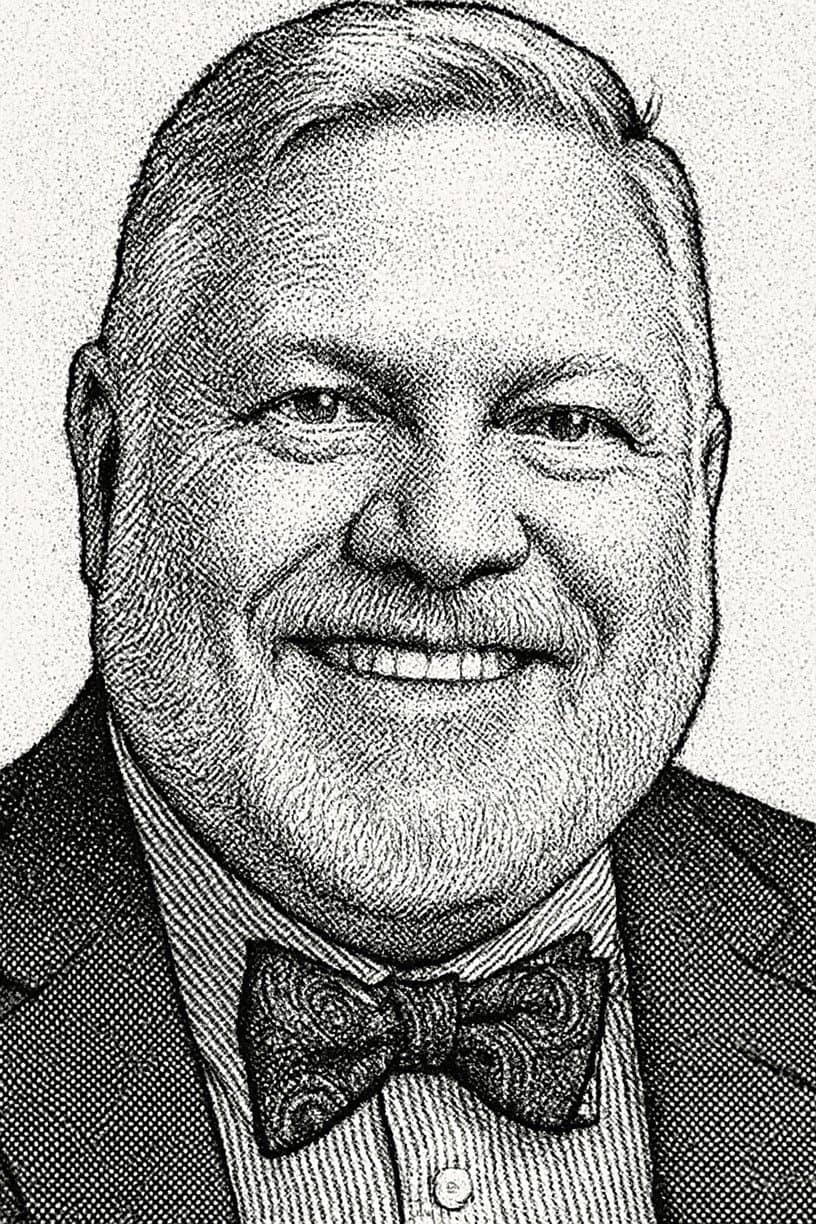
Russell R. Barksdale, Jr., PHD, MPA/MHA, FACHE is President and CEO Waveny LifeCare Network.