By Anne White
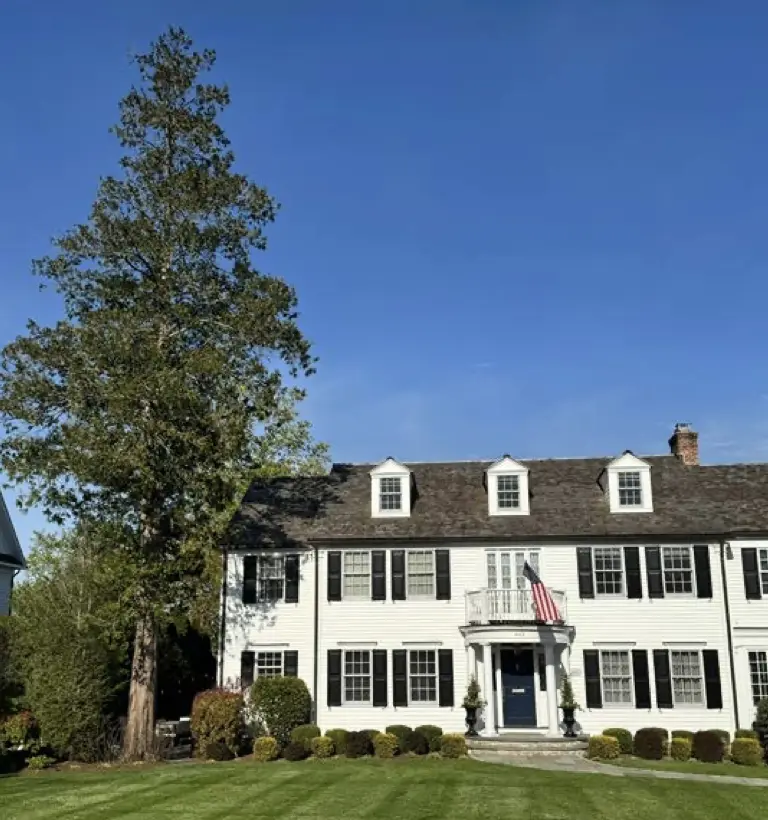
Ticks do not arrive in Connecticut as a distant woodland problem. They arrive at the back door.
For many families, the season announces itself not on a hiking trail but in the yard, on the dog, on the cuff of a pant leg, in the uneasy ritual of combing through fur after an ordinary walk across the grass. That is the fact at the center of the state’s tick problem, and it is the one most likely to unsettle homeowners. According to the Connecticut Agricultural Experiment Station’s tick brochure, about 75 percent of Lyme disease cases are associated with activities around the home, including play, yard work and gardening.
That statistic helps explain both the fear and the urgency this spring. Connecticut researchers reported in March that their 2025 statewide surveillance effort collected more than 10,000 ticks from 40 public sites across all eight counties and tested them for five human disease-causing pathogens. Fairfield County recorded the highest infection rate in adult female blacklegged ticks for Lyme disease in that report, at 68 percent. Recent reporting has also described unusually early tick activity in 2026, with April submissions to the state lab already reaching levels normally seen later in the season.
Talking with the Experts
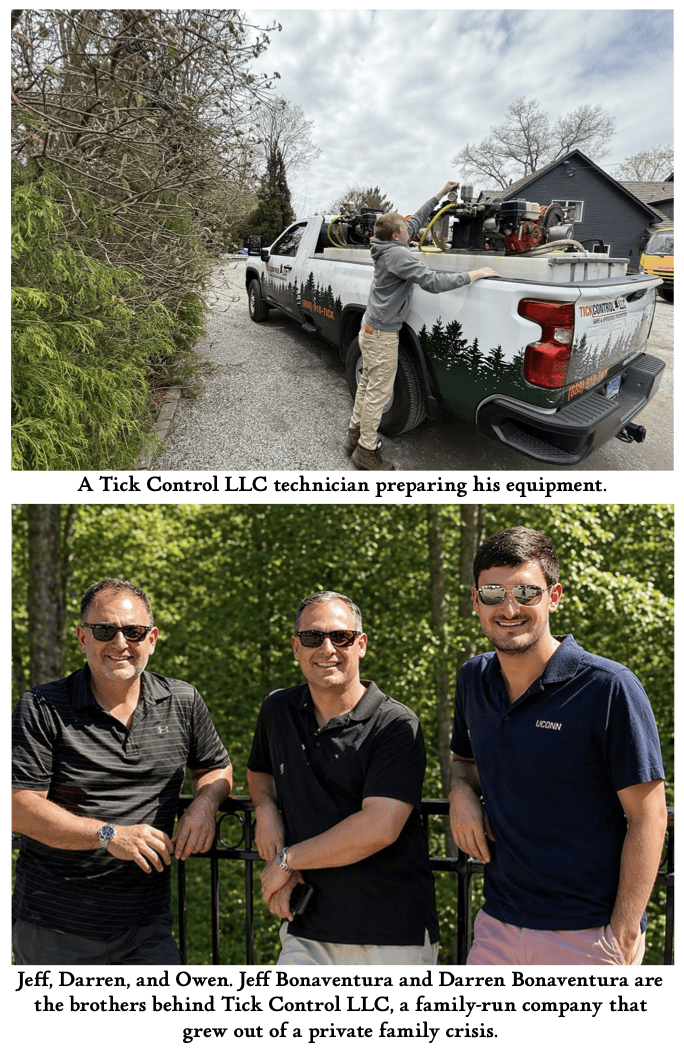
To understand what that looks like on the ground, we spoke with Jeff Bonaventura and Darren Bonaventura, the brothers behind Tick Control, LLC, a family-run company that grew out of a private family crisis. Their father became seriously ill after a tick bite, they said in a long interview, suffering complications and requiring intensive treatment. The experience changed the way they thought about the problem. It was no longer an environmental nuisance or a seasonal business opportunity. It was a threat that had already entered their own family, and they decided to build a company around trying to do something about it.
That origin story is important because it helps explain the way they run their business. Jeff and Darren do not speak about tick control like landscapers adding another service line. They speak about it as a discipline learned over years of repetition, property by property, season by season. In the interview, Jeff said they have been at it for about a decade. Darren described their work less as spraying than as managing conditions: reading a yard, understanding where ticks are, explaining to homeowners what is really putting them at risk and then applying treatment with care.
Backyard Cleanups a Must
Their account tracked closely with what the state’s public-health guidance says. Ticks do not jump or fly. The Connecticut Agricultural Experiment Station says they grasp passing hosts from leaf litter, the tips of grass and similar vegetation, and that most are probably picked up on the lower legs before crawling upward. That means the danger is often rooted in the ordinary features of residential life: a brushy property line, a damp pile of leaves, an unmown back corner, clutter that shelters rodents, the narrow strip where landscaping yields to the woods.
The brothers say the real battleground is usually closer than that. A family lets the dog out. A child chases a ball into sea grass or low brush. Someone cleans out a shed, gardens along a stone wall or walks the back edge of the property. The house can look tidy, even beautiful, and still contain ideal tick habitat at the margins.
The company’s method begins with that premise. Tick control, Jeff said, “is not an event. It’s a process.” In practice, that means they do not present the problem as solvable by one quick spring visit. They described it as a season-long discipline built on timing, cleanup, observation and repeat attention.
Tick Control, LLC brings care to each property and expects discipline from the people who work for them. A new yard is not handed to a crew with little more than an address and a hose. Darren walks the property first with the technicians, studies the layout, points out where ticks are likely to gather, identifies the areas that require treatment, flags the places that must be avoided and explains what they are seeing and why. Jeff said that after thousands of applications, we can read a yard quickly and recognize where the real trouble is likely to be.
They also keep the same technicians assigned to the same properties so that each yard is known, remembered and understood over time. The aim is familiarity, not speed. The crew returns knowing the contours of the property, the trouble spots, the sensitive areas and the expectations of the family that lives there. The principle they stress to their technicians is simple: the most important house they are working on is the one in front of them at that moment. Not the largest property. Not the most expensive account. The small yard matters just as much to the family who lives there as the sprawling estate matters to its owners.
It is the sort of statement that can sound like salesmanship until it is backed by specifics. The interview supplied those specifics. The brothers described yards near the water where homeowners were stunned to find ticks concentrated in shoreline grass. They described brushy, moist areas near the woods that remain dangerous even on otherwise manicured properties. They described how untreated leaf cover can blunt the effect of an application because ticks remain protected underneath until a pet or person disturbs them.
But What About the Bees?
One of the clearest moments in the interview came when the conversation turned to bees. At one property, dandelions were still standing in parts of the perimeter of the property. The crew treated the perimeter and areas without flowering growth, but held back where bees were active. They told the homeowner they would return after the grass was cut so they could finish the job. The scene says a great deal about the company’s self-conception. Their expertise, as they describe it, is not simply about killing ticks. It is about timing, trade-offs and the careful reading of a living property. They want to protect families from ticks without acting carelessly toward pollinators or the broader yard environment.
Finding a Balance
That tension runs through nearly every serious conversation about tick control in Connecticut. Residents worry, reasonably, about Lyme disease and other tick-borne illnesses. They also worry about pesticides, runoff, pets, children and the cumulative effects of treatment. The brothers of Tick Control, LLC did not dismiss those concerns in the interview. They said experience matters precisely because it allows them to use only what is needed and no more. “Everything is a balance,” Darren said, describing that calibration as one of the differences between careful, experienced application and blunt overuse.
The Problem is Getting Worse
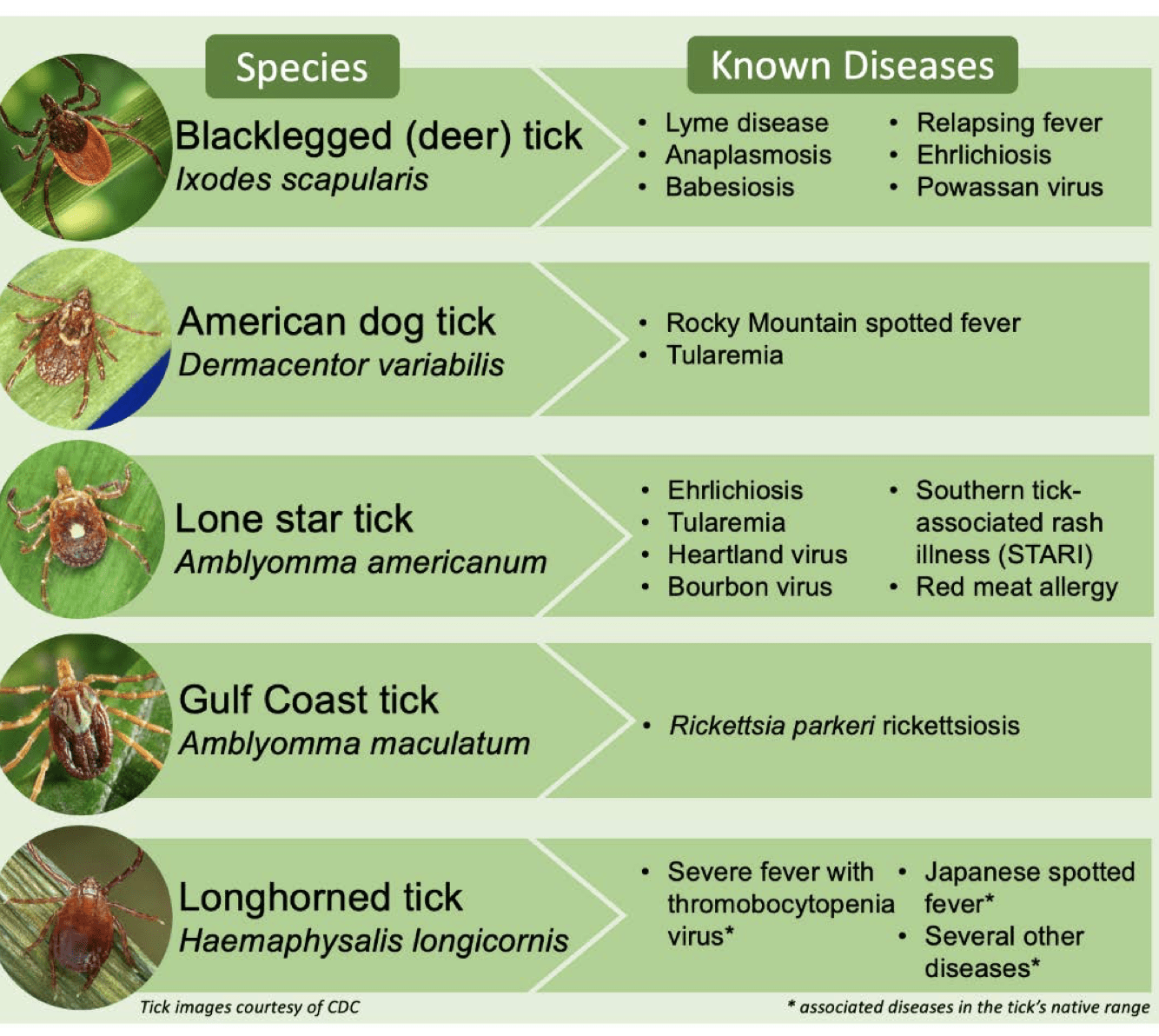
Their work is shaped by a state problem that has become more complex, not less. Connecticut’s 2025 surveillance found not only abundant blacklegged ticks but also lone star ticks, American dog ticks and longhorned ticks. The state reported its first established population of the invasive Asian longhorned tick in Fairfield County in 2020, warning that the species raises human and animal health concerns. Recent reporting on Pleasure Beach in Bridgeport has illustrated how serious that spread can become: the beach was closed for the 2025 summer season because of tick concerns, including the invasive Asian longhorned tick, after years of treatment and consultation with state experts.
The brothers brought up Pleasure Beach in the interview because, for them, it encapsulated how the tick map has changed. Ticks are not only a back-country problem now. State scientists and local operators alike are finding them in coastal areas and in places where residents once assumed salt air or open shoreline would offer some protection. That change has practical consequences for homeowners in towns up and down Fairfield County. A yard near the water is not necessarily a safer yard.
Their work, however, does not end with diagnosis. Much of the interview was about relationships. The brothers emphasized that Tick Control, LLC, is a family company, not a franchise. Customers speak with the owners. New properties are reviewed by the owners. Jeff said that matters because homeowners want to know who is on the property, what is being done and why. In a business built on managing risk that most people cannot see, trust becomes part of the service.
Several stories from the interview underscored that point. Darren described keeping on customers who had fallen on hard times because he knew they had children and dogs in the yard and did not want to leave them exposed. Jeff told a similar story about helping a family dealing with serious illness. These were not offered as boasts so much as glimpses into the company’s ethic: loyalty is expected to run in both directions. Whether every company would frame such decisions that way is another question. The Bonaventuras clearly do.
They also spoke with unusual directness about what customers get wrong. Many people, they said, assume one treatment at the beginning of spring will solve the season.
The state’s data support their concern. The Connecticut Agricultural Experiment Station’s brochure notes that nymphal blacklegged ticks are tiny, active in late spring and summer and associated with most human Lyme disease cases. Adult ticks are active in fall, on warm winter days and in spring. The effect is to stretch the season beyond what many homeowners assume. The danger is not confined to a narrow window.
That helps explain the tone of the Tick Control, LLC operation. They are not panic merchants. They are experienced experts trying to impose order on a problem that is now embedded in daily residential life across Connecticut. Together, they present Tick Control, LLC, as a company built on repetition, supervision and memory: knowing what happened on a yard last month, last season and several years ago; knowing where a customer’s dog runs; knowing where the bees are active; knowing which edge of the property becomes dangerous after rain.
The feature of their business that stands out most is not force but attention. They have built their company around looking closely. They read the yard before they treat it. They adjust when conditions are not right. They return when mowing changes the property. They explain what homeowners can do to make treatment more effective. They describe tick control not as a miracle but as a practiced and careful response to a worsening public-health problem.
Worsening is the Right Word
And worsening is the right word, even if it must be used with precision. This spring’s reporting points to unusually early activity, and the state’s surveillance makes clear that Connecticut remains a place with heavy tick presence and significant pathogen prevalence. What makes the problem frightening is not only the disease risk but the intimacy of the exposure. This is not a distant hazard. It is domestic. It lives in the familiar spaces just outside the house.
For Jeff and Darren Bonaventura of Tick Control, LLC, that reality has defined both their work and their mission for years. Their father got sick. They saw what a tick-borne illness could do. They started a company. About a decade later, they are still walking yards, watching for bees, talking homeowners through cleanup and trying to make a dangerous season a little more manageable for the families who call them.
You can find more information from the State of Connecticut at https://portal.ct.gov/caes/tick-office. You can reach Jeff Bonaventura and Darren Bonaventura, the brothers behind Tick Control, LLC, at (888) 910-8425 or by email at CustomerService@TickControlLLC.com.