By Frank Gallo
Lately, there has been notable press about the effects of accidental or purposeful introductions of non-native species. Often, these introductions lead to unforeseen and ofttimes detrimental consequences, as many of these species, lacking predators and other controls, become invasive and destructive.
Everyone is aware of the recent invasion of the spotted lanternfly from China which is doing extensive crop and vegetation damage in the Northeast. I wrote recently about the spread of beach leaf disease caused by a tiny, introduced nematode worm that is decimating beech populations. Most have heard of Dutch elm disease and American chestnut blight, fungal diseases that wiped out many of our native elms and chestnut trees* in the late 1800’s and early 1900’s, respectively.
Recent features articles have warned of invasive Nile monitor lizards, Burmese pythons, and green iguanas invading the Florida everglades. Headlines warn of 20-pound cold-shocked iguanas falling out of trees onto autos and unsuspecting residents, of monitor lizards eating people’s pets and the eggs of endangered crocodiles, or of pythons devouring alligators and even baby deer. It seems surreal. Stories from which nightmares flourish. Yet they are all too true.
Sadly, there are many more examples to be found of invaders in Florida and across the US. Flashy things like walking catfish and lionfish in Florida and zebra mussels in the Great Lakes make the news, yet many less obvious species, but no less invasive, are plants. In the everglades, Australian Pine, Old World Climbing Fern, Melaleuca, Brazilian Pepper, and Seaside Mahoe are all causing their share of issues by out-competing native vegetation for space and resources.
Why are invasive plants an issue? Crowding out native species negatively impacts habitats and the creatures dependent upon them. Native insects that are critical to the survival of wildlife, especially birds, bats, other insects, and ultimately us, often are not adapted to eating or to rearing young on non-native plants. The plants and their fruit can even be toxic; garlic mustard kills the larvae of some native mustard-dependent butterflies such as West Virginia and Mustard Whites. Non-native animals also compete for resources, eliminating or weakening native species; Bobwhite (quail) from other parts of the U.S. were introduced into the Northeast as game birds. They bred with local Bobwhites, but they were genetically ill-suited to surviving conditions in our area and thus weakened local populations contributing to their eventual demise.
When species—whether plant, insect, or animal— are introduced into areas where there are no natural checks on their spread, bad things can happen. I remember a famous case study and cautionary tale from college that highlighted the dangers and unforeseen consequences of the introduction of non-native species. In about 1000 AD, the Polynesians introduced the Polynesian rat to the Hawaiian Islands. They were joined in the late 1800’s by the black rat brought by whalers and cargo ships. These rats significantly impacted the Hawaiian ecosystem by preying on native birds and consuming seeds, which led to the decline of many native species. The rats also did extensive damage to the sugarcane fields, causing significant economic loss. So, in the 1880’s, sugarcane producers introduced the small Indian mongoose to control the rats. The results were an unforeseen and epic environmental disaster. The rats were nocturnal, and the mongooses were diurnal (apparently, no one thought to check); so, instead of killing the rats, the mongooses further decimated populations of rare native birds, reptiles, and other creatures.
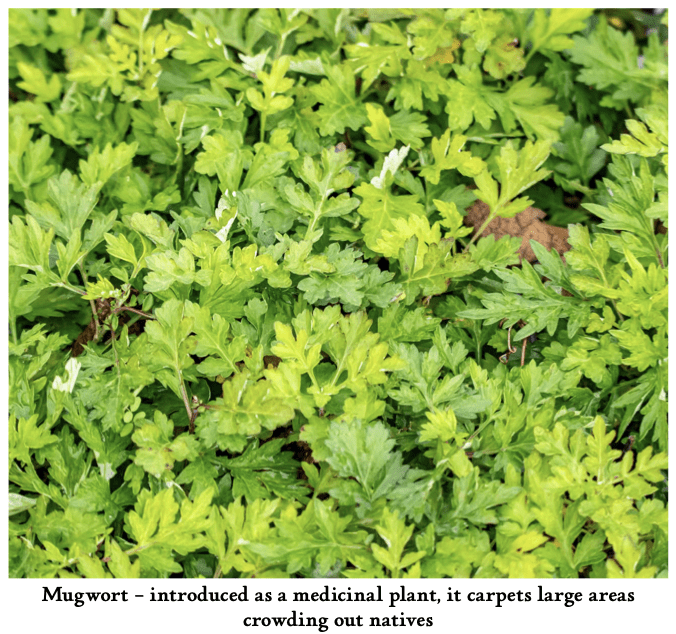
In another example, fur farmers in New Zealand released into the wild brush-tailed possums, which have fur nearly as soft as chinchilla, in the 1840s and 50’s to establish a fur trade and a wild source for food. Unchecked by natural predators, they spread rapidly and by the 1980s the population peaked at an estimated 60–70 million! The possums were literally eating up everything, from native plants and crops to endangered birds. Now, through extensive control measures, the population has been reduced to roughly 30 million. They still have a long way to go.
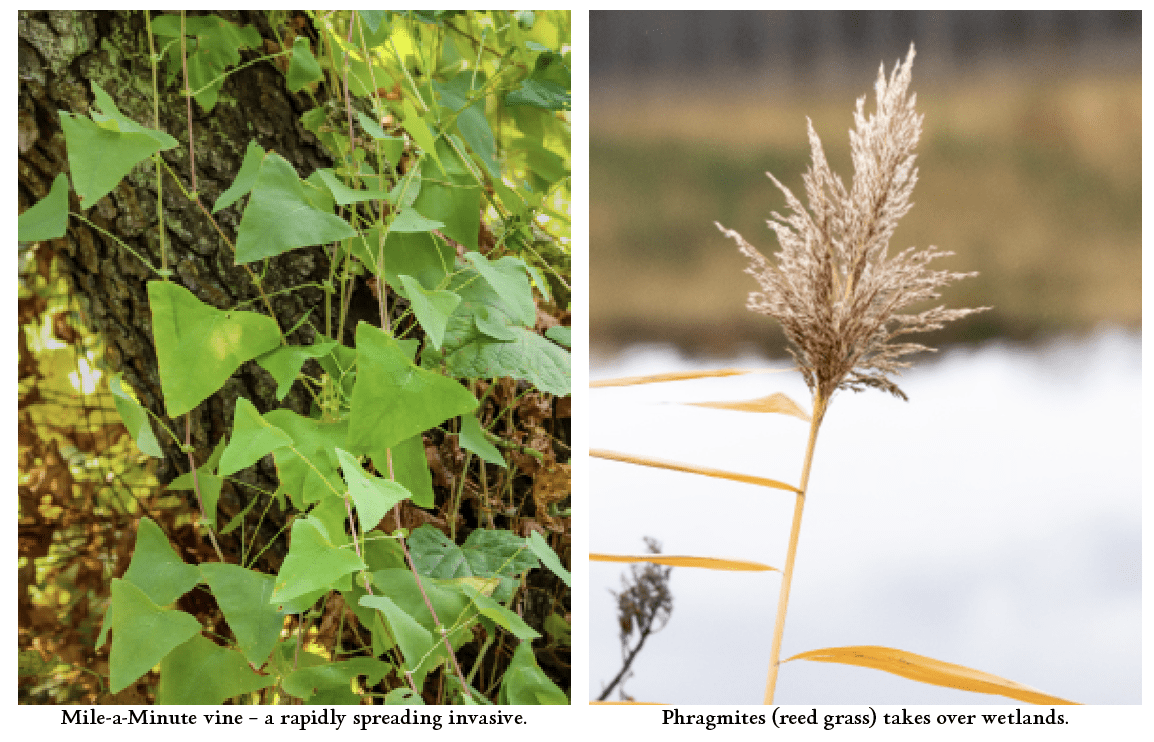
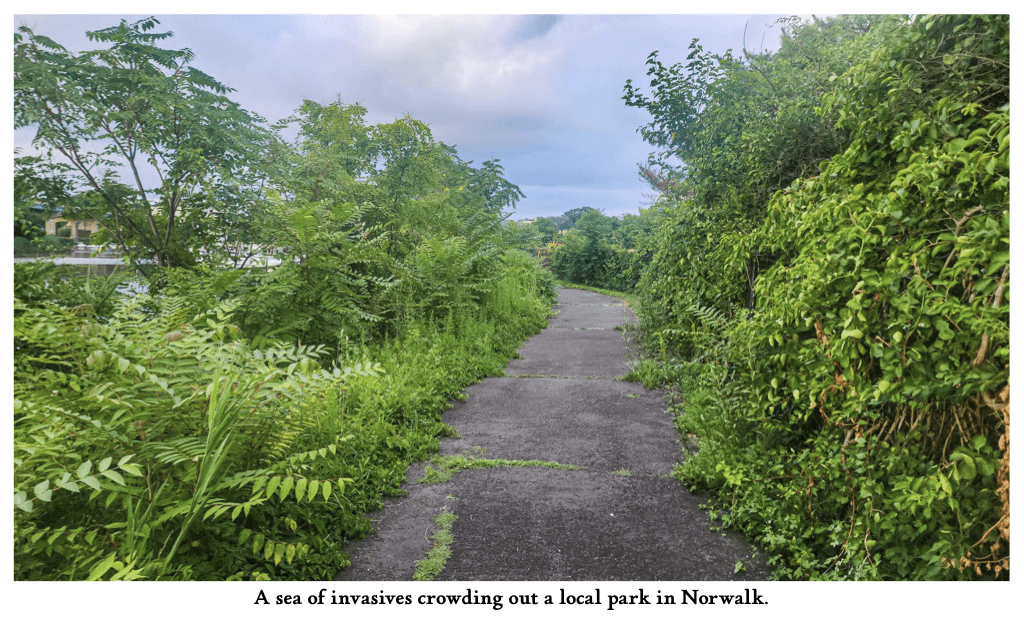
In the Northeast, we have the good fortune not to have giant lizards falling on our heads and eating our pets—but lest you think it’s safe to go back in the water, we do have our share of invasives. Here, it’s often plants, fungi, insects, and other invertebrates, but there are fish, birds, and even mammals that compete with native wildlife for resources.
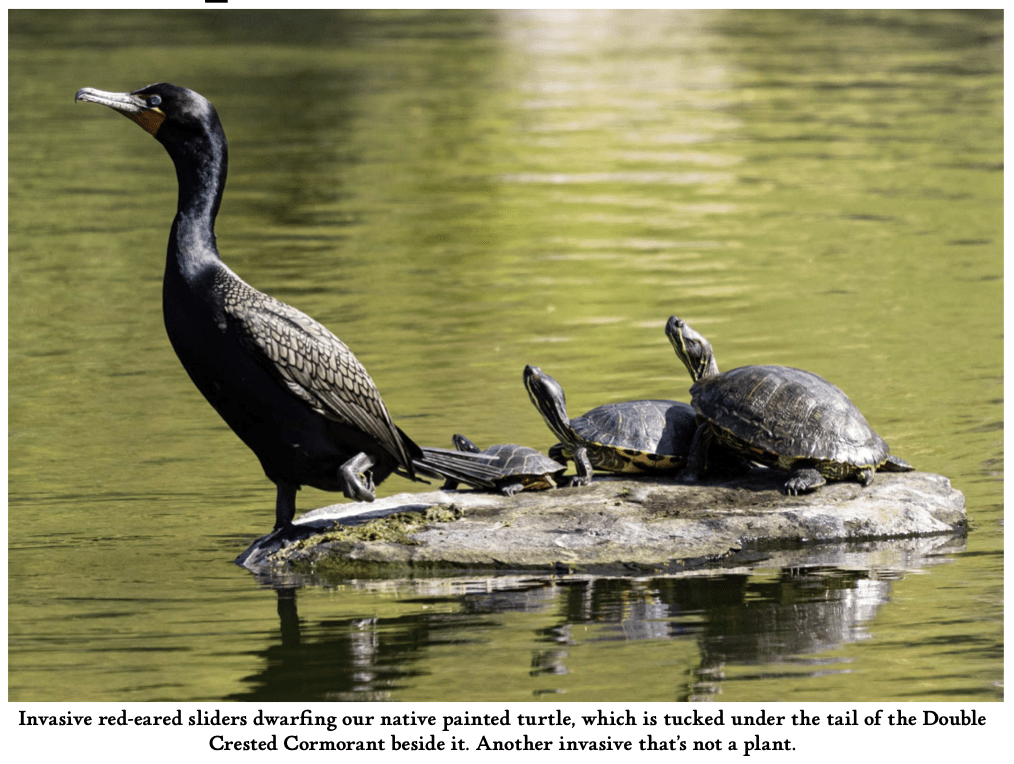
For example, Eugene Schieffelin, a member of the American Acclimatization Society, purposely introduced European Starlings into Central Park in the early 1890’s to bring birds mentioned in the works of Shakespeare to the U.S. They now compete for cavities with native Eastern Bluebirds, Tree Swallows, Black-capped Chickadees and other cavity nesters. The Acclimatization Society also introduced House Sparrows, which also compete for cavity nest space. Red-eared sliders (turtles) from the pet trade—which don’t stay cute and tiny for very long—were set free by their owners and now out-compete native painted turtles. The hemlock woolly adelgid, an aphid-like insect from Asia, has rapidly killed hemlock trees in the Northeast. As for mammals, just think Norway and black rats and the joy they bring to urban environments.
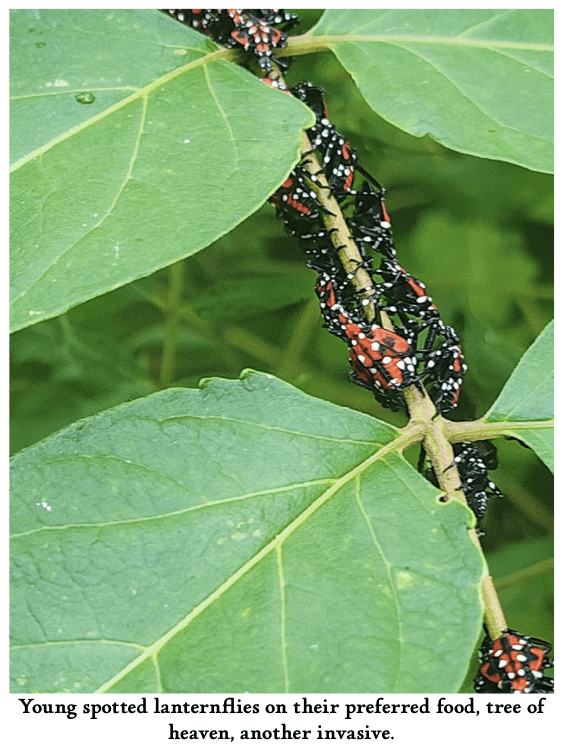
Even things such as biological controls can be risky. In the 1800’s a lovely and prolific garden flower, purple loosestrife, was introduced into the northeastern U.S. With no native predators, it spread rapidly through prolific seed production, invading wetlands, roadside ditches, and areas with disturbed moist soils, and quickly displaced native vegetation, negatively impacting and altering local wetland ecosystems and lowering biodiversity. Initial eradication and containment methods failed. As a last-ditch solution, it seemed reasonable to combat loosestrife with its native predators, so biological controls were employed. Loosestrife beetles and bugs were introduced from Eurasia, and they did a terrific job of controlling the flowers. But, once these insects eradicated most of the loosestrife, they turned to eating other plants. Fortunately, multiflora rose, another invasive, was their next preference, but it could just as easily have been a rare orchid or garden favorite; oh, and the insects are still out there. Biologics are tested on crops and other economically important plants, but there are far too many other plants to test them all, so results are unpredictable. There’s no way to know what will happen. Sometimes, the risk might be worth the reward but it’s always a gamble.
If by this point you haven’t run screaming into the night or jumped out a window—I commend you and suggest that there is hope. So, what can be done? The obvious solution, and the clear moral to these stories, is don’t introduce non-native species in the first place. Instead use similar native species whenever possible. (I’ll delve into natives in my next article). However, when invasives get into an ecosystem, it’s important to remove them as quickly as possible to prevent them from becoming established. However, this is not always practical nor easy. Once established, it’s an uphill, labor intensive, and often expensive battle to remove them, and replace them with natives.
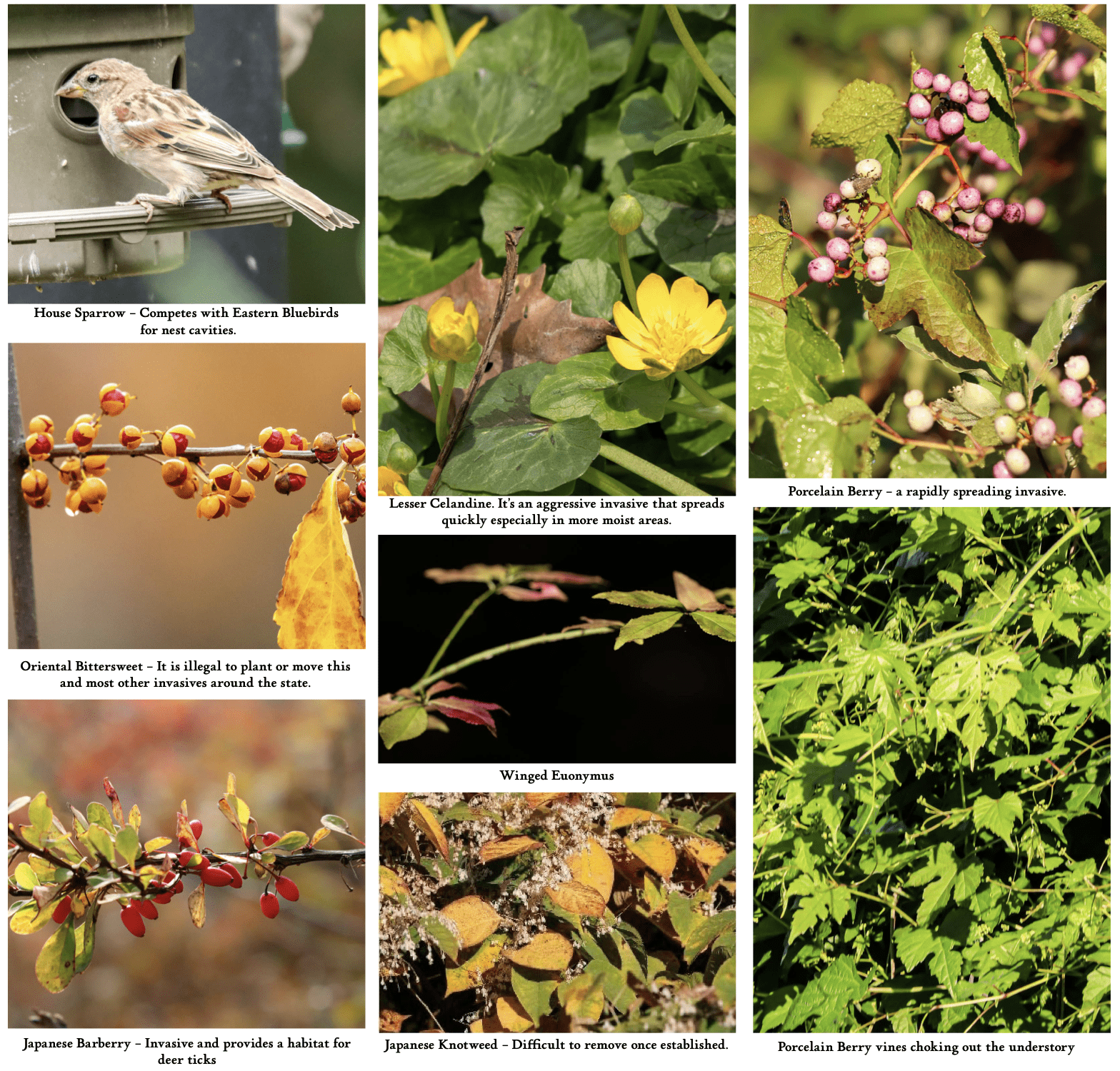
New Canaan Nature Center is a living example of how habitat can be managed for increased biodiversity by removing and mitigating the effects of invasive plant species and replacing them with natives. We do not employ pesticides, herbicides, or other chemicals. Instead, we use solarization, stump bagging, repeated mowing, pulling, and other physical techniques to knock back and kill unwanted plants such as mugwort, Japanese stiltgrass, winged euonymus and porcelain berry. This approach required a strategic long-term plan, the guidance and assistance of Larry Weaner Landscape Associates, and a dedicated crew of volunteers. It is an ongoing process, and we are learning as we go. Ours is a large-scale endeavor—we are working on 40+ acres—and our hope is that our successes and failures and the lessons learned can be used as a resource for everyone in the community.
Note: I will cover native plant species in my next column. (Fortunately, through years of work, scientists are beginning to restore native chestnuts. There is hope, I’m happy to say).
If you are interested in buying native plants and supporting pollinators in New Canaan, the New Canaan Garden Club (NCGC) in celebration of Earth Month has partnered with Copia Home & Garden. A curated selection of native plants will be available for purchase throughout the month, and fifteen percent of the proceeds will benefit the New Canaan Land Trust’s Barbara Johansen Pollinator Garden and NCGC initiatives for Irwin Park Meadow.
Copia Home & Garden
475 Smith Ridge Rd, South Salem, NY
https://copiahomeandgarden.com/
The CT DEEP list of invasive plants in Connecticut.
The list may surprise you. CT-Invasive-Plant-List-2025_Common-Name-3-pagers.pdf
Frank Gallo, the Senior Naturalist the New Canaan Nature Center, has led birding expeditions all over the world. He is a member of the Connecticut Avian Records Committee and is a federally licensed master bird bander.