Publisher’s Note
John Kriz has given New Canaan a work of consequence: a sober, generous and necessary examination of mental health, addiction, stigma and care in this town.
We thank John for the seriousness he brought to the topic. We also thank those who spoke with him and, by doing so, served the community: Dr. Bryan Luizzi, superintendent of New Canaan Public Schools; Andrew Gerber, M.D., Ph.D., president and medical director of Silver Hill Hospital; Marcella Rand, LCSW, New Canaan’s director of human services and adult and senior services coordinator; Susan Bliss, Ph.D., LCSW, student support coordinator with New Canaan Public Schools; Alex Sullivan of New Canaan Unplugged; Jacqueline D’Loughy, LCSW, youth and family services coordinator with the town’s Department of Human Services; Colleen Prostor, executive director of New Canaan CARES; Maureen Asiel, education and program manager with New Canaan CARES; the Rev. Peter Walsh, rector of St. Mark’s Episcopal Church; the Rev. Scott Herr, senior pastor at First Presbyterian Church of New Canaan; Lauren Patterson, president of the New Canaan Community Foundation; Russ Barksdale, Ph.D., president of Waveny LifeCare Network; Laura Futterman, N.D., a naturopathic physician in Stamford; and Paul Reinhardt, founder of the New Canaan Parent Support Group.
They spoke from different stations: the schoolhouse, the hospital, the town office, the pulpit, the nonprofit, the home. Together, they helped name what too often goes unnamed.
May is Mental Health Awareness Month. A community worthy of its blessings says this plainly: Not only is there no shame in tending to one’s physical and mental health; there is beauty in it. There is wisdom in it. There is strength in it.
There is a Panglossian sensibility in New Canaan that we live in the best of all possible worlds. Even the town’s moniker — Next Station to Heaven — sends that message.
True, there is much to be proud of: a lovely, walkable downtown that’s the envy of many; fabulous parks and woodland trails; excellent schools; safe streets; and an active, volunteer-driven civic life.
Still, it’s not all rainbows and butterflies. For more than a few of our residents, not all is for the best in the best of all possible worlds.
Behavioral health is, all too often, a “No Go” topic. Unlike health matters such as knee replacements, diabetes, celiac disease, COPD, or even cancer and dementia — important, all — behavioral health matters are too often seen as signifiers of the sufferer’s (and/or the family’s) moral failure. It’s their own fault — shameful and embarrassing. And bringing up behavioral health issues can be an express train to a socially awkward encounter on steroids. It can also be a remarkable bonding experience so it is time for a little destigmatization.
The stigma of admitting mental health difficulties is cited by experts as a key reason why people do not seek help, or do not seek help and support early enough, inevitably making the situation worse.
Recent difficult losses in our community due to suicide have underscored the urgency of behavioral health concerns in New Canaan. They remind us that many struggles are visible long before they become crises, and can be met with care, candor, and action.
What Are the Issues?
A necessary condition to fixing any problem is knowing what the problem is — a proper diagnosis.
In early 2025, results of a wide-ranging Community Health & Well-Being Survey were released and reviewed with the community — a good place to start. (See https://www.newcanaansentinel.com/2025/02/03/survey-highlights-behavioral-health-opportunities/ for the New Canaan Sentinel’s comprehensive coverage of the presentation. See https://newcanaanbha.org/community-health-well-being-survey/ for the presentation slides and full report.)
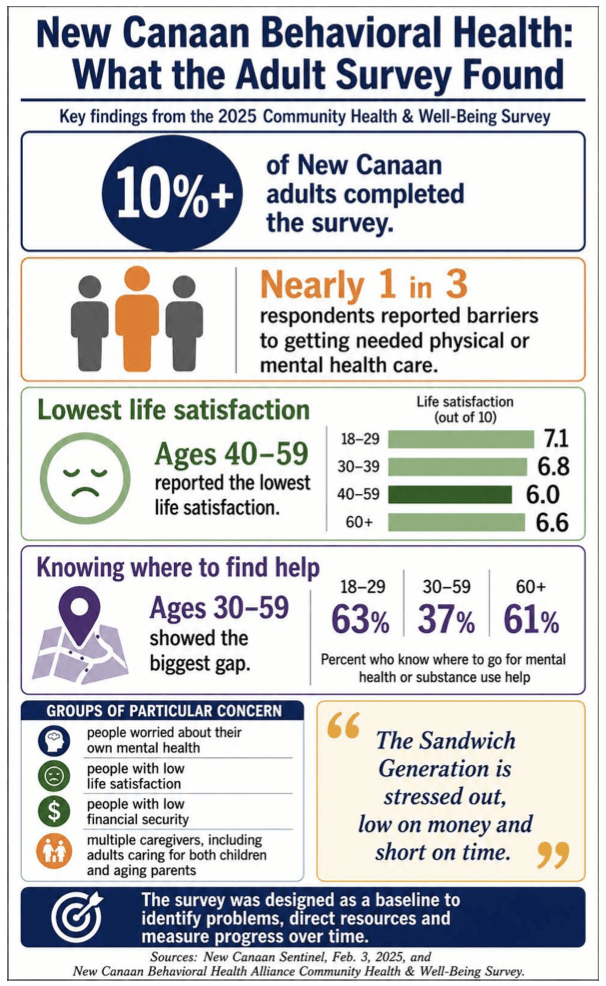
The survey was designed to be a baseline — not only to help identify issues needing attention, but also to help direct follow-on research and resources to those issues, with subsequent surveys determining how effective efforts to address identified issues have been.
This survey, led by the New Canaan Behavioral Health Alliance (www.newcanaanbha.org) and paid for by the Town of New Canaan, focused on adults, with more than 10 percent of adults in town completing the survey — a strong rate.
People who are worried about their own mental health, have low life satisfaction, low financial security and are multiple caregivers (such as caring for both a child and an aging parent) were identified as groups of particular concern.
As the 2025 survey notes, people between 40 and 59 reported the lowest rates of life satisfaction. Said one of the presentation slides: “The Sandwich Generation is stressed out, low on money and short on time.” In addition, people between ages 30 and 59 have a particularly large gap in awareness of where to find help.
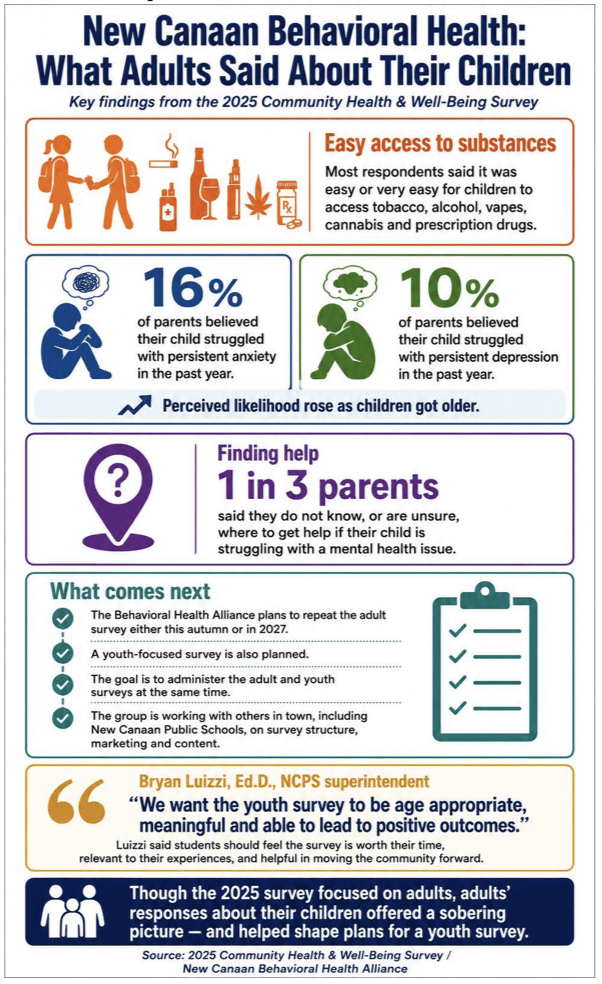
Though this 2025 survey focused on adults, the surveyed adults did comment on the behavioral health of their children. The results were sobering.
Most respondents said it was easy or very easy for children to access tobacco, alcohol, vapes, cannabis and prescription drugs.
Sixteen percent of parents reported that they believe their child had struggled with persistent anxiety in the past year, and 10 percent of parents reported that they believe their child had struggled with persistent depression in the past year, with the perceived likelihoods rising as the age of the child rose.
One-third of parents said that they do not know, or are unsure, where to get help if their child is struggling with a mental health issue.
The New Canaan Behavioral Health Alliance is planning to administer the adult survey again either this autumn or in 2027, likely with some changes to reflect new knowledge and fresh ideas. The group also plans to administer a youth-focused survey, with the intention of administering both surveys at the same time. They are working with others in town, including New Canaan Public Schools (NCPS), on survey structure, marketing and content.
Bryan Luizzi, Ed.D., NCPS superintendent, says he wants to ensure “that it’s [the youth survey] appropriate, that it’s meaningful, and that it leads to positive outcomes down the line.” In his view, “appropriate is certainly age appropriate, that it’s asking the right questions for children with the right ages.” He continues, noting “Meaningful means that the children, when the kids are done, they feel that it was worth their time, that it gave them an opportunity to reflect and think about their own experiences. When we ask students to do things, they should learn from them. It should be a part of their education.” As to positive outcomes, the question is, “How does it help us to move forward?”
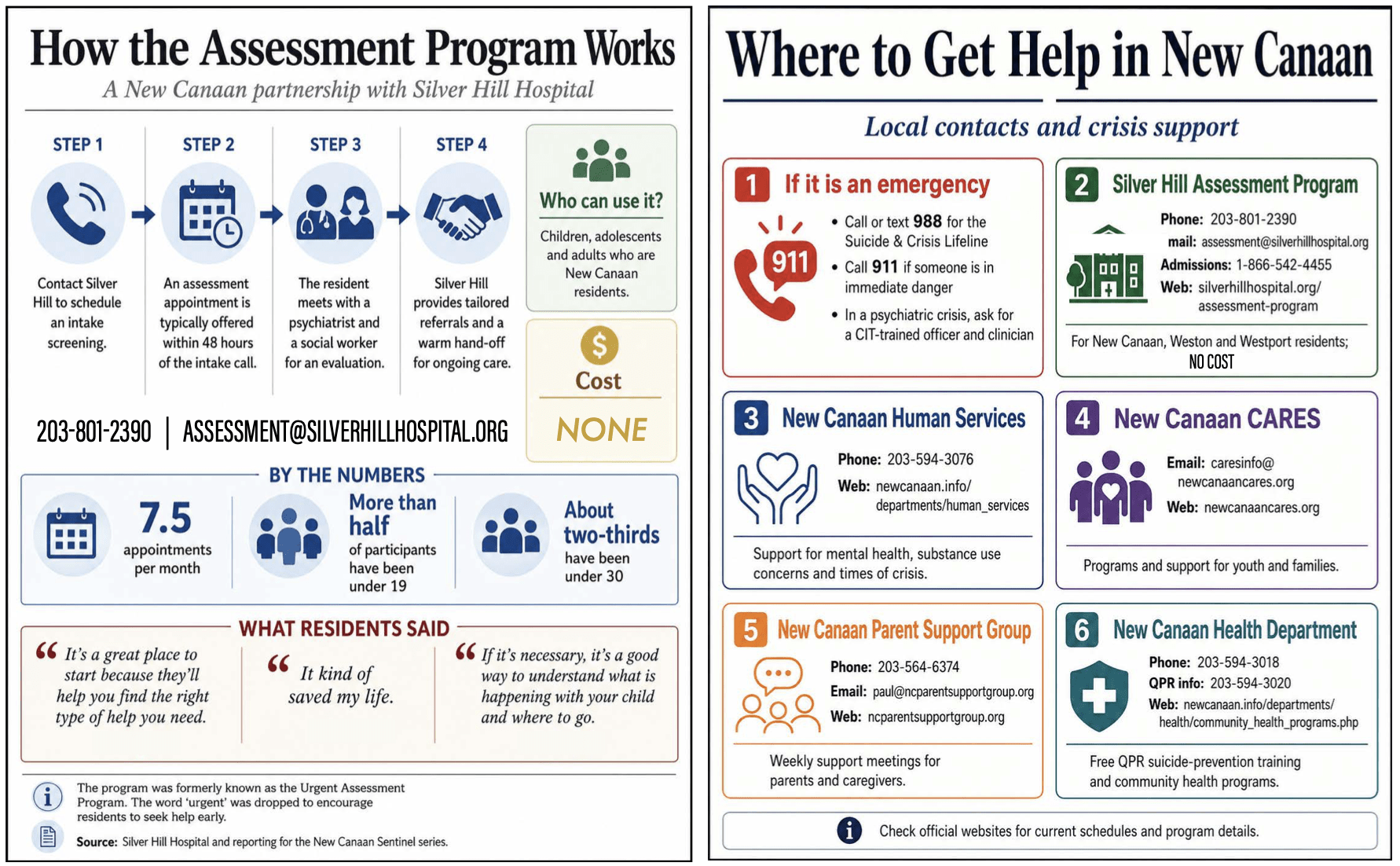
In addition, we have data from the Assessment Program (https://silverhillhospital.org/assessment-program/), a partnership between the town and Silver Hill Hospital, show that around two-thirds of program users are 29 and under — more than half are 18 and under.
The Assessment Program’s goal is to connect people in need of mental health treatment with a timely assessment and a tailored referral for ongoing care, with an initial appointment within 48 hours of the initial call. Launched several years ago, the Assessment Program is free for New Canaan residents. Formerly known as the Urgent Assessment Program, “urgent” was dropped to help emphasize that it’s best to seek care as early as possible.
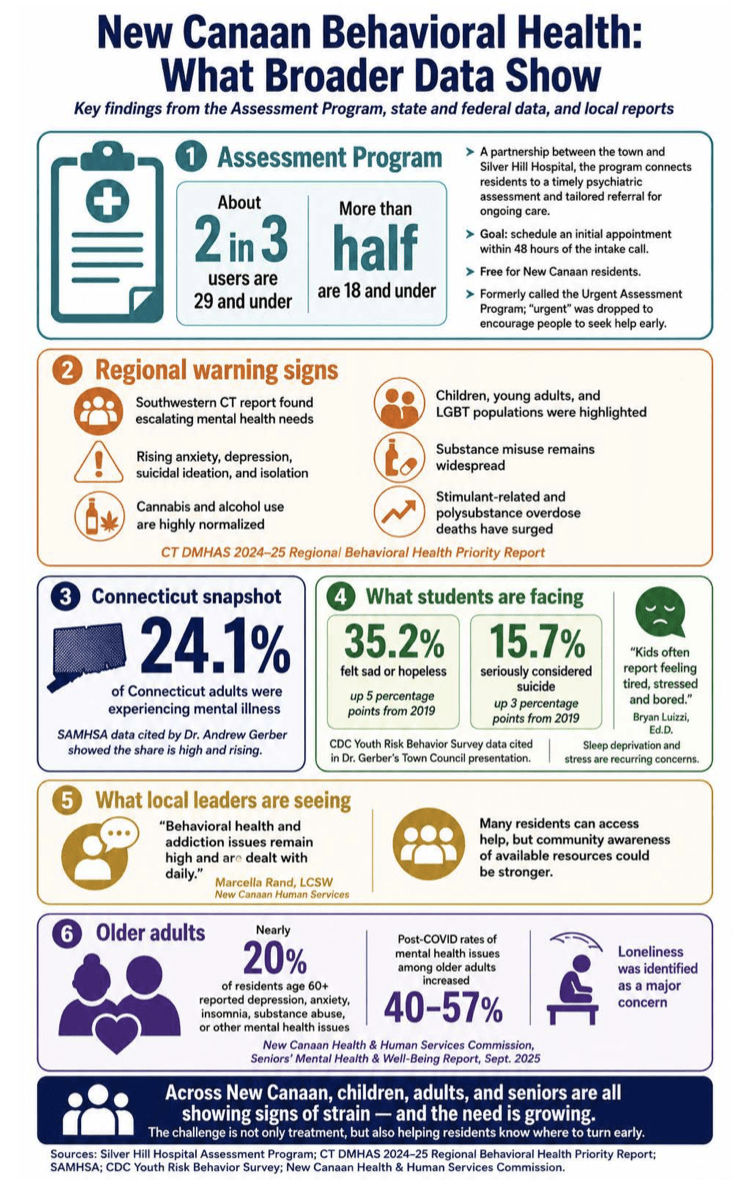
In a January presentation to the Town Council on the Assessment Program, Andrew Gerber, MD, PhD, Silver Hill’s President and Medical Director, noted the key findings of Connecticut’s Department of Mental Health and Addiction Services’ 2024-25 Regional Behavioral Health Priority Report for Southwestern CT.
The report cited an escalation of mental health needs, especially for children, young adults and LGBT populations, with rising rates of anxiety, depression, suicidal ideation and isolation. In addition, substance misuse remains widespread, with cannabis and alcohol use normalized among youth and adults, while stimulant-related and poly-substance overdose deaths have surged.
Dr. Gerber further noted that, according to the federal Substance Abuse and Mental Health Services Administration (SAMHSA), the percentage of adults in Connecticut known to be experiencing mental illness is high at 24.1 percent and rising.
The Centers for Disease Control and Prevention’s Youth Risk Behavior Survey cited by Dr. Gerber shows that in Connecticut the percentage of students who felt sad or hopeless (nearly every day over a two-week period, interfering with usual activities) is 35.2 percent, an increase of 5 percentage points from 2019.
The percentage of students known to have seriously considered attempting suicide in the previous 12 months is 15.7 percent, an increase of 3 percentage points from 2019.
Marcella Rand, LCSW, New Canaan’s director of human services and adult and senior services coordinator, says that both behavioral health as well as addiction issues have been high and remain high. “That is what we are dealing with, and we deal with that on a daily basis.”
Regarding children, Supt. Luizzi notes an academic study in which children were asked “How are you feeling?” The answer was consistently, tired, stressed, and bored. “They’re somewhat sleep deprived. They’re stressed about what’s going on, and they’re bored because it’s not as exciting as a video game or being online or something else.”
As to the elderly, the town’s Health & Human Services Commission’s “Seniors’ Mental Health & Well-Being Report” of September 2025 stated that nearly 20 percent of residents age 60 and older reported “depression, anxiety, insomnia, substance abuse or other mental health issues.” In addition, “post-COVID rates of mental health issues among older adults increased 40-57%.” Loneliness was identified as a major mental health concern for the elderly.
In sum, many groups in New Canaan — adults and children — are struggling, some more than others, and trends seem to be deteriorating. In addition, while barriers to accessing help are limited for some residents, community knowledge of the many excellent resources that do exist could be better.
More Sobering Numbers
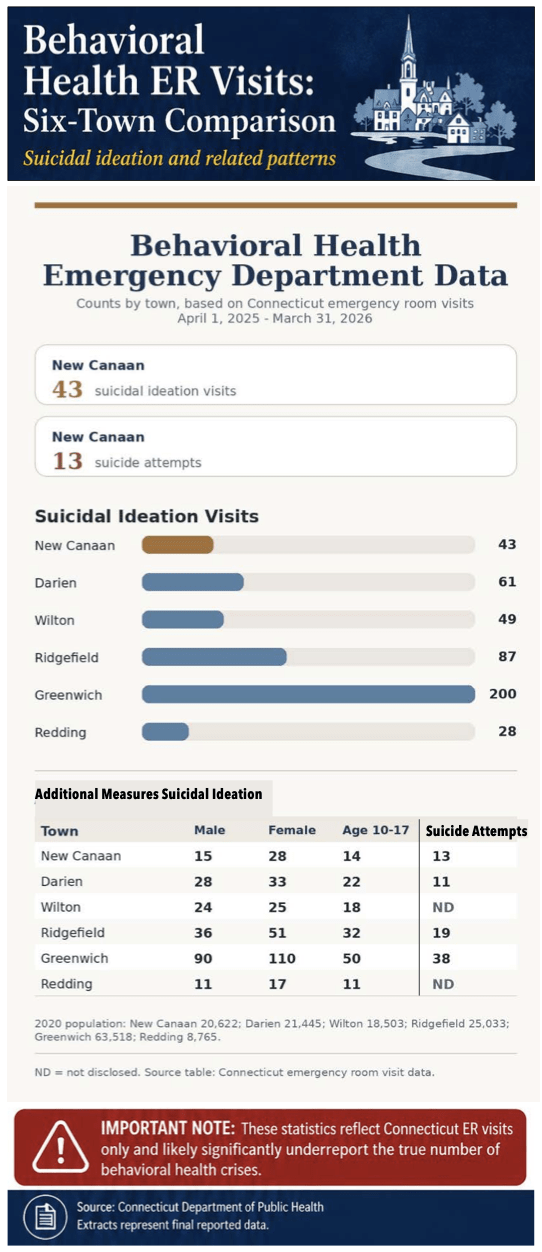
According to the “Connecticut Suicidal Ideation and Self Harm Emergency Department Visit Report” from the Office of Injury and Violence Prevention of the Connecticut Department of Public Health, for the Town of New Canaan for the period April 1, 2025, to March 31, 2026, there were 43 instances of suicidal ideation (this is defined as thoughts or ideas centered around death or suicide) and 13 instances of attempted suicide.
These figures were generated by visits to Connecticut hospital emergency rooms. As such, these figures are, says one senior healthcare professional in town, “grossly under-reported.”
Why under-reported? Not all suicidal ideation or attempts result in the affected person ending up in a Connecticut ER. If no immediate medical attention is deemed necessary, or if the event occurs out of state, the data go unreported in these statistics.
The fact that a suicide attempt results in an ER visit suggests that the person involved had a physical condition resulting from the attempt that required immediate medical care.
Digging more deeply in the figures for New Canaan, of the 43 instances of suicidal ideation during this time period, 28 were for females and 15 for males.
Breaking the suicidal ideation figures down by age group, there were two distinct clusters: ages 10-17 (14 instances) and ages 45-54 (8 instances). This leaves 21 instances of suicidal ideation distributed among the other age groups.
According to Connecticut Public Health’s “Suicide Trends, 2015-2023 Connecticut,” mental health problems were the most common risk factor in suicides from 2015 to 2022, appearing in 40.2 percent of cases. Depression was the most common mental health condition identified. Alcohol and substance misuse ranked second. Many cases involved more than one risk factor.
What do these figures for New Canaan mean?
In these emergency department data, females accounted for more suicidal ideation visits than males.
Older children and adults in the “sandwich generation” who are likely caring for both school-age children and aging parents appeared as notable age clusters in the emergency department data.
Plus, with at least 13 attempted suicides that resulted in an ER visit in a recent 12-month period, self-inflicted actions causing immediate, serious injury are not rare in New Canaan. And remember that these figures are likely substantially under-reported.
Disorders & Addictions
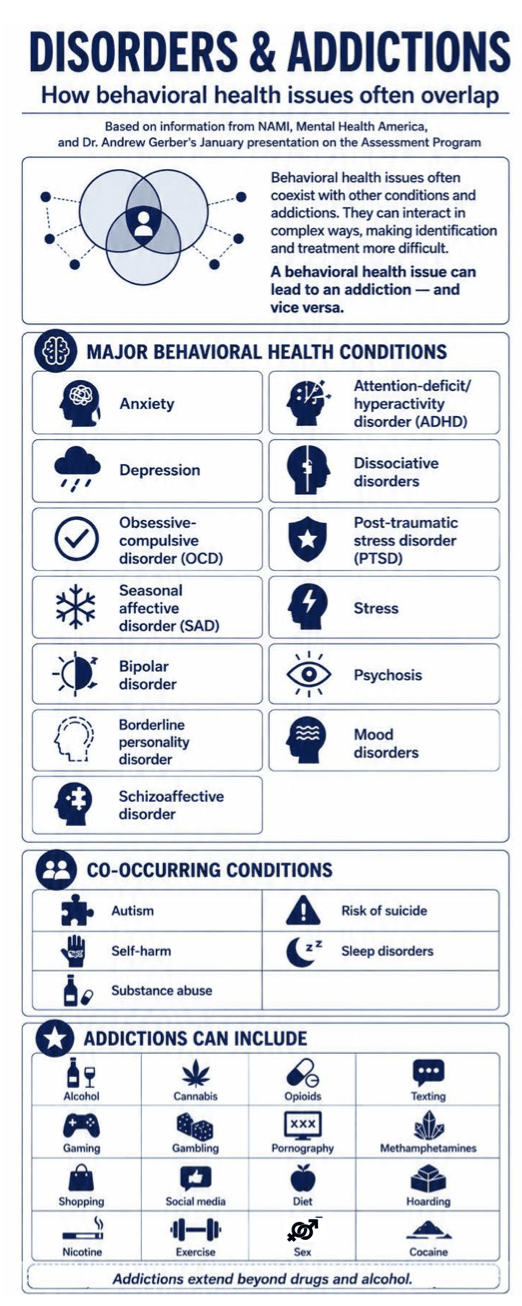
According to the National Alliance on Mental Illness (www.nami.org) and Mental Health America (www.mhanational.org), major types of behavioral health conditions include anxiety, attention-deficit/hyperactivity disorder (ADHD), bipolar disorder, borderline personality disorder, depression, dissociative disorders, eating disorders, mood disorders, obsessive-compulsive disorder (OCD), post-traumatic stress disorder (PTSD), psychosis, schizoaffective disorder, seasonal affective disorder (SAD) and stress.
Co-occurring conditions include autism, risk of suicide, self-harm, sleep disorders and substance abuse.
Addictions extend beyond alcohol, cannabis and opioids. These can include texting, gaming, gambling, pornography, methamphetamines, shopping, social media, diet, hoarding, nicotine, exercise, sex and cocaine, among others.
A behavioral health issue often coexists with one or more other behavioral health issues, co-occurring conditions, and addictions. These can and do interact in complex ways, often reinforcing each other. This makes identifying the issues, let alone treating them, difficult. A behavioral health issue can lead to an addiction, and vice versa.
Dr. Gerber’s January presentation to Town Council on the Assessment Program stated this multiple presenting complaint status bluntly. The presentation also listed 11 types of presenting behavioral health complaints from program clients, depression and anxiety being by far the dominant ones.
Big Picture
Dr. Gerber of Silver Hill notes that people are naturally vulnerable to various physical ailments, some more than others, and often for no apparent reason. The same is true for behavioral health ailments. “There are some people who are more vulnerable to, for example, depression, anxiety, substance use disorders, suicide — even psychosis,” says Dr. Gerber. “And those things have always been with us.”
“Because of stigma and because of fear,” he continues, “we have often been reluctant to accept the fact that those vulnerabilities are all around us.”
Furthermore, Dr. Gerber notes that many support systems that had helped to treat, or at least manage these vulnerabilities, such as close, extended families, faith groups, and civic groups such as Rotary, Daughters of the American Revolution, American Legion and the Masons, have often atrophied.
Even what Dr. Gerber calls our “relatively privileged” community “is no protection against the vulnerabilities of depression, anxiety. And maybe that’s obvious, but I don’t know that it was always obvious.”
Stress Sources
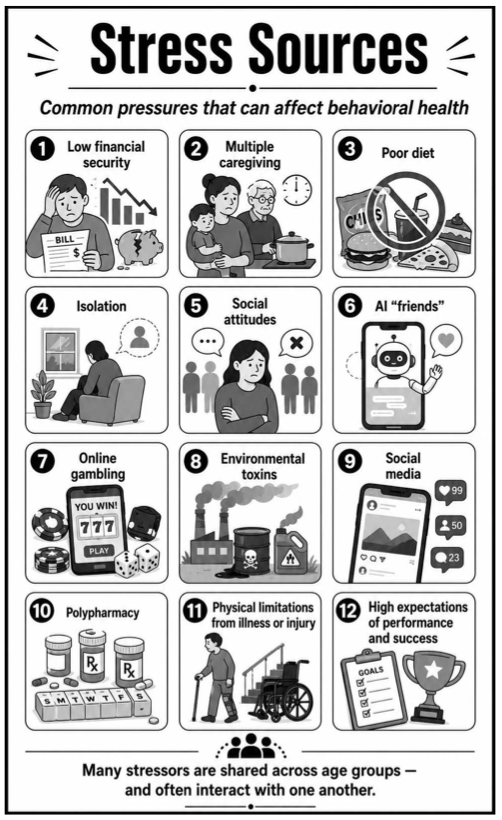
There are many, and they are often shared among age groups: Low financial security. Being a multiple caregiver, such as to both children and aging parents. Poor diet. Isolation. Social attitudes. “Friends” in artificial intelligence (AI). Online gambling. Toxins in the environment. Social media. Polypharmacy. Physical limitations due to illness or injury. High expectations of performance and success.
Technology
Take the iPhone, which Dr. Gerber says “made things worse,” going on to say that “as these devices became ever more powerful and ever more prevalent, more and more of [people’s] social life, more and more of their communication became virtual. Which again, better than nothing, but certainly not as good as spending time in person with their friends, with their families, with their teachers, with everybody else. And every graph that charts these things shows a dramatic increase, not just in screen time, but in time alone for young people.”
One nonprofit group in town that is taking steps to better manage children’s screen time and social media activity is New Canaan Unplugged (www.newcanaanunplugged.org) which, according to its website, “seeks to create both a community and a resource for parents in New Canaan to help navigate the social media and smartphone landscape.” A goal is to “encourage thoughtful boundaries around technology within our New Canaan community such that our kids will engage with each other in a way that fosters positive close relationships for years to come.”
Alex Sullivan, a mother of two young children and one of the parents active in the group, cites worrisome rises in the levels of depression and anxiety in young people, and the role of social media in affecting those stresses.
One example the group cites is a 2023 report from the Surgeon General titled “Our Epidemic of Loneliness and Isolation” that emphasized the importance of relationships and engagement with others as a pillar of our overall health, with social media being featured as a challenge.
“So I think everyone’s trying to just figure out how can we get our kids to go back a little bit to the childhood that we used to have,” says Mrs. Sullivan, “where you learn how to be a fully grown person by interactions with the outside world, by interactions with your peers and community members and adults.”
Susan Bliss, PhD, LCSW, student support coordinator with NCPS, observes there is “a lot of social anxiety and I think that has increased just in, anecdotally, with the phones and the increase of social media. I don’t think there is a question about that at this point — that idea of social comparison and the way kids’ lives have sort of become curated and that there’s so much online about easy FOMO, as they say, right? Fear of missing out that kids have. So we see that for sure in the middle school, high school kids. And that is leading to, I think, more anxiety.”
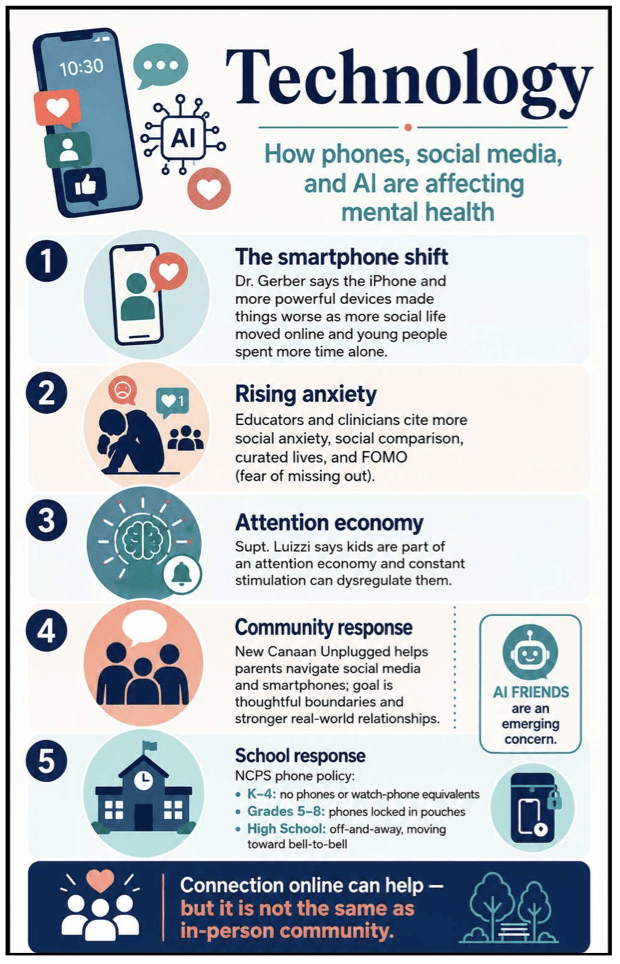
Supt. Luizzi calls it the “attention economy,” noting “our kids [are] part of this economy, and they become actually a product in it. And so wherever they’re going, something is calling out for their attention. And I think that’s a struggle for many people. And we’re not wired that way, right? The mind is wired to learn through reflection, through contemplation, through growth, through social interaction. And what’s happening is the online and the messaging and the short-form videos and the constant stimulation, I think, can really dysregulate kids.”
Jacqueline D’Loughy, LCSW, youth and family services coordinator with the town’s Department of Human Services, observes that “social media and access to online stuff has amped up anxiety and depression for youth.”
New Canaan CARES Executive Director Colleen Prostor cited a program her group presented, led by Max Stossel, on social media. Ms. Prostor recounted how Mr. Stossel noted how social media strives to manipulate users — to generate dopamine hits — and, in Ms. Prostor’s words, “get the child addicted to being on there.” She concluded by saying that, “this is a problem and that our children are kind of guinea pigs.”
“This technology comes out first and then we all have to scramble to figure out how detrimental it is and what are our responses to it,” she notes. “Some communities are further along in that. Others are kind of still struggling on that side of things. But we continue to see there was an incident here in New Canaan the last few weeks where New Canaan High School students were targeted online, and just talk about being a victim of that, and how that impacts the mental health of those students.”
Rev. Peter Walsh, rector of St. Mark’s Episcopal Church, says bluntly, “Social media is a big deal, and it’s a very, very big deal. I don’t think it’s overstated. I think this literally is a really big deal.” He continues, noting that whereas in earlier times events only traveled so far, “but now that thing is now just ramped way up. It doesn’t just take place in your dinky little high school. Now it’s like for the whole world to see. And I do think it’s had a deleterious effect on the formation of a generational brain. And I think we don’t even know where it’s all going to land.”
Rev. Scott Herr, senior pastor at First Presbyterian Church of New Canaan, echoes this, saying, “I am not a Luddite, but think technology in general is a big factor in driving health and addiction challenges.”
Lauren Patterson, president of the New Canaan Community Foundation, adds that while social media “can be incredible forces of connection, but they can also be really isolating, and they could really magnify or blow out of proportion how things look perfect elsewhere,” going on to note that “I know from talking with many nonprofit organizations they will often point to social media and all of its tentacles as being really a top challenge for them to figure out [how] to better help the people that they work with. And I think we’re all collectively trying to figure out the best way to navigate that.”
NCPS has a strict phone policy, because children learn better when they are free from distractions. And phones are big distractions. In K-8, there is a zero bell-to-bell phone policy. In K-4, students cannot bring phones or the wristwatch equivalent into school. Grades five through eight can bring them to school, but they are locked in pouches all day. In the high school, there is an ‘off and away’ policy, with use permitted in the library and cafeteria, but nowhere else in the school. Next year, it will be bell-to-bell as well.
An emerging stressor is so-called “AI friends.” Dr. Bliss of NCPS says “we know that it has its downsides for sure in terms of not being the real person. You don’t have that social friction where you’re learning to deal with another person who doesn’t just validate you all the time and that’s a problem. So we are starting to think about that and we’re hearing more about kids who are turning to that as a form of both, I guess, social interaction and just somebody to go to for help.”
Maureen Asiel, education and program manager with New Canaan CARES, observes that “I think that AI is coming down the pike,” and that, “the same thing that’s happening [with social media] will happen with AI, or it’s happening already right now, and there’s no guardrails again. So we’re in this place where we’re not protecting our kids, and that is the point of where I think public health should be focusing on.”
Gaming & Gambling
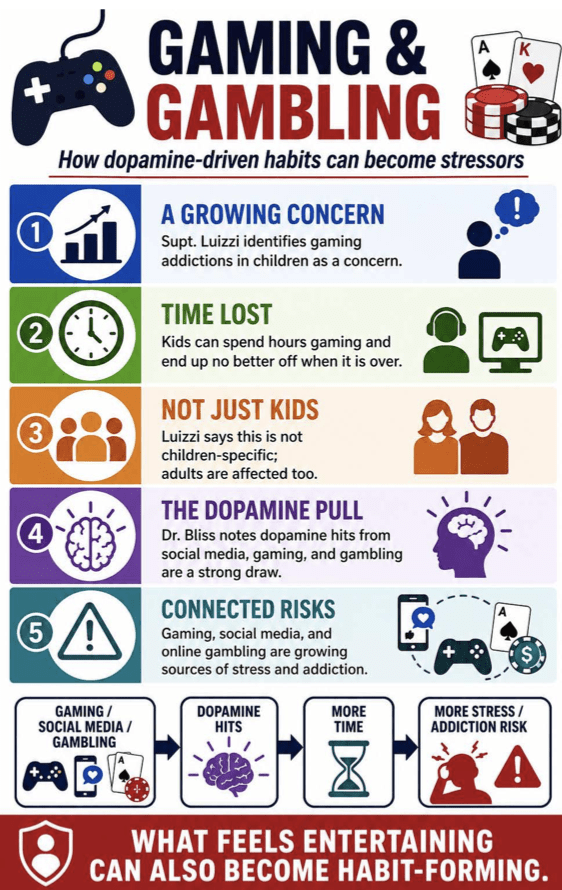
Supt. Luizzi notes gaming as a concern, too, saying “the gaming addictions we see with children, kids where they could be outside doing something that leads to a better outcome, that they are finding themselves gaming past that point, and keep going and going, going. Then at the end, when they’re finished, they realize that X number of hours just transpired and they’re no better off,” continuing to observe that it’s the same with social media and online gambling, which are growing sources of stress and addiction.
Dr. Bliss notes “the dopamine hits” that come with social media, gaming and gambling are a strong draw, with Supt. Luizzi adding that “this is not a children-specific thing,” but it’s an issue for adults, too.
Polypharmacy
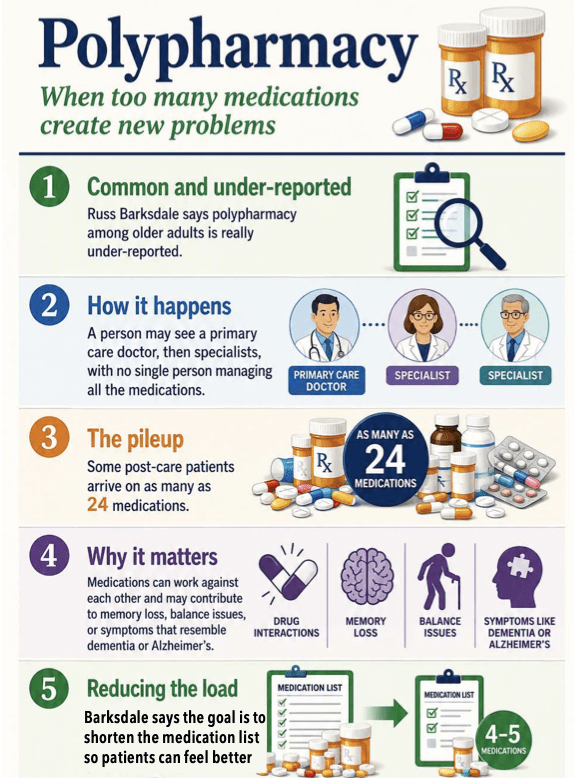
Polypharmacy is another stressor, which is all-too-common among the elderly. Russ Barksdale, PhD,, president of Waveny LifeCare Network, says that polypharmacy — taking many prescription medications — is “really under-reported.” He gives the example of a person going to their primary care doctor, then a specialist, then another doctor, for various acute or chronic ailments, and there isn’t “someone that is managing all the medications” being taken.
“So they’re always adding and they’re always adjusting to it,” he continues. “You can have patients that will come to us for post-care; they’re on 24 different meds at this point. One is a stool softener, one is a stool hardener, one lowers their blood pressure, one increases their blood pressure. And we look at it as detoxing — that we’re trying to get you down to four or five medications so that you can feel better. And sometimes the symptoms of Alzheimer’s and dementia and memory loss start going away that you’ve had before, or you may have [had] a balance issue. It starts going away as you start reducing some of these medications that you’re on.”
Nicotine & Energy Drinks
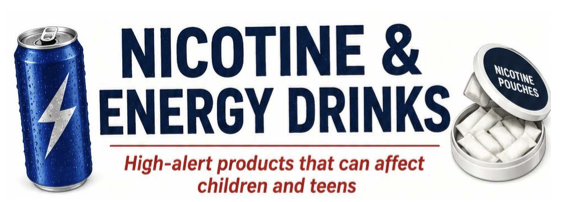
Ms. Prostor of New Canaan CARES cites nicotine- and sugar-laden energy drinks as behavioral health concerns, especially for children. Any adult who has dealt with the aftereffects of consuming several mugs of strong coffee will understand the implications.
Ms. Asiel describes nicotine pouches that look like small candies, and are placed between the cheek and gum. She continues, saying, “this is the new way to get kids addicted because no one knows — adults, teachers, they don’t see it. There’s no wad in your mouth that you can see. But kids think it’s safe because they think it’s not tobacco so it doesn’t have those properties.”
She notes that the Food and Drug Administration (FDA)considers these to be tobacco products.
Isolation
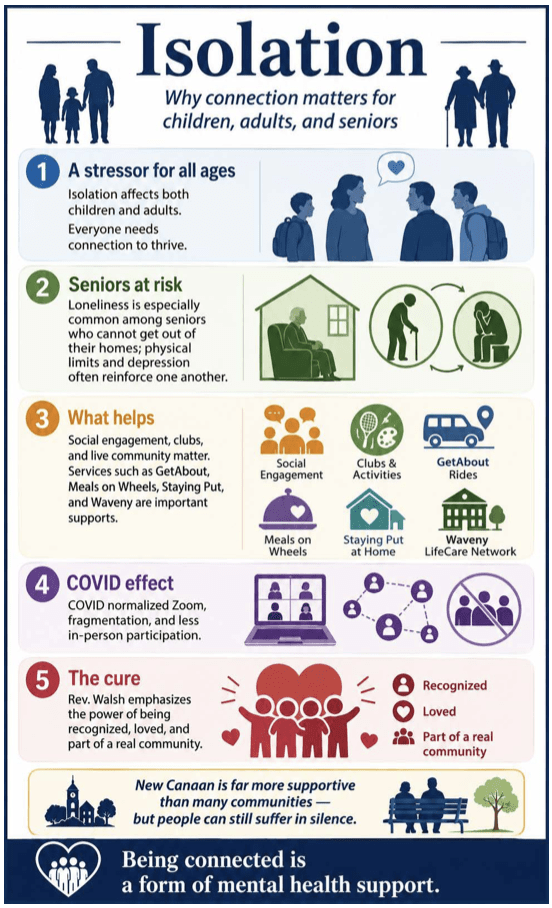
Isolation is yet another stressor, affecting both children and adults.
Ms. Rand says that “we mostly see a lot of anxiety and depression, especially in seniors. There’s a lot of loneliness and people who are unable to get out of their houses. That’s been a difficult hurdle for us.”
Behavioral health, and physical health, issues seem to be two sides of the same coin: Someone becomes depressed due to isolation, which is caused by a physical health limitation.
Dr. Barksdale cites “the elderly who can’t drive anymore, or whose chronic ailments have prevented them [from being] socially active the way that they used to be.” He notes, positively, that GetAbout www.getaboutnc.org, which provides rides for elderly and handicapped people, has helped them tremendously, as has the Meals on Wheels www.mowofnc.org program, which provides meals to residents whose physical, emotional, mental, medical or social condition makes it difficult to provide meals themselves. “The demand for that is unbelievable,” he stresses.
“One of the highest issues and factors from someone recovering from any kind of chronic illness is being able to have that social network around you to support you,” Dr. Barksdale emphasizes. “But also if you’re a widow or widower or have never been married, you don’t have that network unless you have a group of friends that are willing to check in on you, and be there and be supportive. And that’s very difficult to find these days.”
“So that social engagement is extremely important,” he notes. “Clubs are extremely important.”
Dr. Gerber adds that, “there are folks even in a town like New Canaan whose families, if they have children… now live far away and are alone.” He continues, observing that, “maybe they’re texting, maybe they’re emailing, which is great. It’s better than nothing, but it’s not the same as being right there and supported by others. I mean this is where organizations like Staying Put, and Waveny, and some of the other services in town for the elderly really are essential because those folks I think can often suffer in silence.”
Rev. Herr says, “There are an increasing number of seniors who are feeling isolated and alone. The Silent Generation and Boomers tend to be joiners, so if they can get out they more naturally seek community in various types of social groups. Robert Putnam, the sociologist from Harvard famous for his book “Bowling Alone,” notes that younger generations have stopped joining social groups, clubs and service organizations. They tend to substitute real-time social grouping with on-line virtual ‘community,’ which is not the same as ‘live’ community experience.”
But isolation is not limited to the elderly or infirm. “Taking the isolation away from children and making them feel like they’re part of a community is extremely important,” Dr. Barksdale says.
Dr. Gerber also emphasizes the ill effects of COVID, and the associated isolation, on behavioral health. “People got used to being on Zoom instead of going into the office. People got used to going online for what served some of their social needs …but it’s not the same as getting in your car or walking down the street and going to a meeting and participating and going to an in-person event. I think COVID really led to almost a normalization of this kind of fragmentation.”
Rev. Walsh talks of ‘seasons,’ with COVID being a season of coming together and mutual support, followed by a post-COVID season “in which people came out of the pandemic. And in that season, there was an increased anxiety in the community.”
“But the quality of social interactions and the time spent with family, friends, community has changed, has decreased,” Dr. Gerber continues. “And when you ask me why do we have an increased — at least awareness — of suicides in our community, why do we have increased depression and anxiety in young people? Why are we hearing about more loneliness in the elderly? All of those things are a consequence of this combination.”
Still, says Dr. Gerber, “one of the most remarkable things in my mind about a community like New Canaan is it’s actually far more supportive” compared with many other communities.
The cure for isolation, in Rev. Walsh’s view, is, “the power of being recognized. And so to be in a community within a community, a community of love where you are recognized for who you are, and honored and cherished. This is the greatest mental health: to be loved. And we seek to love people for who they are and where they are.”
Social Attitudes & A High-Achievement Town
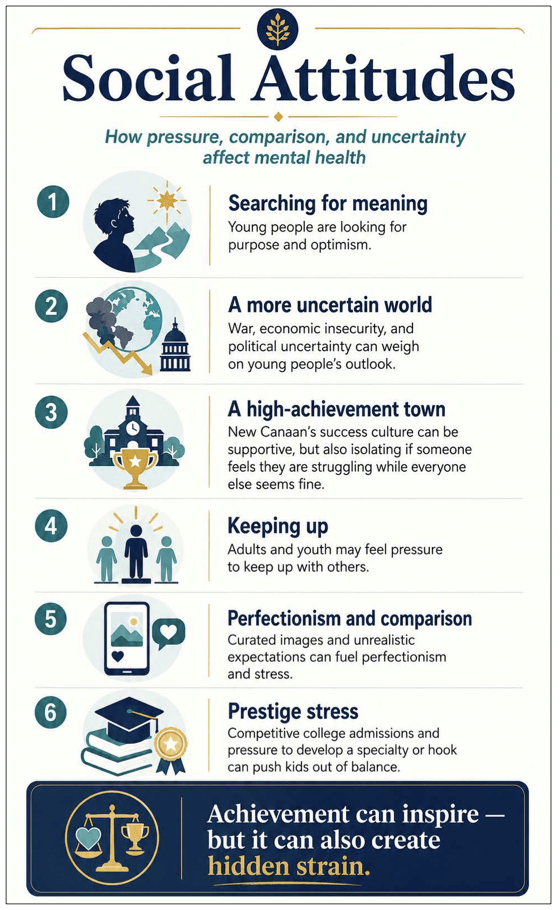
There are also certain social attitudes that affect people, and can lead to behavioral difficulties, especially young people, whose brains are still developing.
“Young people come in wanting to find meaning in their lives and in the world they’re looking for the thing to do and who to be,” says Dr. Gerber. “And if you grow up in a world where the promise is ‘I can do more than my parents, and I can accomplish more or make more money or move and do something exciting,’ that’s motivating. If you grew up in a world where what you’re being told for one reason or another by the older generation is the world is not doing well, that we have more war, that we have a less secure economy, that we have a more uncertain political environment that is a huge consequence on young people in terms of their optimism about the future.”
New Canaan has a deserved reputation of being a town of high achievers: Adults who are often leaders in their fields. High educational standards. Material wealth.
Lauren Patterson of the New Canaan Community Foundation observes that New Canaan “is wonderful, and people are so supportive and want to help each other, but it’s also a well off and high achieving culture. And so it’s sometimes even more isolating to feel that if I’m struggling, I must be in the minority here because it seems like everyone’s doing so well, right? So that’s part of the stigma reduction that makes it really possible to do some good stuff in New Canaan, but also maybe particularly challenging.”
Rev. Herr remarks that “I think many people struggle with the “keeping up with the Joneses” syndrome in our town. Every time I turn around, I’m meeting some new and incredible person who has accomplished so many amazing things in their life. We live in a community filled with high-achievers and “Alpha adults” who are often very competitive and successful. That’s a wonderful gift in many ways, but also can create a “gotta keep up” culture, and I think that can press in on adults, as well as our youth. We pride ourselves on having a high quality of life here, excellent schools and positive community spirit, but sometimes I think we could focus more on cultivating a healthy inner life.”
Supt. Luizzi notes that “there is a perfectionism, a quest of perfectionism amongst kids. It’s the comparisons that they make from their life and the lives that they believe others are leading as experienced through curated imagery and stories that isn’t the real thing, but they have a hard time distinguishing that. And so they’re trying to live up to ideals or lives that are just unrealistic.”
Rev. Walsh says, “I find myself surprised, but receive as truth when the adults of the community tell me the stress that they are under living in the community over questions of belonging in the community, around just trying to keep up with a community where it looks like Lake Wobegon where all the children are above average kind of thing. And the next thing is, with reference to adolescents in high school, I do believe that the kids of the community do feel stress.”
Digging deeper into the competitive challenges New Canaan’s children face, Rev. Walsh laments, “I mean, we have a whole generation of children, many of whom are not likely to go to the college of their choice because the number of applicants to the college of their choice is astronomical. The great upside of the common app was that everybody can apply. The downside was the numbers are ridiculous. I mean, they’re crazy numbers. And I do always hope that the children of our community can understand that there are incredible colleges all over the place for them to go to. But I do agree that the children of the community do experience stress, prestige stress.”
“Our children lead dissipated lives that are both dissipated and overfocused, in my opinion,” continues Rev. Walsh, citing sports as an example. “I do think that the emphasis on the idea that you need a specialty, a hook, an expertise to get into college is quite part of the waters that are drunk in the community, and that therefore parents find themselves in pursuit for their children of some kind of something. And I do think it leads to their children either playing too much hockey, too much basketball, or too much of this or too much of that. I think there’s some things that are out of balance in our kids’ lives.”
Diet
Diet can create behavioral, and not just physical, health issues.
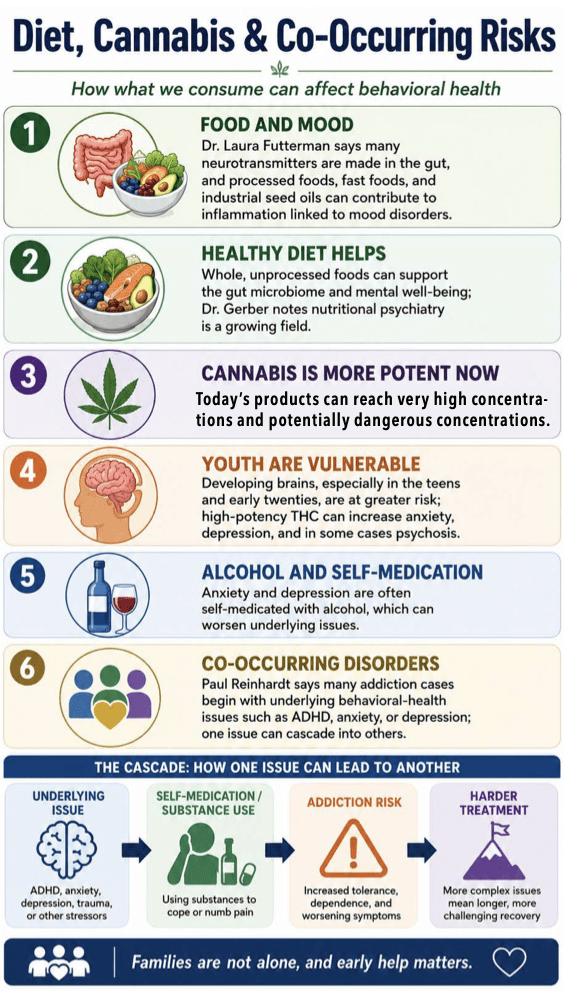
Laura Futterman, ND, a naturopathic physician in Stamford, sees “a myriad of diseases, symptoms, complaints — especially when it comes to weight loss, fatigue and mental health concerns.” She goes on to note that many patients “don’t realize that most of our neurotransmitters (serotonin, dopamine, etc.) are actually made in the gut and not the brain. Consuming processed, fast foods, industrialized seed oils can also cause inflammation in the gut, which leads to inflammation and the disruption of the gut lining integrity, as well as causing neuroinflammation, or inflammation in the brain that leads to mood disorders.”
“A healthy diet that supports our gut microbiome (our gut ecosystem), has a positive effect on our mental well-being,” Dr. Futterman emphasizes. “Eating whole foods that are unprocessed, such as organic fruits and vegetables, pasture-raised animal proteins, wild-caught fish and ancient grains can boost your mental health, lower inflammation and increase one’s overall health.”
“There’s now a whole field of psychiatry called nutritional psychiatry, and it is based on this idea that …what you eat actually matters,” adds Dr. Gerber. “And there are ways to change the mind in pretty profound ways that are about adjusting your diet. It doesn’t work for everybody, but nothing works for everybody. And it can be quite gentle.”
This emphasis on the importance of diet is ancient, going back to Hippocrates. The phrase “Let food be thy medicine and medicine be thy food” is often attributed to him.
Cannabis
Cannabis is not at all new, but the products now being legally sold are a far cry from the pot grandpa, mom or you had back in the day when the Woodstock Generation “Sparked a Doobie.”
Dr. Gerber notes that “you can buy 90% concentration oils now in some of these stores. What did that do to you?” He continues, noting “this is where the vulnerability problem comes in because somebody will tell you ‘It’s great; it doesn’t hurt me at all.’ And hey, I believe that’s true for some people and they’re the lucky ones. And for some people it is absolute poison.”
Ms. D’Loughy, who focuses on youth in the town’s Human Services Department, puts it simply: “I think it’s been very bad.” Why is this?
“People who are in their teens or early twenties [are most vulnerable] because their brains are still developing,” emphasizes Dr. Gerber. Consuming high-concentration THC by particularly vulnerable individuals for extended periods “can make [them] psychotic. And sometimes that’s reversible and sometimes not.”
Dr. Barksdale concurs, noting the article he co-wrote with Dr. Gerber on neurotoxicity and the developing brain.
“The potency [of cannabis] now has gone up dramatically,” Dr. Barksdale says. “And for a developing brain, it is increasing anxiety, depression and other illnesses.”
Rev. Walsh is worried as well, saying, “I believe the warnings from the mental health community about high-dose cannabis at a formative brain time, that they’re not overstating that. That is true, and it is petrifying.”
In March, Dr. Gerber submitted testimony before the Connecticut General Law Committee on HB5350, which, among other things, eliminates cannabis potency limits, so Connecticut’s recreational cannabis dispensaries can better compete against neighboring states that permit higher potencies.
HB5350 has been passed by the Connecticut legislature.
In his testimony, Dr. Gerber cited “that 80% of young people admitted to Silver Hill for severe psychotic disorders had histories of exposure to cannabis.”
He also cited a near tripling of psychosis hospitalizations among youth in Colorado after retail outlets opened, and strong links between high-potency cannabis and increased cases of schizophrenia among young men in Ontario.
As a father himself, Dr. Gerber said that he did not want his children “growing up in a state that has decided, in the name of industry revenue, to strip away the protections that stand between my children and a product that could break their minds.”
Interactions and Tragedy
Behavioral health difficulties are often combined with addictions — a worrisome combination.
Ms. Rand of the town’s Human Services Department observes that “I think a lot of people tend to self-medicate, especially with anxiety. They’ll self-medicate with alcohol.” Furthermore, “because especially with alcohol being a depressant, if you’re already anxious and depressed and you use that, it can definitely trigger underlying mental health problems.”
This tragic combination does not discriminate. It happens even in the very best of families. And these challenges can be difficult to treat, let alone cure.
Paul Reinhardt, founder of the New Canaan Parent Support Group (www.ncparentsupportgroup.org), says that behavioral health issues are often tied to addiction issues, citing that “over half the people that our parents are talking about that are struggling have ADHD.” He also cites that around 300 parents have attended his group’s meetings, indicating that addiction and behavioral health issues are common in New Canaan.
He founded the group after his son, Evan, died after a long battle with mental illness and addiction. Mr. Reinhardt’s goal in founding the group was to assist other families who have a member struggling with these challenges, and to help provide healing.
Evan Reinhardt, a child who “gave us such joy,” was “an adorable kid for many, many years.” However, around the seventh grade, things began to change. He developed anxiety, didn’t want to go to school, complained of stomach aches, got bullied, “wasn’t quite fitting in.”
Eventually, alcohol and drugs entered the picture. These “relieved his anxiety. He felt better. He felt like he could fit in better.” A cannabis addiction followed, and then prescription pills such as benzodiazepines. During his sophomore year in college, opioids arrived.
There was much support from family, with Evan experiencing successful recoveries and some relapses, but then “everything seemed fine,” Mr. Reinhardt recalls. There was hope.
Those hopes ended, however, on July 15, 2015, when the Reinhardt family had a knock on their door in the wee hours from the New Canaan police, who informed them that Evan had died of an opioid overdose.
In Mr. Reinhardt’s view, what starts as a single behavioral issue often cascades along the way, and gets turbocharged by addictions, causing things to spiral. “We talk about it in every case of a parent talking about their loved one in the support meeting. There are co-occurring disorders and mostly it’s a … mental health issue [that] comes first.”
He notes further that although mental health issues are the trigger, it’s not always so. “A lot of times, not every time, because there could be … Johnny’s doing perfectly well, but at age 11, he finds out about alcohol, starts using at a very early age.”
“What you hear an awful lot [in alcohol addiction meetings] is that person [is] saying, ‘As I was growing up, I just didn’t feel comfortable in my own skin. I didn’t feel like I really fit in with other people.’ You hear that all the time. I think it means there was an underlying mental health issue, and it could be anxiety.”
In Mr. Reinhardt’s experience, in almost all cases addiction is a pediatric disease, and “you have those conditions that set you up to have it,” with those conditions being “ADHD, anxiety, depression, and this underlying feeling, which it could be like a social anxiety.”
Where From Here?
In his “Discourses on Livy’s History of Rome,” Niccolò Machiavelli observes, among other things, that it is useful to return to first principles.
What would these principles be here?
Dr. Barksdale of Waveny LifeCare observes that “there is still a negative image from someone having any type of mental health issue.”
As quoted earlier, Dr. Gerber of Silver Hill concurs, noting that “because of stigma and because of fear, we have often been reluctant to accept the fact that those [behavioral health] vulnerabilities are all around us.”
So, the First Principle appears to be: Let’s Talk About It. Let’s Purge the Stigma.
As the old shibboleth says: The first step in solving a problem is admitting there is one.
And the corollary of the First Principle is the Second Principle: It’s OK Not Just to Talk About It, But to Take Action to Address It.
Assuming people will start to talk openly about behavioral health challenges, and seek relief and support, what resources are available in New Canaan to help struggling people and families? And what are the missing links?
Publisher’s Note
Next week, Part 2 will move from the public health picture to the human stories behind it.
John Kriz will examine the experiences of people who sought help, accepted treatment, found support, and began the hard work of recovery or stability. Their stories will not reduce mental health to slogans or statistics. They will show what help can look like in real life: the first call, the first appointment, the family conversation, the relapse, the return, the support group, the clinician, the friend who stayed, the program that opened a door.
Part 1 showed the scope of the challenge. Part 2 will show the courage of those who have faced it.
That distinction matters. Awareness is necessary, but awareness without action is incomplete. The next step is to understand what happens when people stop hiding, ask for help, and discover that care is available, recovery is possible, and no one should have to suffer alone.