By John Engel
In this two-part series, John Engel examines national residential real estate trends from 2025 and compares them to the New Canaan market.
This week’s column zooms in on what buyers and sellers are thinking.
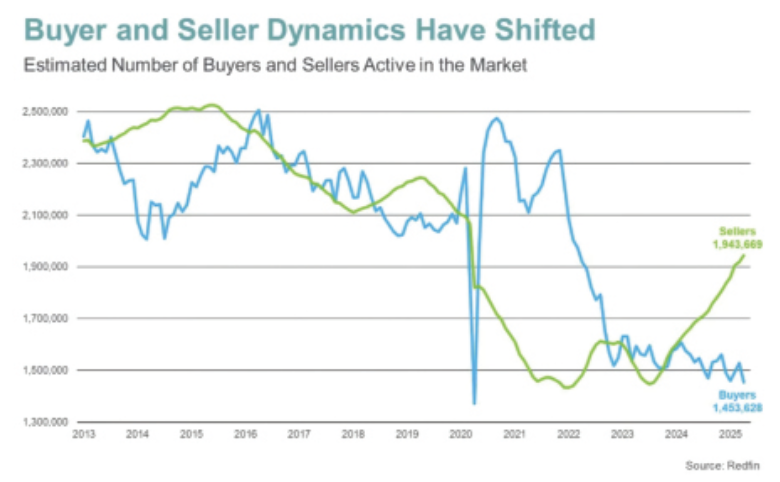
2025 was a year where everyone seemed to be looking for a sign. Mortgage rates moved (from 6.9% to 6.2%), inventory stayed tight (4.2 months inventory), commissions became a headline, and buyers and sellers spent much of the year trying to understand what had actually changed and what hadn’t.
Zillow’s 2025 Consumer Housing Trends Report is based on surveys of 5,000 buyers and 6,200 sellers. It’s useful. It’s also incomplete in the way all national data is incomplete. Fairfield County is not the United States. We are more expensive, more competitive, more local, and more sensitive to small shifts in leverage.
So instead of treating national findings as conclusions, we’ll use them as a starting point. I’ll tell you what Zillow says is happening nationally, and then I’ll tell you what I’m seeing locally, across the twelve towns that make up my southwest Fairfield County market. In some cases, the data lines up neatly. In others, it doesn’t. That gap is where the real story is.
Do buyers and sellers still use agents?
Zillow reports that agents remain central to the transaction. Nationally, 85% of buyers and 93% of sellers worked with an agent at some point during their process, despite the availability of DIY tools and online platforms.
In Fairfield County, those figures are higher. Once a property enters the MLS, professional representation is essentially universal. While off-market and private sales exist, they are a tiny fraction. They’re not driving volume. In our market, nearly every sale involves a listing agent, and the overwhelming majority involve buyer representation as well.
What is worth noting is how representation is structured. In the 12-town southwest Fairfield County market, roughly 14% of transactions involve the same brokerage on both sides. That means about 86% of deals involve separate firms representing buyers and sellers. This is not a market dominated by dual-agency or one or two powerful offices. It is competitive, fragmented, and still very much driven by professional intermediaries.
Do buyers and sellers really hire the first agent they contact?
Zillow found that 47% of buyers and 59% of sellers ultimately hired the first agent they contacted, suggesting that many consumers do not shop extensively and often default to an existing relationship or a strong first impression. This is presented as evidence that agent choice is often quick and relatively uncomplicated.
In southwest Fairfield County, that first-agent preference feels overstated to me. Fairfield County has higher prices, more agents per capita, and fewer transactions than national averages. It is also not dominated by one or two large agencies, so the market is more evenly distributed. Instead, there are at least 10 strong firms competing in Fairfield County, and each town functions as its own defined market with strong local players.
In the Fairfield County environment, it is less common for buyers or sellers to call one agent and stop than it might be nationally. The financial stakes are higher, the strategies vary meaningfully, and consumers are more inclined to compare pricing advice, marketing plans, and risk tolerance. Competition among agents is visible here, and clients take advantage of it.
Are digital tools still a differentiator?
Zillow reports that 78% of sellers are more likely to hire an agent who offers high-resolution photography, and 71% are more likely to hire an agent who provides virtual tours or interactive floor plans. Nationally, these tools are framed as meaningful advantages in agent selection.
These numbers feel low in the Fairfield County market because digital presentation is no longer a differentiator. It is a baseline expectation. Nearly every listing already meets modern standards for photography, floor plans, and online presentation. Sellers assume this level of marketing as a given, and agents who fail to deliver it simply don’t compete.
What has changed is not whether these tools are used, but how little credit they now earn. Good presentation no longer helps you win. It only keeps you from losing.
How do buyers and sellers want to communicate?
Zillow found that a majority of buyers prefer to communicate with agents by text or messaging apps, rather than phone calls, pointing to a broader shift toward written, asynchronous communication.
Locally, this is accurate. In competitive, luxury markets with affluent buyers and sellers — and especially where listings are serviced by a team rather than a single agent — there is an increased reliance on group texts. Deals move quickly, multiple parties are involved at once, and texting allows everyone to stay aligned without slowing the process down.
Do buyers and sellers think commissions are fair?
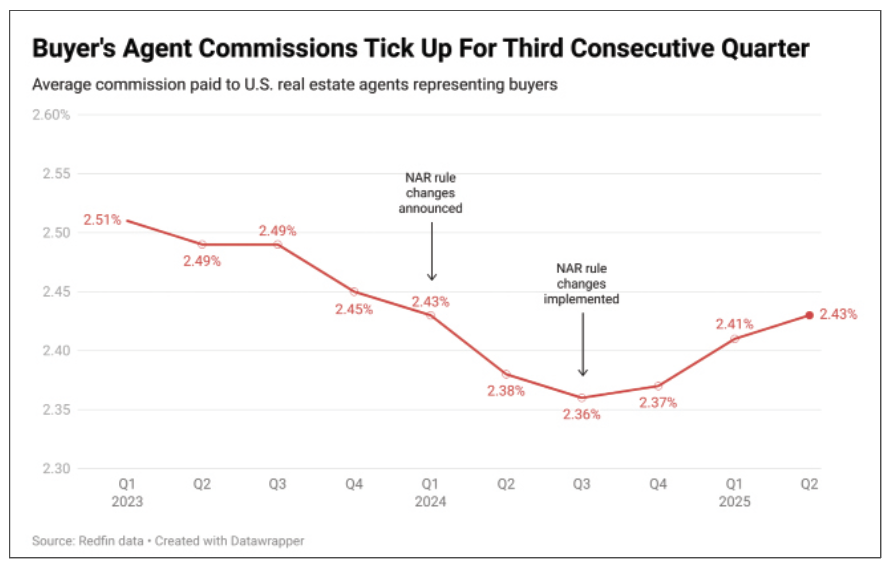
Zillow reports that 73% of sellers and 70% of buyers say their agent’s commission was fair, with a small percentage saying commissions were even too low. The finding is presented as reassurance amid widespread discussion of commission changes.
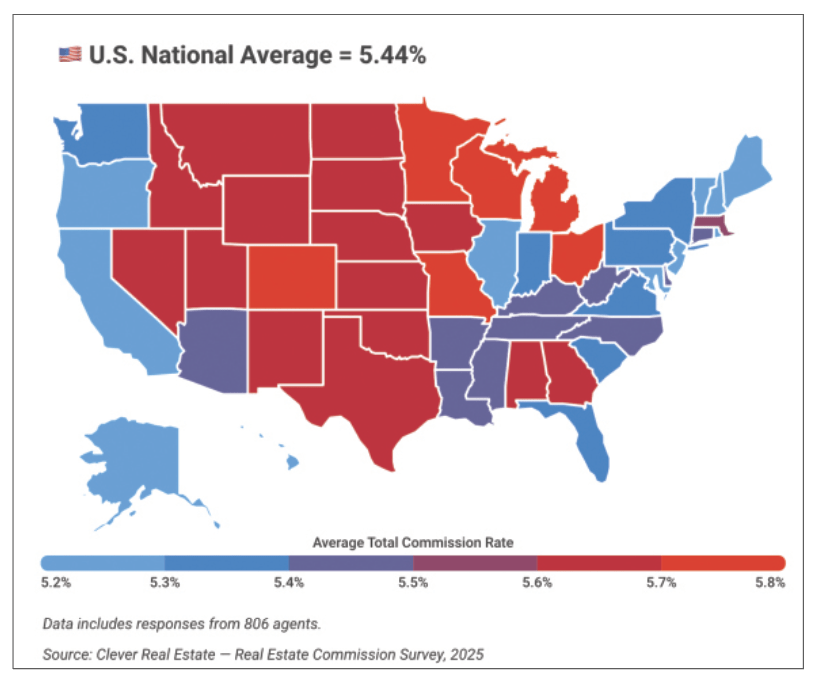
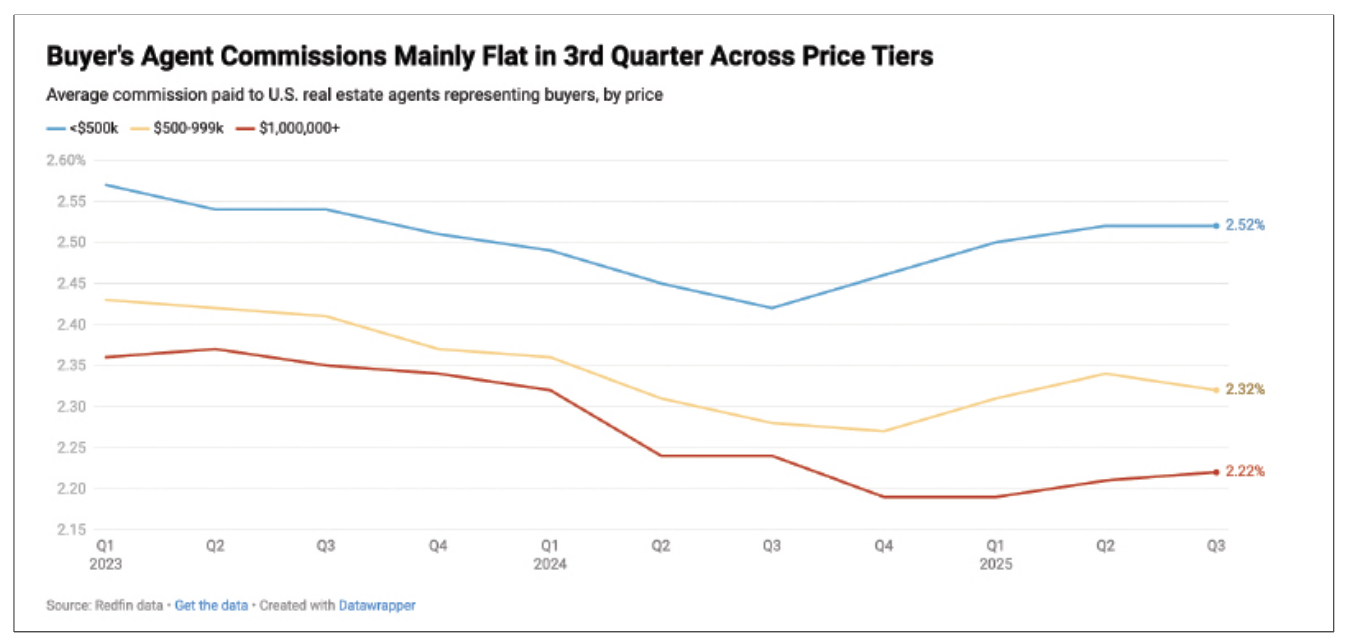
Zillow asked the wrong question in a year that saw unprecedented uncertainty about how commissions are handled. Fair? It’s never fair when commission is pegged to the price of the house, not the value of the service. Scarcity has caused power to shift from buyer agency to listing agency, and the effect of court cases this year accelerated that shift. There are more commission conversations taking place than ever before, and they are increasingly happening at the expense of buyer agency. Zillow’s findings don’t fully reflect the impact these negotiations are having on how deals are structured, how representation is valued, and where pressure is being absorbed in real transactions. We’d all like to know what the real impact of the Sitzer-Burnet case on commissions has been nationally, and in specific submarkets like ultra-luxury, second homes, and here.
In next week’s column, John will delve into what’s changing in real estate transactions.
John Engel is a broker with the Engel Team at Douglas Elliman in New Canaan. This weekend, he helped set up a sewing room for his daughter in his (unfinished) basement. New Canaan loves a nice, dry basement. It’s usually storage, a playroom, a TV room, or a workshop. John has admired a few million-dollar basements in town, with glass walls and fancy lighting to show the wine collection and others with enough big-screen TV’s to rival the sports book at Caeser’s Palace. A few older houses still have the “working” kitchen in the basement, while the main kitchen is “fancy.” In Florida, where there are no basements, they are truly deprived of one of the great joys of home ownership.