By John Engel
In this two-part series, John Engel examines national residential real estate trends from 2025 and compares them to the New Canaan market.
Last week, John revealed what buyers and sellers are thinking. In this week’s second part, he delves into what’s changing in the way houses are bought and sold.
How hard is it to sell a home — and how often do deals fall apart?
Zillow reports that nationally, today’s typical seller holds two open houses, leaves the home multiple times for private showings, and that 50% of sellers experienced an offer falling through before closing. Zillow presents this as evidence that listing agents need to set clearer expectations around the selling process.
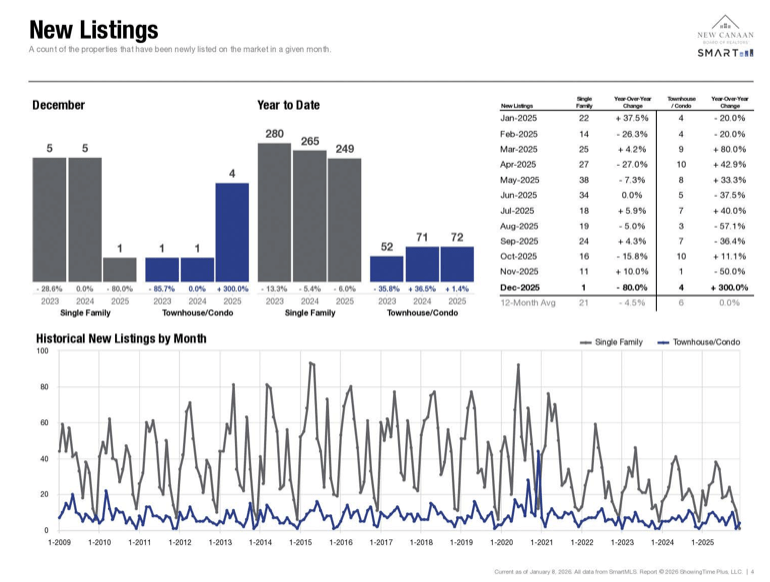
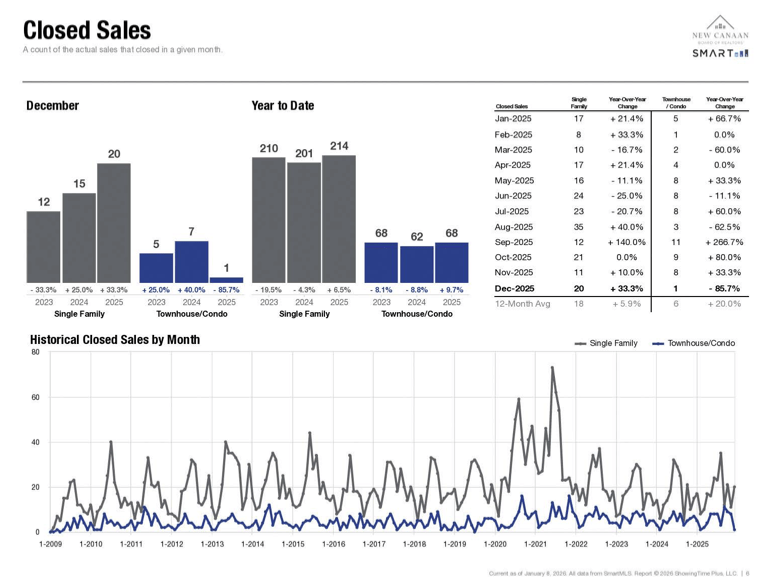
Here in New Canaan, we are still in a seller’s market where sales are decided in the first 30 days, often driven by a strong opening weekend. That usually requires the owner to leave the house for every private showing. We rely more heavily than most markets on multiple private showings followed by a series of detailed inspections. During that process, around half of accepted offers fall apart.
There are several reasons for this. Inventory scarcity creates panic among buyers trying to win. Many experience regret after winning a multiple-bid situation. Inspections reveal real deficiencies. And on the seller side, there is a growing willingness to move immediately to a backup offer at the first sign of wavering commitment or an attempt to renegotiate. Sellers do not like the current loss of leverage, and that tension is causing a record number of deals to collapse. Yes, probably 50%.
Are inspection waivers declining?
Zillow reports that the share of sellers who received an offer waiving the inspection declined year over year, marking one of the more notable shifts in buyer behavior.
Locally, we saw a decline in inspection waivers in the Fall market, but I don’t view this as a permanent change. As competition intensifies in the Spring market, inspection waivers are likely to return. Realtors, aware of current inventory levels and demand, will again be advising buyers to waive inspections to win in multiple-offer situations.
Are first-time buyers declining?
Zillow reports that the share of first-time buyers declined year over year, reflecting affordability pressures and increased competition.
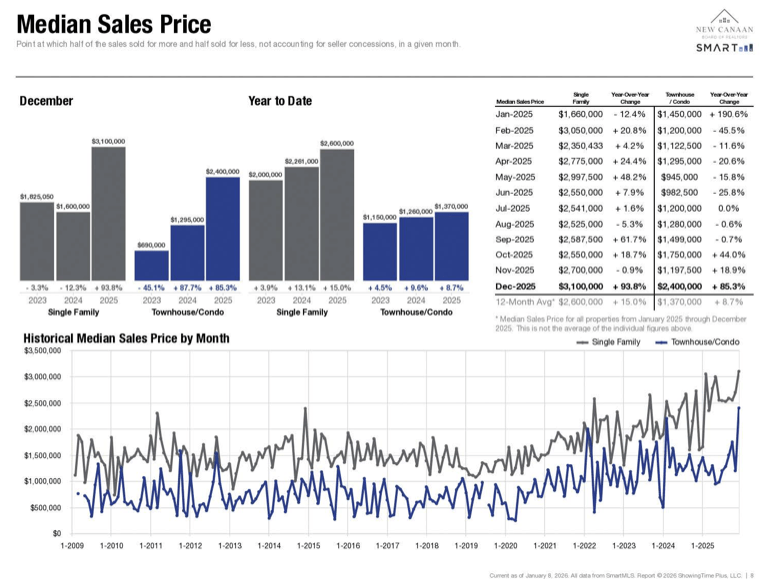
Here in Fairfield County, we are starting to price ourselves out of the first-time-homebuyer market. Setting aside the most expensive Fairfield County communities, many of which now have median prices above $2 million, we are seeing increased pressure in the surrounding, less expensive towns. First-time buyers who require financing are increasingly competing with downsizing seniors who do not. In the small-home and condo market throughout Fairfield County, that financing contingency is often the deciding factor. In multiple-bid situations on below-the-median homes, first-time buyers usually lose. So much for affordability as public policy.
Are fewer sellers taking their homes off the market?
Zillow reports that the share of sellers who temporarily took their home off the market declined year over year, suggesting that fewer sellers are pausing listings once they come on.
In Fairfield County, inventory levels have declined steadily across the county for five years in a row, while prices have continued to rise. That dynamic has changed seller behavior. Many sellers are choosing to leave their homes on the market in a rising environment, aware that buyers are active year-round and that tightening inventory may eventually work in their favor.
The alternative is to take a home off the market, invest in improvements, and reintroduce it in a different season. But many sellers don’t have the cash, or the willingness, or the patience to do that. Instead, they are waiting for the market to come to them.
Are fewer sellers also buying another home?
Zillow reports that the share of sellers who also purchased another home declined by 16 percentage points year over year, one of the largest shifts in behavior measured in the report.
There are several forces behind this, and they play out differently depending on the market. In Fairfield County, many sellers have found it difficult to downsize within the same market. Rising interest rates created real hesitation around giving up 2% mortgages. Some sellers already owned second homes and didn’t need to replace their Fairfield County residence. Others moved during the pandemic and later found that their circumstances changed, eliminating the need for a second home tied to New York City.
Work-from-home uncertainty also disrupted plans that were built around a daily commute. And while southern Fairfield County is expensive and often described as luxury, it does not behave like ultra-luxury markets such as Palm Beach, the Hamptons, Aspen, Jackson Hole, New York City, or Los Angeles, where dramatic price appreciation has been accompanied by significant new construction. Here, without new inventory, sellers are often forced to pause on the next purchase, moving out of market, renting, and in some cases delaying the buying process indefinitely.
What 2025 actually told us
Zillow’s national data is useful because it shows how buyers and sellers feel. But feelings don’t close transactions. Mechanics do. And in southwest Fairfield County, the mechanics are being driven by scarcity, leverage, and risk in ways that national averages can’t fully capture.
Inventory has been declining for years. Below-the-median homes are often the most competitive segment of the market. First-time buyers are losing ground not because they lack interest, but because financing has become a liability in multiple-bid situations. Sellers are staying on the market longer, not because they are confident, but because they have limited alternatives. And while agents remain central to nearly every transaction, the pressure inside those transactions has shifted — particularly around inspections, fall-throughs, and commissions.
None of this feels transitional anymore. It feels structural. The market hasn’t frozen, but it has tightened. Risk has moved around, leverage has become more situational, and outcomes increasingly depend on how well buyers and sellers understand what they are actually competing against.
That may not be the neatest story. But it is the one 2025 made clear.
John Engel is a New Canaan–based real estate advisor with Douglas Elliman. He writes about housing the way people experience it in real time: inventory at a twenty-year low, expectations for the spring season already running high, and more than a foot of snow forecast for this weekend — an extraordinary January event that will likely disrupt photography, showings, and February launch plans before the spring market even gets started. His weekly column looks past national headlines to focus on what’s actually happening on the ground in Fairfield County, where timing, weather, and psychology often matter as much as price.