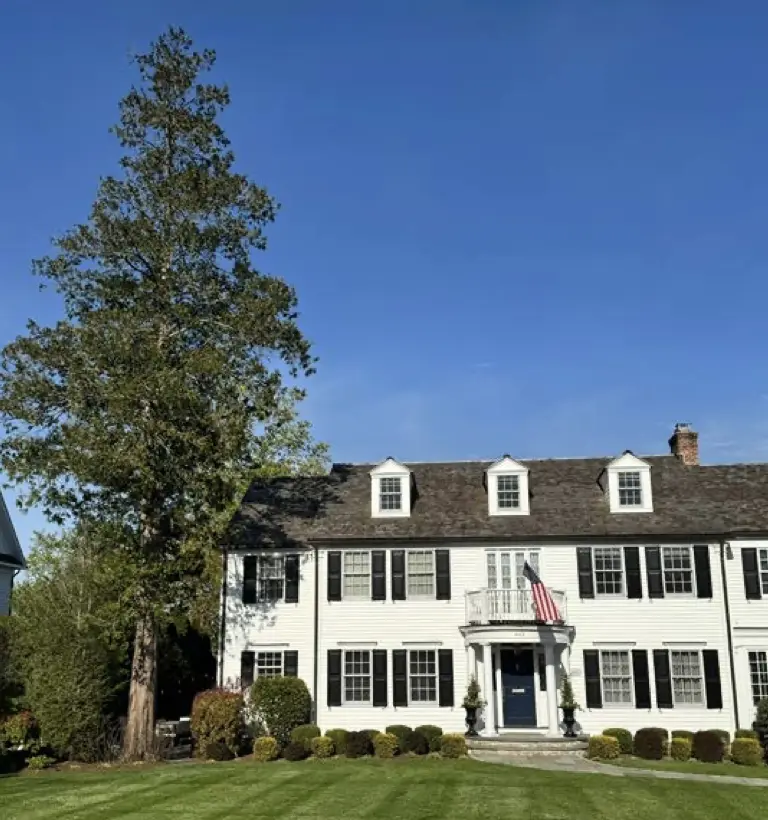
18 takeaways from this week’s ‘Boroughs and Burbs’ show, with Jonathan Miller and Scott Hobbs joining Roberto Cabrera and John Engel.
By John Engel
Low interest rates do not automatically make housing more affordable.
This is probably the strongest idea in the whole conversation. Jonathan’s point is contrarian and memorable: When rates are pushed too low, they can wipe out inventory, create instant demand and making housing less affordable.
 Inventory is still the most important housing metric.
Not rates, not headlines, not politics. Inventory tells you how distorted a market is five years after the pandemic.
Today’s market keeps breaking the old rules.
In a normal cycle, sales slow, inventory builds, and prices fall. In this cycle, sales slowed and prices often held or rose anyway.
Consumers are not disappearing. They are taking longer to decide.
Uncertainty is not always demand destruction. Sometimes it is just delayed decision-making.
The Northeast still has an inventory problem, while parts of the Sun Belt are normalizing.
This point pushes back against lazy national narratives.
If you haven’t been able to sell a house in three and a half to four years, your pricing is wrong. You’re not on the market.
Sellers delude themselves, saying, “It only takes one offer” and “Maybe a rich person will show up who really wants it” and “We should leave room for negotiation” and “I hear people are leaving the city because they don’t like the new (fill in the blank).”
There is still enough demand to absorb limited inventory and keep prices buoyant.
The market is constrained, not collapsing.
The market is healthier than the mood around the market.
This idea runs throughout the whole episode. Headlines feel worse than the underlying transaction data. Roberto listed the Spring crises for 10 years, illustrating that every year, something tries to spoil the party.
Real estate professionals remember the red lights and forget the green lights.
Jonathan’s “red light theory” is a very usable metaphor. Agents and consumers tend to fixate and remember the latest obstacle — and miss the broader forward movement.
Spring is the Super Bowl of housing, which is why everyone is hypersensitive to anything that interrupts it.
This is a good line for framing seasonal psychology. Each open house weekend is analyzed as intensely as instant replay, as we pick it apart.
The value proposition of property has been recalibrated upward.
This statement of Roberto’s is strong. It opens the door to a broader argument that homes are now valued differently as shelter, status, utility, and asset class.
More people now treat housing as an asset class, not just a place to live.
We’re not just talking about a handful of people who have second homes. This is why second-home ownership, wealth transfer, and constrained supply matter.
Generational wealth transfer is helping support high-end prices.
This is a useful supporting point, especially for luxury markets.
Where do you live while you renovate the house? There’s no rental anyplace. You can’t do it. That gums up the construction market, too.
This is a keen insight. Tight inventory is not just about buying. It also jams up the renovation chain because rentals are scarce.
Construction inflation is not just about materials. It is also about expectations.
Scott made this strong point: Some cost increases are real inflation, and some are buyers wanting better finishes, better systems, and more complexity.
People eventually adjust to higher prices, even if they hate them.
That applies to houses, renovations, rentals, and daily life. Everyone’s had to adjust to the pricing.
The housing market is being slowed more by uncertainty than by lack of desire.
Consumers just take longer to make decisions.
The Hotness Meter
Palm Beach: 9 or 10
And that’s inventory… That’s characteristic of that market.
Miami/Miami Beach: 5 or 6
Inventory is above pre-pandemic levels. The proper word is probably “normalizing.” And it’s not that it’s cold; it’s just not like Palm Beach.
Naples/Sarasota: 3
The hurricanes went up the Gulf side a couple years ago, and they still haven’t fully recovered.
Manhattan: 8 or 9
Prices are rising. Sales are rising. Listings are falling. Rentals… are near record or, depending on the month, at record levels, and leasing activity is up.
Los Angeles: 3
It’s not bouncing back. This market is tied to the aftermath of the Palisades fire and pressure on Hollywood and tech.
Austin: 5
Austin is, right now, a good five. It had been a 2, and the Sun Belt responded with a lot of supply. It overbuilt.
Hamptons: 9 or 10
The sales activity could be double what it is — the market share of $5 million or higher houses is the highest in the history of the Hamptons.
Long Island: hot
Inventory levels on Long Island are about 4,000 units. During its height, 20 years ago, it was at 26,000 units. Even if inventory’s rising today, it’s still half of what the normal levels should be. Prices are going straight up.
North Fork, LI: hot
One of the places money is being spent is on the East End, and when there’s limited inventory, what happens to housing prices? They go up.
Greenwich: hot
It’s not that wealthy people fleeing the city. It’s that Wall Street in 2024 and 2025 had the highest compensation and the highest profits in history. So that’s why the phones in Greenwich are ringing off the hook.
Montclair: hot
If you have four people bidding on a house in Montclair, is that any different than eight people bidding on a house? It’s still out of balance.
Fairfield County: hot
We’re also seeing the high-end shift in Westchester and Connecticut. In the real estate market that we have today, with 50 houses on the market, you have four buyers show up, and it’s a boom.”
Visit boroughsandburbs.com to listen to this episode and more.
John Engel is a broker on the Engel Team at Douglas Elliman and in addition to writing this column, he hosts an hour-long interview show every Thursday. Writing and talking are very different skills. Good writing is about coming up with an original thought and then shaping that thought by cutting and more cutting. Like sculpting. In contrast, a live show requires editing in-the-moment and pacing. More like music. Sometimes we slow down the question to get a better, louder answer.