By Emma Barhydt
I always get itchy right around the middle of May. Like a migratory bird, pure predilection: north… go north. My bags are often packed before I even have a bed to sleep in. For as long as I can remember, the last day my mom could stand staying in town—usually a few days before the end of school—we’d pack up the car and drive north and spend the whole summer in Maine.
Last summer, like every summer—though now I’m on my own or with friends—I did the same drive. The routine never really changed. Passing Old Sturbridge Village, waving hello to my friends in Boston, reminiscing about an old friend from Lowell, stopping for wine at the New Hampshire Liquor Store, stopping for a meal and groceries in Portland, grabbing Aroma Joe’s in Brunswick, windows down and music up, until I hit Boothbay, or Deer Isle, or Mount Desert, or wherever I’m going.
This time, I was, in fact, going to Deer Isle. I pulled into the driveway of the little cabin far after dark, when the stars could wink their small hellos in the clear coastal sky. I grabbed my bag, went inside, and went to bed without thinking too hard about anything. In the morning, I glanced at the windshield out of habit—ready to deal with the usual mess—and there was nothing to deal with.
No streaks. No splatter. No evidence of the drive. I shrugged and got in the car. Which feels insane now, because that should have been a bigger moment. Or at least one I stayed with longer than it takes to brush a tick off your leg and head to the beach. But that’s how things like this work. They arrive small. Easy to dismiss. Easy to file away as nothing. Until something comes along and names it.
That something, for me, ended up being The Great Divide by Noah Kahan. More specifically, The Great Divide: Last of the Bugs. Because hearing that that’s the album title and the tour name has been scratching at something in my brain that I keep remembering and then forgetting. It’s this, that the bugs are dying.
I had already been living inside that realization without putting it together. Less to clean off the windshield. Fewer mosquito bites than I expect, to the point where I genuinely forgot where I put my anti-itch stick. Crickets missing. Fireflies.
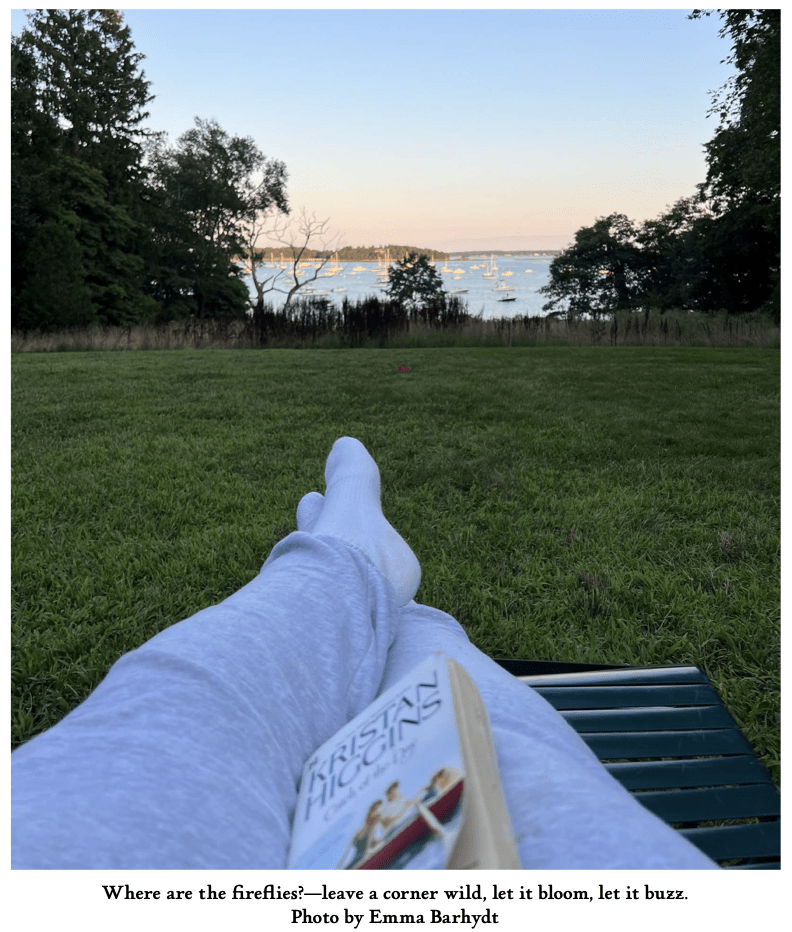
They used to build. Slowly, then all at once. A flicker, then another, then suddenly you’re standing in it and the whole yard feels alive in a way that’s hard to explain without sounding like you’re exaggerating. Last summer, I stood outside and waited. And waited.
The few fireflies that showed up felt enormous. I would sit on my front steps and watch them, count them without meaning to, lose count because there were so few to keep track of. I remember thinking that last year there were more than this. And the year before that, more still.
Listening to Noah Kahan, everything feels tied to place. Roads, houses, seasons, the way a town holds onto you whether you stay or go. The album itself becomes a place, or a memory of one, and it sits with you. And once The Last of the Bugs lodged itself in my head, everything I had been half-noticing started lining up.
Insect decline. Which sounds like something you can read once and move on from. Populations dropping across species, across regions, across time. Pesticides, development, climate change, light pollution—all of it stacking in the background. And bugs are easy to write off. They bite, they buzz, they show up uninvited.
We are New Englanders. Complaining about bugs is one of our core personality traits. Mosquitoes, humidity, that one thing that bit you through your jeans somehow. If those are gone, what exactly are we supposed to complain about all summer? There’s a version of this where fewer bugs sounds like a win. It isn’t. They’re doing everything. Pollinating, breaking things down, feeding everything else. The whole system leans on them whether we think about it or not.
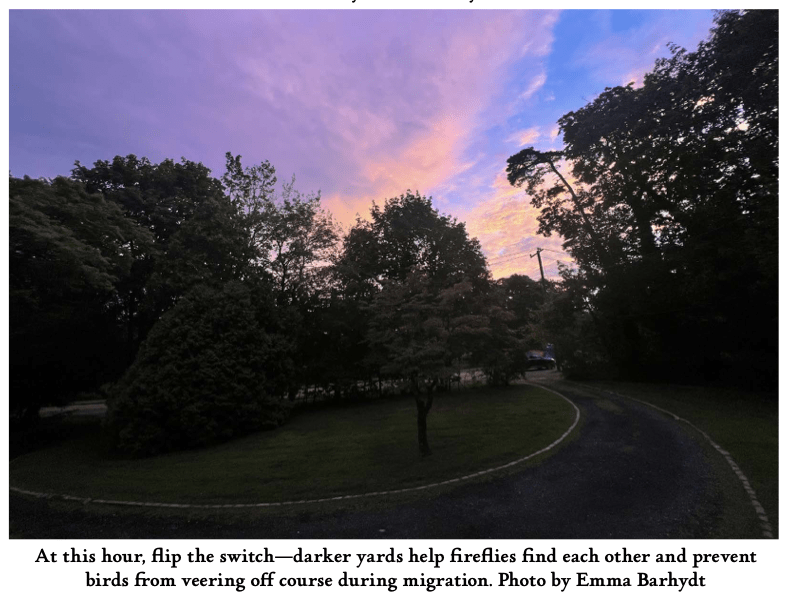
Fireflies just make it impossible to ignore. They blink because they’re trying to find each other. And we’ve made that quite difficult. Every porch light left on. Every floodlight that turns a yard into a parking lot. Every street that never really goes dark anymore. It all adds up, and suddenly something that used to feel constant starts to feel… conditional.
At the same time, this is one of the biggest tick years in a long time. People are jumpy about it. For good reason. Nobody is trying to play games with Lyme disease. So the answer isn’t pretending that problem doesn’t exist. It’s being intentional.
There are companies like Tick Control LLC that use food-grade treatments and avoid spraying flowers or anything pollinators rely on. You can see last week’s issue for more coverage on them. Their process means you can protect yourself without wiping everything else out in the process.
That’s the lane here: attention to detail, and action. The big one is the Xerces Society for Invertebrate Conservation. They’re basically leading firefly conservation efforts in North America—habitat protection, research, policy work, all of it. You can donate, volunteer, even advocate locally with actual scripts and resources they provide.
If you want something more hands-on, try Firefly Atlas. It’s a nationwide project where you literally go outside at dusk, watch fireflies, count the flashes, and log what you see. That data goes to scientists who use it to track populations and make conservation decisions. Walk outside. Count bugs. Log it online. Boom—you’re doing real ecological research.
There’s also Firefly Conservation & Research, which focuses entirely on fireflies. You can turn your yard into a certified firefly habitat through them, which is both very cute and actually useful.
Globally, there’s the IUCN Firefly Specialist Group, which identifies endangered species and shapes conservation strategy. Supporting partner orgs like Xerces helps that work continue.
There are even places doing breeding and restoration work, like the Butterfly Pavilion, trying to rebuild populations in the wild. There’s even a firefly sanctuary in New Canaan.
The biggest threats are not mysterious: habitat disappearing. Too much light, pesticides, and climate shifts. You don’t need to move into the woods and become a woodland witch (tempting, I know) to help conserve the bugs. You have to notice, and act.
A few weeks from now, it’ll be warm enough to sit outside at dusk. You’ll hear the usual things—the low hum of traffic somewhere far off, someone’s screen door, a dog barking down the road.
It’ll be warm soon. Not fully summer, just enough that you end up outside without really deciding to. Same steps, same time of night, that stretch where everything used to start on its own. I’ll sit there longer than I mean to. I’ll think about something else at first. What I’m doing tomorrow. What I forgot to do today. Something from The Great Divide will still be stuck in my head, half a line looping without me really noticing it.
I’ll remember to actually look; not just at what’s there, at what isn’t. I’ll turn the porch lights off at dusk.