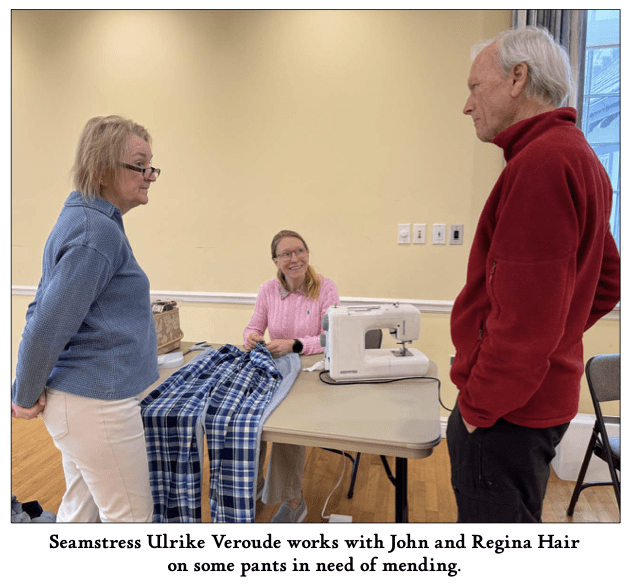
 Planet New Canaan’s second free Fix-It Cafe brought residents to Lapham Community Center on Saturday, May 2, for a community repair event aimed at extending the life of household items and keeping usable goods out of the waste stream.
Residents were asked to make reservations for help with lamp and small electrical repairs, bicycle repairs, wood and small furniture fixes, and sewing and clothing repairs. It was a repair opportunity for broken lamps, bikes, small furniture and jewelry, with the environmental purpose of giving items “a second life.”
Katie Owsley, co-president of Planet New Canaan, said the event reflected both demand and appreciation from residents.
“I am gratified Planet New Canaan’s second, free, Fix-It Cafe has been so popular. Lots of happy customers,” Owsley said.
The Fix-It Cafe drew on volunteer artisans and repair-minded residents who donated their time and skill to help neighbors mend furniture, bicycles, clothing and small electrical devices. The format was practical: residents brought items that might otherwise have been discarded, and volunteers assessed what could be repaired on site.
The event’s premise was simple but increasingly relevant. A broken lamp, a loose chair, a bicycle in need of adjustment or a torn garment can move quickly from closet to curb. The Fix-It Cafe offered another route: repair before replacement.
Planet New Canaan presented the event as part of its broader sustainability work in town. The organization’s mission is to provide education about environmental issues and inspire change that improves sustainability in New Canaan. Its public programs include waste-reduction efforts, volunteer initiatives and reuse-oriented projects such as the New Canaan Swap Shop at the Transfer Station.
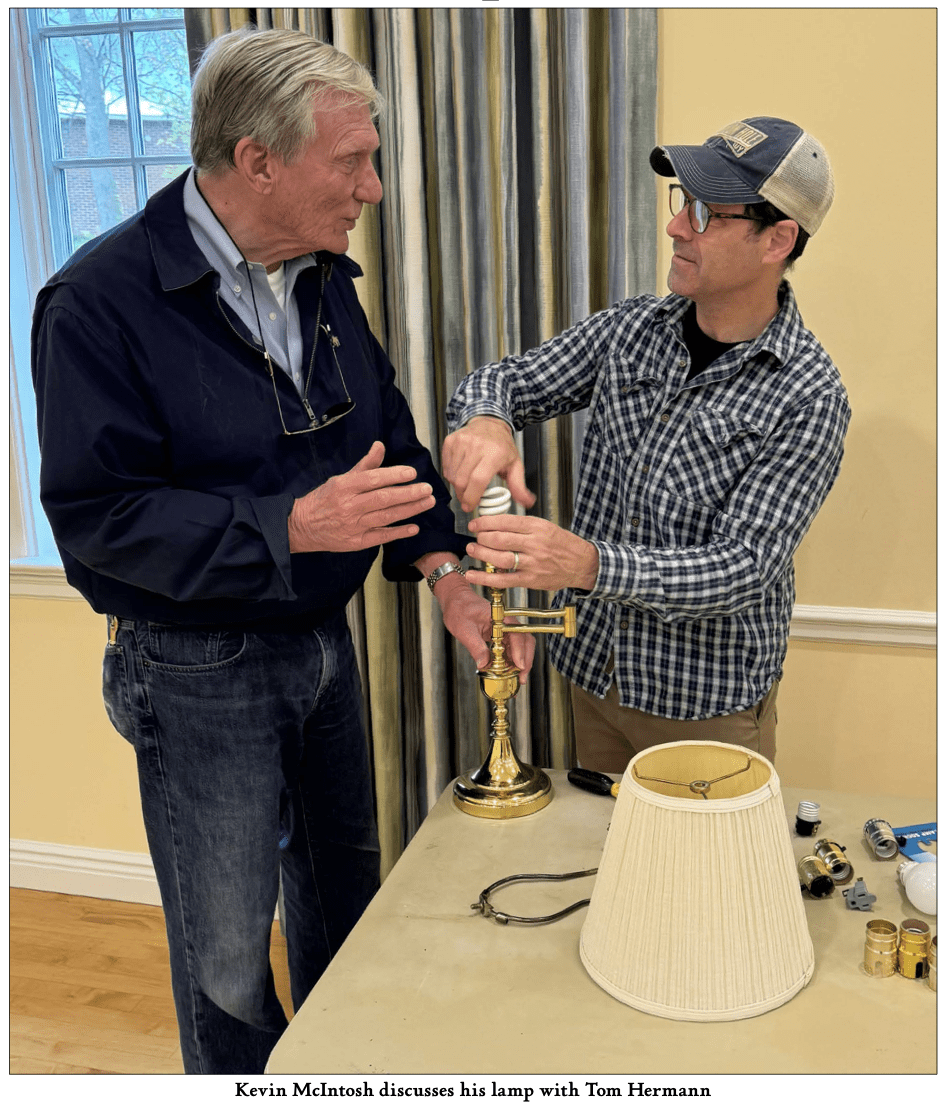
Last year’s event brought residents seeking repairs helping restore possessions that still had practical value. This year’s return suggested that the model has found a local constituency.
The event also placed intergenerational practical knowledge at the center of local environmental action. Rather than approaching sustainability through policy discussion or consumer messaging alone, the Fix-It Cafe relied on hands-on skill: tightening, stitching, wiring, sanding, adjusting and diagnosing.
For residents, the benefit was immediate. A repaired object saves money, preserves something familiar and reduces the need to buy a replacement. For Planet New Canaan, the larger goal was cumulative: fewer usable items entering landfills, less consumption of new materials and more public awareness of repair as a normal household option.
The Fix-It Cafe’s success also underscored a central principle of local environmental work: practical programs often gain traction when they meet residents where they are. A person does not need to be an environmental specialist to bring in a broken lamp or a bicycle in need of repair. The act itself becomes the lesson.
Planet New Canaan’s next challenge may be accommodating the interest the event has generated. Owsley’s post-event assessment pointed to a program that has moved beyond experiment and into demand.
For a town accustomed to volunteer-led civic efforts, the Fix-It Cafe offered a familiar formula applied to a contemporary problem: neighbors with skills helping neighbors with needs, one repair at a time.