By Geri Rhoades
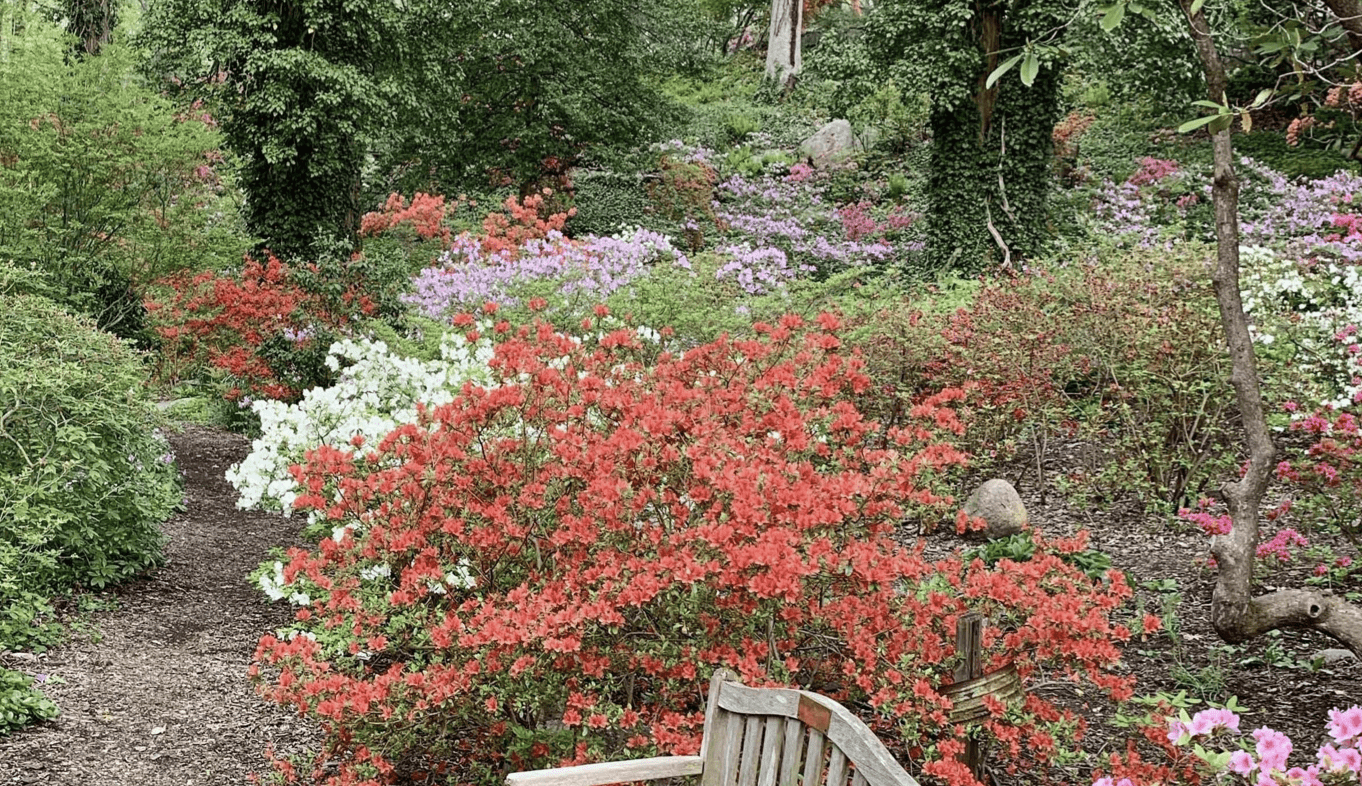
Come see the breathtaking display of azaleas and rhododendrons in peak spring bloom at Lee Garden, a pride of New Canaan. On May 9th from 1:00–4:00 PM, visitors are invited to enjoy guided tours and light refreshments while exploring this extraordinary landscape. Bring friends, family, and a camera—this is spring at its most spectacular.
The Olive W. and George S. Lee Memorial Garden
George S. Lee’s 2.7-acre woodland garden began in 1940 with a gift of Gable azalea hybrids from his brother, Frederic P. Lee, author of The Azalea Book. Inspired to create “a peaceful place where plants can reveal their characteristic beauty in a natural setting,” Lee spent nearly 40 years cultivating a remarkable collection suited to the shade, granite outcroppings, and acidic soils of New England.
Rather than clearing the land, he embraced the natural woodland, creating a garden that remains a compelling alternative to traditional landscaping. Generous in spirit, he kept the garden open to all. Upon his death in 1978, he bequeathed it to the Garden Center of New Canaan, now the New Canaan Beautification League. Maintained largely by volunteers, the garden remains open daily to all who seek beauty and serenity.
The Plant Collections
Lee planted every hybrid azalea introduced by Joseph B. Gable, along with Gartrell, Knap Hill, Exbury, Kaempferi, and Ilam hybrids. The rhododendron collection includes hybrids from Shamarello, Gable, Dexter, and Nearing, as well as native species.
These flourish beneath a layered canopy of oaks, maples, tulip trees, and dogwoods, with ground layers of epimedium, wildflowers, and bulbs. Spring ephemerals include bloodroot, trout lily, trillium, Virginia bluebells, and mayapple, among many others. Seasonal bulbs—snowdrops, winter aconite, iris reticulata, squill, daffodils, and grape hyacinth—add to the display.
When to Visit
Spring is the most celebrated season, beginning with early bulbs in March and April and building to peak azalea bloom in early May, around Mother’s Day, followed by rhododendrons later in the month. With such diversity, blooms can be seen from early April into July. At any time of year, the Lee Garden offers a place of quiet beauty, inspiration, and discovery.
Hours and Guided Walks
Lee Garden is open daily from dawn to dusk, year-round, and admission is free. Please note that paths are wood-chipped, with some rocky and steep areas; the garden is not handicap accessible. There are no restrooms or drinking water on site.
Guided tours for groups of 6–10 are available from early April through June. While there is no set fee, a small donation is appreciated. Groups of eight or more are asked to schedule their visit.
The New Canaan Beautification League is a nonprofit community service and educational organization in New Canaan, Connecticut. Founded in 1939 to beautify the community and to provide members with an opportunity to increase their knowledge of gardening, conservation, and horticulture, the Beautification League has continued to dedicate itself to enhancing the beauty of our town. Visit www.beautificationleague.org.
The Lee Garden Calendar
Here are our rough guidelines for what to look for when you visit Lee Garden. Note that weather conditions may speed up or delay peak blooms by as much as 2 weeks.
January & February: During the garden’s dormant season, enjoy a winter walk in the rock garden
March: early spring bulbs and ephemerals, including snowdrops, winter aconite, Iris reticulata, hellebores
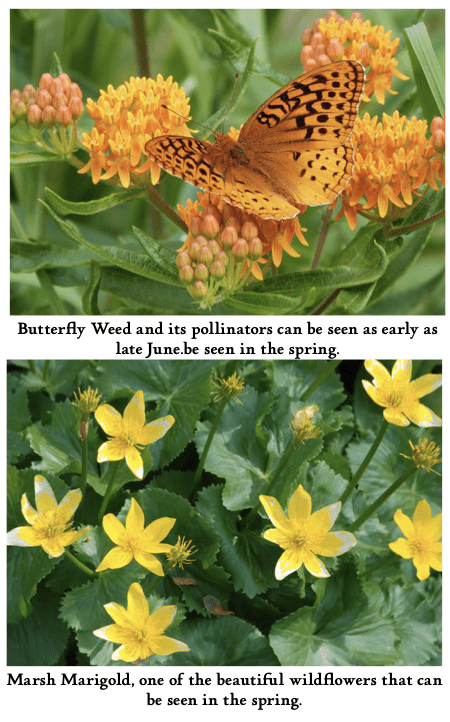
April: bulbs, spring ephemerals and ground covers including bloodroot, oconee bells, primroses, grape hyacinths, lungwort, hellebores, trout lily, squill, blue-eyed Mary, twinleaf, daffodil, bleeding heart, marsh marigold, trillium, anemone, epimedium, kerria, early azalea, and rhododendron bloom
May: azalea and rhododendron bloom, Spanish bluebells, columbine, Canada mayflower, mayapple, trillium, primroses, wild geranium, bleeding heart, lily of the valley, emerging ferns, viburnum, Carolina silverbell trees in bloom
June: rhododendron, native azalea, and mountain laurel in bloom, cimicifuga, wild strawberry, hosta, foxglove, ferns
July: native rhododendron, stewartia, bottlebrush buckeye, hosta, jewelweed, wild Leeks
August: ferns
September: rose of Sharon, gentian, turtlehead, New England aster
October: fall color in azalea leaves, viburnum, and beautyberry in fruit
November: berries on winterberry, viburnum, dogwood
December: During the garden’s dormant season, enjoy a winter walk in the rock garden