By Mimi Santry
Parkinson’s Disease is personal to me. My maternal grandfather, Dr, Robert Alexander Johnston, was a beloved and prominent physician in Houston, Texas specializing in Obstetrics and Gynecology. According to family lore, there were hundreds of “Robert Alexanders” residing in Houston who were named in his honor. I remember him as charming man who loved playing golf, would delight us with tricks –magically pulling quarters from our ears, and enjoyed sneaking out to the ice cream store to delight his grandchildren with a cool treat.
Parkinson’s Disease, with its tremors, loss of coordination, and dyskinesia would soon rob him of his ability to practice medicine, swing a golf club, perform magic tricks or drive to the ice cream store. Complications from the disease took his life in 1972. Forty five years later, his only son and my uncle, Dr. Robert Alexander Johnston Jr. would also succumb to this debilitating neurological disease.
Many families are similarly affected. Parkinson’s Disease is the second most common neurodegenerative disease, in the U.S. following Alzheimer’s. Parkinson’s effects 1.1 million Americans with approximately 90,000 people new cases diagnosed annually.
I reached out to Dr. Matt McConnell of The Neurology and Headache Center of Greenwich to ask about the current outlook on Parkinson’s—curious if there have been any advancements, new treatments or promising research that might provide those effected with hope.
Dr. McConnell and his partner, Dr. Jennifer Werely, specialize in diagnosing neurological conditions like epilepsy, neuropathies, and memory disorders. Dr. McConnell is a recent transplant to Greenwich from Charlotte, North Carolina where he headed a team of neurologists. He generously agreed to share his expertise with the readers of Greenwich Sentinel.
What factors contribute to Parkinson’s Disease?
“Part of the reason Parkinson’s can be so challenging is that it does not appear to stem from one single cause. In most people, it likely reflects a combination of aging, biology, genetics, and environmental exposures. Certain pesticides and industrial solvents have been linked to higher risk, and researchers are also paying close attention to the gut, since constipation and other gastrointestinal changes can appear years before the more familiar movement symptoms.
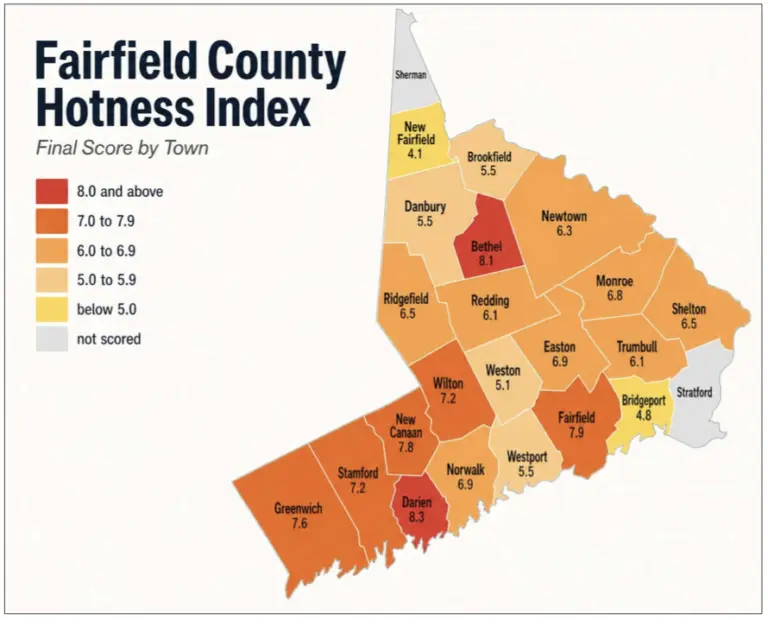
Rates tend to rise with age, are higher in men, and vary by region. However, the Midwestern region of the USA is facing higher incidence rates of Parkinson’s. This is due to the manufacturing and farming that is occupationally dominant in this area. “
Have you seen any significant trends in the diagnosis of Parkinson’s Disease?
“Most patients develop symptoms after age 60, though younger-onset Parkinson’s certainly occurs. Many people first notice subtle slowing, a reduced arm swing, softer speech, loss of smell, constipation, sleep disturbance, or smaller handwriting before they ever develop the classic resting tremor most people associate with Parkinson’s. “
What should someone do if they suspect Parkinson’s disease?
“It is so important not to dismiss early changes that seem small on their own. If you are seeing multiple small changes, I highly recommend seeking a qualified neurologist who can perform an in-depth exam that can assess for Parkinson’s. Earlier diagnosis is key! If we start symptomatic treatment and begin a targeted exercise plan, patients tend to have a better quality of life.”
Any advice on how best to avoid Parkinson’s Disease?
“We do not yet know how to fully prevent Parkinson’s, but we can support brain health and likely reduce risk by exercising regularly, sleeping well, eating a healthy diet, and minimizing exposure to certain environmental toxins discussed in this article. The best preventative treatment is taking care of yourself and not avoiding your medical appointments. “
How does exercise, sleep, mood and nutrition factor in to Parkinson’s Disease?
“Exercise is a crucial part of treatment for Parkinson’s patients. It is part of treatment. The Parkinson’s Foundation describes exercise as a vital part of Parkinson’s disease management, with benefits for balance, mobility, flexibility, quality of life, and even non-motor symptoms. Research cited by the Foundation suggests that people who begin exercising earlier and do at least 2.5 hours per week experience a slower decline in quality of life. That helps explain why programs such as boxing, cycling, swimming, tai chi, yoga, dance, walking, and strength training can be so valuable. “
What are the most promising new treatments that you are seeing for Parkinson’s Disease?
“Treatment today is far more individualized than it once was. Levodopa is generally the primary medication I recommend. I like Levodopa because my patients find it effective at symptom management, and the side effects are usually tolerable. In the last two years, the FDA approved new continuous infusion options such as VYALEV, a 24-hour under-the-skin levodopa-based therapy for advanced Parkinson’s, and ONAPGO, a continuous apomorphine infusion for adults with motor fluctuations. Deep brain stimulation (DBS) also continues to evolve, including the 2025 FDA approval of adaptive deep brain stimulation, which adjusts stimulation based on brain signals. Focused ultrasound has expanded as well, including staged bilateral treatment for selected patients with advanced disease. Adaptive DBS can “listen and respond” to the brain in real time, while focused ultrasound can reduce disabling motor symptoms without open surgery. “
Many treatments are not yet available. Any worth watching?
“Researchers are developing treatments that can offer better symptom-control medications, gene-targeted approaches, and cell-based therapies designed to repair or replace damaged dopamine pathways. One of the most closely watched near-term treatments is Tavapadon, a once-daily oral therapy now under FDA review. At the same time, gene and cell therapy programs are advancing in clinical development. This is real progress, and it deserves optimism.
I caution my patients that they should still be cautious when they see headlines using words like cure, reverse, or breakthrough. Parkinson’s research is moving forward, but researchers and the FDA is rightfully assessing each step thoroughly for efficacy and safety. I expect we will hear news about Tavapadon this year.”
Helpful Resources
YMCA of Greenwich Parkinson’s Body and Mind Program
Rock Steady Boxing
LSVT BIG (physical therapy program)
The Parkinson’s Foundation ****
The Michael J. Fox Foundation
The American Parkinson Disease Association
***The Parkinson’s Foundation’s PD GENEration program offers genetic testing and counseling at no cost for people living with Parkinson’s.
Thank you to Dr. McConnell for sharing his time and medical expertise with our readers. He and his partner Jennifer Werely are definitely on their way of making a mark on Greenwich and achieving their goal of “building a relationship-based neurology practice where the staff listen carefully, diagnose thoughtfully, and partner closely with patients and families” .