Why Connecticut Must Act for Children with Brain Cancer
By Mairead Finn
May is Brain Cancer Awareness Month. It is also known as “Gray May,” because gray is the color of the brain tumor awareness ribbon. For many people in Greenwich, May means spring flowers, Sacred Heart Greenwich graduation on the great lawn overlooking the Sound, sports award nights, and the promise of summer.
For families like mine, May carries something deeper. It is a month of remembrance, grief, advocacy, and urgency. It is a month when we remember the children stolen by brain cancer, and when we recommit ourselves to fighting for the children who will be diagnosed next.
Sadly, there will be more. In 2026, an estimated 4,975 new cases of primary brain tumors will be diagnosed in children and adolescents in the United States. Brain and central nervous system tumors remain one of the most devastating diagnoses in childhood and are a leading cause of cancer-related death among children and adolescents.
Brain and central nervous system tumors are the second most common cancers in children ages 0–19 in the United States. Gliomas account for more than half of brain tumors in children ages 0–14. Infants under age one have the highest incidence of gliomas among children ages 0–19. In adolescents ages 15–19, pituitary tumors are among the most common central nervous system tumors. There are more than 100 distinct types of primary brain and central nervous system tumors, each with different symptoms, treatment options, and outcomes.
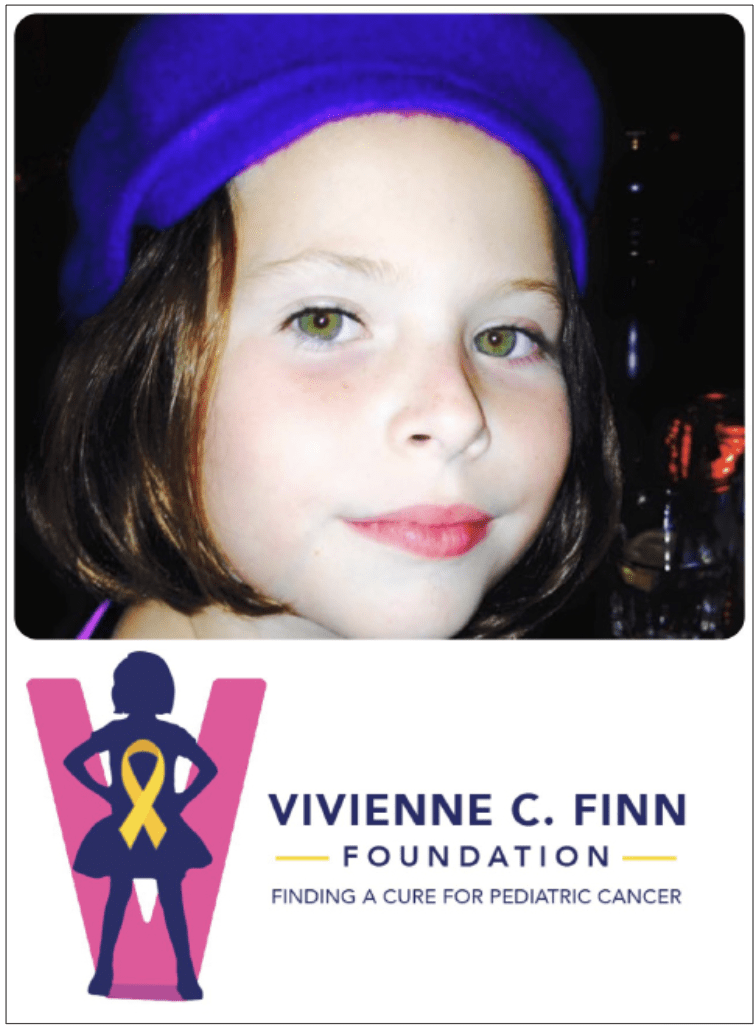
My daughter, Vivienne, was dealt the unimaginable hand of being diagnosed with DIPG — diffuse intrinsic pontine glioma — an aggressive and inoperable brain tumor in the pons of the brain. Her diagnosis came with a devastating reality: a life expectancy often measured in months, not years.
That is why we created the Vivienne C. Finn Foundation Inc. The Foundation is guided by three pillars, which serve as both our mantra and our measure of success: funding research close to home, supporting families in the fight, and championing legislation that changes outcomes for children with cancer.
These pillars reflect what families need most when a child is diagnosed: better treatments, practical support, and a public system willing to fight as urgently as they do.
At this stage, it is worth taking a brief jaunt down legislative lane to see what bipartisan federal work has achieved for children with cancer — and why recent events have also given families cause for concern.
At the federal level, there has been meaningful progress. President Biden reignited the Cancer Moonshot in 2022 with the goal of reducing the cancer death rate by at least 50 percent over 25 years and improving the experience of patients and families. For pediatric cancer, the Moonshot’s focus on data sharing, patient navigation, research coordination, and clinical trial access matters deeply because rare childhood cancers require researchers to learn from every child’s case, not just from one hospital or institution.
That same belief is one of the reasons the Vivienne C. Finn Foundation supports the nurse navigator program started by the ChadTough Defeat DIPG Foundation. Families should not have access to knowledge, treatment options, or clinical trial guidance only because of their income, education, or ZIP code. Every family deserves someone who can help them understand the diagnosis, ask the right questions, and find the best possible path forward.
Bipartisan laws have also helped change the pediatric cancer landscape. The Research to Accelerate Cures and Equity for Children Act, commonly called the RACE for Children Act, pushed drug companies to study targeted cancer therapies in children when the molecular target is relevant to childhood cancer. The Childhood Cancer Survivorship, Treatment, Access, and Research Act, commonly called the Childhood Cancer STAR Act, strengthened research, survivorship care, biospecimen collection, and cancer surveillance. More recently, the Mikaela Naylon Give Kids a Chance Act, signed on February 3, 2026, advanced pediatric combination therapy studies and extended the Rare Pediatric Disease Priority Review Voucher program through September 2029.
The Vivienne C. Finn Foundation was proud to support advocacy around this initiative becoming law. For children with aggressive cancers, this matters because they do not have the luxury of waiting while one drug is tested at a time. Many adult cancer breakthroughs come through combination therapies. Children deserve that same urgency.
There are also promising federal efforts around artificial intelligence. In September 2025, President Trump signed an executive order called “Unlocking Cures for Pediatric Cancer with Artificial Intelligence.” The goal was to use artificial intelligence and health data to speed up pediatric cancer research. The hope is that artificial intelligence can help organize medical records, genetic information, imaging, and other complex data so doctors and researchers can better match children to clinical trials, identify treatment patterns, and make rare pediatric cancer data more useful.
But federal promise is not the same as reliable access for a child in Connecticut.
Some recent federal actions have given families and advocates real cause for concern. The National Cancer Institute’s 2026 budget request proposed a major reduction in cancer research funding of 37%. Congress ultimately rejected that proposed cut, but the proposal itself showed how vulnerable cancer research can be to federal budget shifts. For children with aggressive brain tumors, uncertainty is not abstract. Delayed grants, paused trials, or disrupted research networks can mean lost time children do not have.
The Pediatric Brain Tumor Consortium is one clear example of why state action matters. For many years, this national research group helped run early-phase clinical trials for children with brain tumors. Federal officials have said this work will move into a broader pediatric early-phase clinical trial network, with the goal of expanding access to more hospitals. The National Cancer Institute announced in fall 2025 that the Pediatric Brain Tumor Consortium would no longer receive federal funding after March 2026. That goal is important. But families are right to worry whenever trial enrollment pauses, transitions take time, or funding does not clearly follow the work.
That is why Connecticut cannot rely on federal action alone.
Federal policy can open doors, but state policy determines whether a child can actually walk through them. A Connecticut Pediatric Cancer Action Plan would help our state ask the questions that matter: How many children are diagnosed here? Where are they treated? Are they receiving molecular testing? Are they being matched to clinical trials? Are families able to afford transportation, food, housing, and time away from work? Are adolescents and young adults being connected to appropriate care? Are our hospitals supported so pediatric oncology expertise stays in Connecticut?
Other states have already recognized that childhood cancer deserves specific attention inside state cancer planning. Connecticut should not be satisfied with a passing mention of children. We should build a plan that reflects the real burden of pediatric cancer on children, siblings, parents, hospitals, schools, and communities.
A Connecticut Pediatric Cancer Action Plan could support Yale New Haven Children’s Hospital, Connecticut Children’s, UConn Health, and partner institutions in building stronger trial infrastructure, data systems, research nursing, regulatory support, tumor boards, family navigation, and financial assistance. It could help prevent a brain drain from Connecticut hospitals by making our state a place where pediatric oncology expertise, clinical trials, and innovation can grow.
For families facing brain cancer, close to home is not a convenience. It is part of care. When a child may have months, not years, proximity matters. Being near siblings, grandparents, school friends, pets, bedrooms, familiar streets, and community allows families to make memories in the time they have. No child should have to leave the state simply to access hope. No family should be forced to choose between a clinical trial and financial survival.
Gray May asks us to remember. But remembrance is not enough. We must act. We must fund research, support families, and pass legislation that makes Connecticut a leader in pediatric cancer care.
The Vivienne C. Finn Foundation fights in Vivienne’s memory because we believe the next child deserves more options than the last child had. Our state has the hospitals, the doctors, the families, the advocates, and the heart to do better. Now we need a plan.
The Vivienne C. Finn Foundation will hold a luncheon on November 10 at Greenwich Country Club, where we will hear from Nancy Goodman of Kids v Cancer about what is needed to advocate, legislate, and move pediatric cancer policy forward. Sadly, in 2026, an estimated 18,350 Americans — adults and children — will die from malignant brain cancer, and more than 108,000 Americans will receive a primary brain tumor diagnosis. Families’ lives will be altered forever.
As a society, we hold on to hope. But hope must be paired with action. We stand beside the more than 1.3 million Americans living with or after a brain tumor diagnosis, and we fight for the children and families who deserve better. If you or someone you love is facing a brain tumor diagnosis, please visit the resource page at https://vcfinnfoundation.org. No one should have to fight alone.